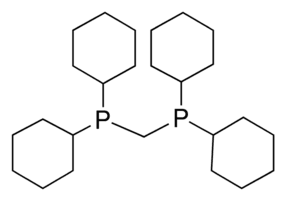
Bis(dicyclohexylphosphino)methane
Bis(dicyclohexylphosphino)methane (CAS 137349-65-6; formula (C6H11)2PCH2P(C6H11)2; molar mass 408.58 g/mol) is an electron-rich bidentate phosphine ligand in which two dicyclohexylphosphino groups are bridged by a single methylene unit. Its strongly donating, bulky cyclohexyl substituents make it a useful supporting ligand for transition-metal catalysis, notably ruthenium- and palladium-mediated reactions. Tech Serve Solutions supplies this reagent-grade ligand (assay 95%) to research, synthesis and process-development laboratories worldwide.
- IUPAC
- Methylenebis(dicyclohexylphosphine)
- Synonyms
- Bis(dicyclohexylphosphino)methaneMethylenebis(dicyclohexylphosphine)1,1'-Methylenebis(dicyclohexylphosphine)(C6H11)2PCH2P(C6H11)2dcpm
Ligand for ruthenium-catalysed additions
Used as a supporting phosphine ligand in ruthenium/phosphine systems for anti-Markovnikov addition reactions. The short methylene bridge gives a small bite angle that favours chelation at the metal centre.
Regioselective Suzuki coupling
Serves as a ligand in palladium-mediated, regioselective Suzuki-Miyaura cross-coupling reactions, where its electron-rich, bidentate character assists oxidative addition and selectivity.
Homogeneous hydrogenation
Applied in ruthenium/phosphine catalysed homogeneous hydrogenation, where the bidentate ligand helps stabilise the active metal species in solution.
Mediated cross-coupling chemistry
Employed as a ligand in metal-mediated cross-coupling reactions for carbon-carbon and related bond formation in organic synthesis.
Organometallic and coordination research
Acts as a chelating diphosphine for preparing and studying transition-metal complexes, supporting method development in catalysis and inorganic chemistry.
| Molecular weight | 408.58 |
|---|---|
| Linear formula | (C6H11)2PCH2P(C6H11)2 |
| Assay | 95% |
| Application | Catalyst for:• Ru/phosphine catalyzed anti-Markovnikov addition reactions1• Regioselective Suzuki coupling reactions2• Ru/phosphine catalyzed homogeneous hydrogenation reactons3• Mediated cross-coupling reactions4 |
| Melting point | 95-102 °C(lit.) |

Hazard statements
- H315Causes skin irritation
- H319Causes serious eye irritation
- H335May cause respiratory irritation
Precautionary statements
- P261Avoid breathing dust, fume, gas or vapours
- P305IF IN EYES
| Protective equipment | dust mask type N95 (US), Eyeshields, Gloves |
|---|---|
| Water hazard class (WGK, DE) | 3 |
| Hazard codes (EU) | Xi |
| Risk statements (R) | 36/37/38 |
| Safety statements (S) | 26-36 |
Hazard information is provided for guidance. Always consult the product Safety Data Sheet (SDS), available on request, before handling.
Documentation
Every batch ships with a Certificate of Analysis covering assay, identity and purity; the grade is confirmed against your enquiry. Safety Data Sheets and technical data sheets are available on request.
Supply & logistics
Samples for technical evaluation; bulk MOQ by grade and packaging. In-stock material ships in 7–10 working days, worldwide, with full export documentation.
What is Bis(dicyclohexylphosphino)methane used for?
+
It is used as an electron-rich bidentate phosphine ligand in transition-metal catalysis. Documented uses include ruthenium/phosphine-catalysed anti-Markovnikov additions and homogeneous hydrogenation, regioselective Suzuki coupling, and other metal-mediated cross-coupling reactions in organic and organometallic synthesis.
What is the CAS number and molecular formula of Bis(dicyclohexylphosphino)methane?
+
The CAS number is 137349-65-6 and the linear formula is (C6H11)2PCH2P(C6H11)2, with a molecular weight of 408.58 g/mol. Its MDL number is MFCD00143763 and the Beilstein registry number is 5340912.
What grade and purity does Tech Serve Solutions supply?
+
We supply it as a research/reagent-grade ligand with a typical assay of 95% and a reported melting point of 95-102 °C. It is offered for laboratory and process-development use; we do not represent it as USP, BP or EP pharmacopoeia grade.
What are the safety and handling requirements for Bis(dicyclohexylphosphino)methane?
+
It carries GHS07 with the signal word Warning and hazard statements H315 (causes skin irritation), H319 (causes serious eye irritation) and H335 (may cause respiratory irritation). Handle with gloves, eye protection and an N95-type dust mask, avoid generating dust, and follow precautionary guidance P261 and P305+P351+P338. It is assigned German Water Hazard Class WGK 3 (highly hazardous to water); always consult the SDS before use.
Is Bis(dicyclohexylphosphino)methane a controlled or scheduled substance?
+
The supplied data does not indicate any narcotic, psychotropic or drug-precursor control status for this compound. It is handled as a standard laboratory chemical; customers should nonetheless confirm the requirements applicable in their own jurisdiction.
How is Bis(dicyclohexylphosphino)methane packed, shipped and exported?
+
It is supplied in suitable air-tight, light-resistant laboratory packaging sized to the order, labelled in line with GHS. As an air- and moisture-sensitive phosphine it is typically packed under inert conditions, and Tech Serve Solutions arranges compliant export documentation and freight to laboratories worldwide.
How do I request a sample or quote?
+
Contact Tech Serve Solutions with your required quantity, purity and destination, and our team will respond with availability, packaging options, lead time and full documentation.
▶ Related products

Benzeneruthenium(II) chloride dimer
Ru2(C6H6)2Cl4
Catalysis & Inorganic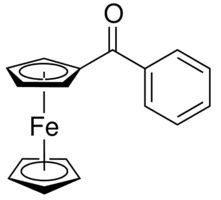
Benzoylferrocene
C17H14FeO
Catalysis & Inorganic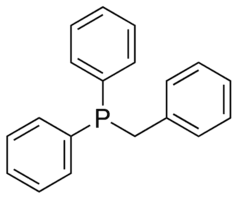
Benzyldiphenylphosphine
C6H5CH2P(C6H5)2
Catalysis & Inorganic
Beryllium
Be
Catalysis & Inorganic
Beryllium oxide
BeO
Catalysis & Inorganic![Bicyclo[2.2.1]hepta-2,5-diene-rhodium(I) chloride dimer — chemical structure, CAS 12257-42-0; Catalysis & Inorganic, fine chemical supplied by Tech Serve Solutions](/_next/image?url=https%3A%2F%2Fpub-f4d920c906024441a773a96f7098e551.r2.dev%2Fimages%2Fproducts%2F12257-42-0.png&w=3840&q=75)
Bicyclo[2.2.1]hepta-2,5-diene-rhodium(I) chloride dimer
Catalysis & Inorganic
![Bis[(10,11-η)-5-[(11bS)-dinaphtho[2,1-d:1′,2′-f][1,3,2]dioxaphosphepin-4-yl- κP4]-5H-dibenz[b,f]azepine]rhodium(I) tetrafluorobo — chemical structure, CAS 1228149-03-8; Catalysis & Inorganic, fine chemical supplied by Tech Serve Solutions](/_next/image?url=https%3A%2F%2Fpub-f4d920c906024441a773a96f7098e551.r2.dev%2Fimages%2Fproducts%2F1228149-03-8.png&w=3840&q=75)
Bis[(10,11-η)-5-[(11bS)-dinaphtho[2,1-d:1′,2′-f][1,3,2]dioxaphosphepin-4-yl- κP4]-5H-dibenz[b,f]azepine]rhodium(I) tetrafluorobo
1-d:1′
Catalysis & Inorganic![Bis[(2-dimethylamino)phenyl]amine nickel(II) chloride (C16H20ClN3Ni) — chemical structure, CAS 1033772-47-2; Catalysis & Inorganic, fine chemical supplied by Tech Serve Solutions](/_next/image?url=https%3A%2F%2Fpub-f4d920c906024441a773a96f7098e551.r2.dev%2Fimages%2Fproducts%2F1033772-47-2.png&w=3840&q=75)
Bis[(2-dimethylamino)phenyl]amine nickel(II) chloride
C16H20ClN3Ni
Catalysis & Inorganic