
Bicyclo[2.2.1]hepta-2,5-diene-rhodium(I) chloride dimer
Bicyclo[2.2.1]hepta-2,5-diene-rhodium(I) chloride dimer (CAS 12257-42-0), commonly written [Rh(nbd)Cl]2, is an organorhodium(I) coordination complex with the empirical formula C14H16Cl2Rh2 and a molecular weight of 460.99 g/mol. Each rhodium centre is bound by a chelating 2,5-norbornadiene ligand and bridged through chloride. It is a versatile homogeneous catalyst precursor, used for valence isomerisation, N-heterocyclisation and, with phosphine or chiral ligands, for hydrogenation, hydroformylation and asymmetric hydrogenation. Tech Serve Solutions supplies it as a research-grade reagent.
- IUPAC
- 2,5-Norbornadiene-rhodium(I) chloride dimer,Chloro(2,5-norbornadiene)rhodium(I) dimer,Rhodium(I) chloride 2,5-Norbornadiene complex dimer,[Rh(nbd)Cl]2,[Rh(nbd)Cl]2,dichlorobis(norbornadiene)dirhodium
- Synonyms
- Bicyclo[2.2.1]hepta-2,5-diene-rhodium(I) chloride dimer2,5-Norbornadiene-rhodium(I) chloride dimerChloro(2,5-norbornadiene)rhodium(I) dimerRhodium(I) chloride 2,5-norbornadiene complex dimerDichlorobis(norbornadiene)dirhodium[Rh(nbd)Cl]2CAS 12257-42-0
![Bicyclo[2.2.1]hepta-2,5-diene-rhodium(I) chloride dimer (C14H16Cl2Rh2) — chemical structure, CAS 12257-42-0; Chemistry, fine chemical supplied by Tech Serve Solutions](/_next/image?url=https%3A%2F%2Fpub-f4d920c906024441a773a96f7098e551.r2.dev%2Fimages%2Fproducts%2F12257-42-0.png&w=3840&q=75)
Valence isomerisation and N-heterocyclisation
Acts as a homogeneous rhodium(I) catalyst for valence isomerisation reactions and for N-heterocyclisation, supporting synthetic routes in organic and heterocyclic chemistry.
Hydrogenation catalysis with phosphorus ligands
In combination with phosphine and other phosphorus ligands, it forms active catalysts for the hydrogenation of a wide range of functional groups under homogeneous conditions.
Hydroformylation
The complex serves as a rhodium precursor for hydroformylation, where alkenes are converted to aldehydes, again typically modified in situ with phosphorus-donor ligands.
Asymmetric hydrogenation
Paired with chiral ligands, it generates catalysts for enantioselective (asymmetric) hydrogenation, a key tool in the preparation of single-enantiomer intermediates.
Catalyst precursor and research reagent
The labile norbornadiene ligands are readily displaced, making the dimer a convenient entry point for preparing other rhodium(I) complexes in catalysis and coordination-chemistry research.
| Molecular weight | 460.99 |
|---|---|
| Empirical formula | C14H16Cl2Rh2 |
| Assay | 96% |
| Application | Catalyst for valence isomerization and N-heterocyclization; incombination with phosphorus ligands are catalysts for hydrogenationof many functional groups and hydroformylation; withchiral ligands are catalysts for asymmetric hydrogenation |
| Protective equipment | Eyeshields, Gloves, type N95 (US), type P1 (EN143) respirator filter |
|---|---|
| Water hazard class (WGK, DE) | 3 |
Hazard information is provided for guidance. Always consult the product Safety Data Sheet (SDS), available on request, before handling.
Documentation
Every batch ships with a Certificate of Analysis covering assay, identity and purity; the grade is confirmed against your enquiry. Safety Data Sheets and technical data sheets are available on request.
Supply & logistics
Samples for technical evaluation; bulk MOQ by grade and packaging. In-stock material ships in 7–10 working days, worldwide, with full export documentation.
What is Bicyclo[2.2.1]hepta-2,5-diene-rhodium(I) chloride dimer used for?
+
It is used as a homogeneous rhodium(I) catalyst and catalyst precursor. Applications include valence isomerisation and N-heterocyclisation; with phosphorus ligands it catalyses the hydrogenation of many functional groups and hydroformylation, and with chiral ligands it enables asymmetric hydrogenation.
What is the CAS number and molecular formula of Bicyclo[2.2.1]hepta-2,5-diene-rhodium(I) chloride dimer?
+
Its CAS number is 12257-42-0 and its empirical formula (Hill notation) is C14H16Cl2Rh2, with a molecular weight of 460.99 g/mol. The MDL number is MFCD00198060 and the EC number is 235-510-4. It is frequently abbreviated [Rh(nbd)Cl]2.
What grade and purity does Tech Serve Solutions supply?
+
Tech Serve Solutions supplies this complex as a research-grade reagent with a typical assay of 96%. We do not represent it as a USP, BP or EP pharmacopoeial grade. A certificate of analysis can be provided with each consignment on request.
What are the safety and handling requirements?
+
Handle the material with suitable personal protective equipment, including eye shields, gloves and a particulate respirator (type N95 (US) or type P1 (EN 143)). It carries a German Water Hazard Class (WGK) of 3, indicating it is severely hazardous to water, so prevent release to drains and the environment. Always consult the current Safety Data Sheet before use.
How is Bicyclo[2.2.1]hepta-2,5-diene-rhodium(I) chloride dimer packed, shipped and exported?
+
It is supplied in securely sealed containers with appropriate inner protection, labelled in line with applicable regulations, and pack sizes are matched to laboratory and pilot-scale requirements. Tech Serve Solutions exports worldwide with full documentation and a certificate of analysis.
How do I request a sample or quote?
+
Contact Tech Serve Solutions with your required quantity, purity and destination, and we will respond with availability, lead time and export terms. Quoting your CAS number (12257-42-0) helps us process the enquiry quickly.
▶ Related products
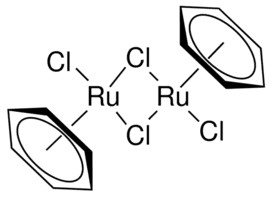
Benzeneruthenium(II) chloride dimer
Ru2(C6H6)2Cl4
Catalysis & Inorganic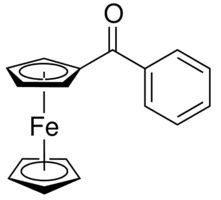
Benzoylferrocene
C17H14FeO
Catalysis & Inorganic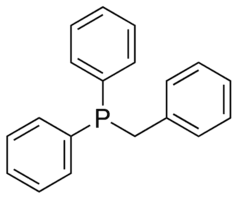
Benzyldiphenylphosphine
C6H5CH2P(C6H5)2
Catalysis & Inorganic
Beryllium
Be
Catalysis & Inorganic
Beryllium oxide
BeO
Catalysis & Inorganic![Bis[(10,11-η)-5-[(11bS)-dinaphtho[2,1-d:1′,2′-f][1,3,2]dioxaphosphepin-4-yl- κP4]-5H-dibenz[b,f]azepine]rhodium(I) tetrafluorobo — chemical structure, CAS 1228149-03-8; Catalysis & Inorganic, fine chemical supplied by Tech Serve Solutions](/_next/image?url=https%3A%2F%2Fpub-f4d920c906024441a773a96f7098e551.r2.dev%2Fimages%2Fproducts%2F1228149-03-8.png&w=3840&q=75)
Bis[(10,11-η)-5-[(11bS)-dinaphtho[2,1-d:1′,2′-f][1,3,2]dioxaphosphepin-4-yl- κP4]-5H-dibenz[b,f]azepine]rhodium(I) tetrafluorobo
1-d:1′
Catalysis & Inorganic![Bis[(2-dimethylamino)phenyl]amine nickel(II) chloride (C16H20ClN3Ni) — chemical structure, CAS 1033772-47-2; Catalysis & Inorganic, fine chemical supplied by Tech Serve Solutions](/_next/image?url=https%3A%2F%2Fpub-f4d920c906024441a773a96f7098e551.r2.dev%2Fimages%2Fproducts%2F1033772-47-2.png&w=3840&q=75)
Bis[(2-dimethylamino)phenyl]amine nickel(II) chloride
C16H20ClN3Ni
Catalysis & Inorganic![Bis[(dicyclohexyl)(4-dimethylaminophenyl)phosphine] palladium(II) chloride — chemical structure, CAS 945375-77-9; Catalysis & Inorganic, fine chemical supplied by Tech Serve Solutions](/_next/image?url=https%3A%2F%2Fpub-f4d920c906024441a773a96f7098e551.r2.dev%2Fimages%2Fproducts%2F945375-77-9.png&w=3840&q=75)
Bis[(dicyclohexyl)(4-dimethylaminophenyl)phosphine] palladium(II) chloride
Catalysis & Inorganic
▶ Explore more

Bis(cyclopentadienyl)cobalt(III) hexafluorophosphate
C10H10CoF6P
Catalysis & Inorganic
1-(4-Chlorophenyl)biguanide hydrochloride
ClC6H4NHC(NH)NHC(NH)NH2 · HCl
Chemical Synthesis
Bis(cyclopentadienyl)dimethylzirconium(IV)
Catalysis & Inorganic

1-(4-Chlorophenyl)ethanol
ClC6H4CH(CH3)OH
Chemical Synthesis