
Bis[(10,11-η)-5-[(11bS)-dinaphtho[2,1-d:1′,2′-f][1,3,2]dioxaphosphepin-4-yl- κP4]-5H-dibenz[b,f]azepine]rhodium(I) tetrafluorobo
Bis[(10,11-η)-5-[(11bS)-dinaphtho[2,1-d:1′,2′-f][1,3,2]dioxaphosphepin-4-yl-κP4]-5H-dibenz[b,f]azepine]rhodium(I) tetrafluoroborate (CAS 1228149-03-8; C68H44BF4N2O4P2Rh; molar mass 1204.75 g/mol) is a chiral cationic rhodium(I) complex bearing two BINOL-derived dioxaphosphepine phosphorus ligands on a dibenzazepine scaffold, with a tetrafluoroborate counter-ion. Supplied as a defined single-enantiomer (S) catalyst, it is used in homogeneous asymmetric catalysis and fine-chemical synthesis. Tech Serve Solutions supplies it as a research-grade reagent to laboratories worldwide.
- IUPAC
- Bis[(10,11-η)-(S)-N-[(3,5-dioxa-4-phosphacyclohepta[2,1-a;3,4-a′]dinaphthalen-4-yl-κP4)]-dibenzo[b,f]azepine]rhodium(I) tetrafluoroborate salt
- Synonyms
- Bis[(10,11-η)-5-[(11bS)-dinaphtho[2,1-d:1′,2′-f][1,3,2]dioxaphosphepin-4-yl-κP4]-5H-dibenz[b,f]azepine]rhodium(I) tetrafluoroborateBis[(10,11-η)-(S)-N-[(3,5-dioxa-4-phosphacyclohepta[2,1-a3,4-a′]dinaphthalen-4-yl-κP4)]-dibenzo[b,f]azepine]rhodium(I) tetrafluoroborate saltchiral rhodium(I) dioxaphosphepine complex tetrafluoroborate(S)-rhodium(I) BINOL phosphite dibenzazepine catalystCAS 1228149-03-8
![Bis[(10,11-η)-5-[(11bS)-dinaphtho[2,1-d:1′,2′-f][1,3,2]dioxaphosphepin-4-yl- κP4]-5H-dibenz[b,f]azepine]rhodium(I) tetrafluorobo — chemical structure, CAS 1228149-03-8; Chemistry, fine chemical supplied by Tech Serve Solutions](/_next/image?url=https%3A%2F%2Fpub-f4d920c906024441a773a96f7098e551.r2.dev%2Fimages%2Fproducts%2F1228149-03-8.png&w=3840&q=75)
Asymmetric homogeneous catalysis
Serves as a chiral rhodium(I) pre-catalyst for enantioselective transformations, where the BINOL-derived phosphorus ligands transfer chirality to the substrate. It is used in research aimed at preparing optically active, single-enantiomer products.
Asymmetric hydrogenation and C–C bond formation
Cationic rhodium(I) phosphite and phosphoramidite complexes of this type are established catalysts for asymmetric hydrogenation and rhodium-catalysed asymmetric conjugate (1,4-) addition chemistry. Specific scope should be confirmed against the user's own substrate and conditions.
Chiral ligand and methodology development
Used by synthetic and organometallic chemists evaluating BINOL-derived dioxaphosphepine ligands and rhodium catalyst systems, and in the screening of new enantioselective reactions and reaction conditions.
Pharmaceutical and fine-chemical intermediate synthesis
Applied at laboratory and process-development scale to construct stereodefined building blocks and intermediates where enantiocontrol is required. It is offered for research and manufacturing-development use, not as a finished pharmaceutical.
| Molecular weight | 1204.75 |
|---|---|
| Empirical formula | C68H44BF4N2O4P2Rh |
| Assay | ≥97% (elemental analysis)97% |
Documentation
Every batch ships with a Certificate of Analysis covering assay, identity and purity; the grade is confirmed against your enquiry. Safety Data Sheets and technical data sheets are available on request.
Supply & logistics
Samples for technical evaluation; bulk MOQ by grade and packaging. In-stock material ships in 7–10 working days, worldwide, with full export documentation.
What is Bis[(10,11-η)-5-[(11bS)-dinaphtho[2,1-d:1′,2′-f][1,3,2]dioxaphosphepin-4-yl-κP4]-5H-dibenz[b,f]azepine]rhodium(I) tetrafluoroborate used for?
+
It is a chiral cationic rhodium(I) catalyst used in homogeneous asymmetric catalysis. The BINOL-derived phosphorus ligands make it suitable for enantioselective transformations such as asymmetric hydrogenation and rhodium-catalysed conjugate addition, and for chiral methodology development in fine-chemical and pharmaceutical-intermediate research.
What is the CAS number and molecular formula?
+
The CAS number is 1228149-03-8. The empirical formula is C68H44BF4N2O4P2Rh (Hill notation), corresponding to a molecular weight of 1204.75 g/mol. It is the single-enantiomer (S) rhodium(I) complex with a tetrafluoroborate counter-ion.
What grade and purity does Tech Serve Solutions supply?
+
Tech Serve Solutions supplies this material at an assay of ≥97% (by elemental analysis) as a research-grade catalyst. We do not represent it as USP, BP or EP pharmacopoeial grade. A current Certificate of Analysis is provided with each lot, and specifications can be confirmed at the time of enquiry.
How should this rhodium catalyst be handled and stored?
+
No GHS hazard classification was supplied to us for this compound; in the absence of full classification, handle it as a potentially hazardous research chemical. As an air- and moisture-sensitive organometallic, it should be handled under inert atmosphere using standard laboratory protective equipment and stored cool and dry. Always consult the accompanying Safety Data Sheet before use.
How is this product packed, shipped and exported?
+
It is packed in tightly sealed, appropriately labelled containers, typically under inert gas to protect the air-sensitive complex, with pack sizes from research quantities upward. Tech Serve Solutions exports worldwide with full documentation, including the Certificate of Analysis and Safety Data Sheet, and arranges transport in line with applicable regulations.
How do I request a sample or a quote?
+
Contact Tech Serve Solutions with your required quantity, purity and intended application, and our team will respond with availability, lead time and a formal quotation. Samples can be arranged for qualification, subject to availability and applicable regulatory requirements.
▶ Related products
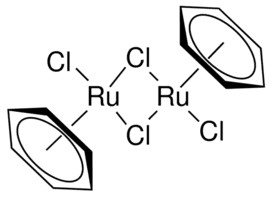
Benzeneruthenium(II) chloride dimer
Ru2(C6H6)2Cl4
Catalysis & Inorganic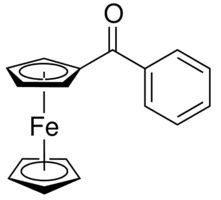
Benzoylferrocene
C17H14FeO
Catalysis & Inorganic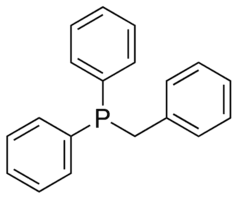
Benzyldiphenylphosphine
C6H5CH2P(C6H5)2
Catalysis & Inorganic
Beryllium
Be
Catalysis & Inorganic
Beryllium oxide
BeO
Catalysis & Inorganic![Bicyclo[2.2.1]hepta-2,5-diene-rhodium(I) chloride dimer — chemical structure, CAS 12257-42-0; Catalysis & Inorganic, fine chemical supplied by Tech Serve Solutions](/_next/image?url=https%3A%2F%2Fpub-f4d920c906024441a773a96f7098e551.r2.dev%2Fimages%2Fproducts%2F12257-42-0.png&w=3840&q=75)
Bicyclo[2.2.1]hepta-2,5-diene-rhodium(I) chloride dimer
Catalysis & Inorganic
![Bis[(2-dimethylamino)phenyl]amine nickel(II) chloride (C16H20ClN3Ni) — chemical structure, CAS 1033772-47-2; Catalysis & Inorganic, fine chemical supplied by Tech Serve Solutions](/_next/image?url=https%3A%2F%2Fpub-f4d920c906024441a773a96f7098e551.r2.dev%2Fimages%2Fproducts%2F1033772-47-2.png&w=3840&q=75)
Bis[(2-dimethylamino)phenyl]amine nickel(II) chloride
C16H20ClN3Ni
Catalysis & Inorganic![Bis[(dicyclohexyl)(4-dimethylaminophenyl)phosphine] palladium(II) chloride — chemical structure, CAS 945375-77-9; Catalysis & Inorganic, fine chemical supplied by Tech Serve Solutions](/_next/image?url=https%3A%2F%2Fpub-f4d920c906024441a773a96f7098e551.r2.dev%2Fimages%2Fproducts%2F945375-77-9.png&w=3840&q=75)
Bis[(dicyclohexyl)(4-dimethylaminophenyl)phosphine] palladium(II) chloride
Catalysis & Inorganic
▶ Explore more

Bis(cyclopentadienyl)cobalt(III) hexafluorophosphate
C10H10CoF6P
Catalysis & Inorganic
1-(4-Chlorophenyl)biguanide hydrochloride
ClC6H4NHC(NH)NHC(NH)NH2 · HCl
Chemical Synthesis
Bis(cyclopentadienyl)dimethylzirconium(IV)
Catalysis & Inorganic

1-(4-Chlorophenyl)ethanol
ClC6H4CH(CH3)OH
Chemical Synthesis