
Beryllium oxide
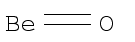
Beryllium oxide (CAS 1304-56-9), formula BeO and molar mass 25.01 g/mol, is a white crystalline inorganic ceramic oxide also known as beryllia. It combines very high thermal conductivity with strong electrical insulation, making it valued in advanced electronic, ceramic and refractory applications. It is also used in inorganic synthesis and catalysis research. Tech Serve Solutions supplies it as a high-purity reagent (99.98% trace metals basis) to laboratory, research and industrial users worldwide.
- Synonyms
- Beryllium oxideBerylliaBeryllium monoxideBeOBromellite
Technical and electronic ceramics
Beryllium oxide is used to produce ceramics that conduct heat efficiently while remaining electrically insulating. This combination supports demanding thermal-management and high-performance ceramic component applications.
Refractory and high-temperature materials
With its high melting point and chemical stability, BeO serves in refractory bodies and crucibles intended for high-temperature service. It is selected where thermal and dimensional stability are required.
Catalysis and inorganic chemistry
The high-purity oxide is used as a starting material and reagent in catalysis and inorganic synthesis. Its 99.98% trace metals basis assay suits work where metallic impurities must be controlled.
Materials science and research
Beryllium oxide is employed in materials and ceramic science studies of beryllium compounds and oxide systems. It is supplied for controlled laboratory and characterisation work.
| Molecular weight | 25.01 |
|---|---|
| Empirical formula | BeO |
| Assay | 99.98% trace metals basis |
| Grade | purum |
| Density | 3.01 g/mL at 25 °C(lit.) |


Hazard statements
- H301Toxic if swallowed
- H315Causes skin irritation
- H317May cause an allergic skin reaction
- H319Causes serious eye irritation
- H330Fatal if inhaled
- H335May cause respiratory irritation
- H350I
- H372Causes damage to organs through prolonged exposure
Precautionary statements
- P201Obtain special instructions before use
- P260Do not breathe dust, fume, gas, mist, vapours or spray
- P280Wear protective gloves, clothing and eye/face protection
- P284Wear respiratory protection
- P301IF SWALLOWED
- P305IF IN EYES
| Transport (UN / ADR) | UN 1566 6.1 / PGII |
|---|---|
| Water hazard class (WGK, DE) | 3 |
| Hazard codes (EU) | T+ |
| Risk statements (R) | 49-25-26-36/37/38-43-48/23 |
| Safety statements (S) | 53-45 |
Hazard information is provided for guidance. Always consult the product Safety Data Sheet (SDS), available on request, before handling.
Documentation
Every batch ships with a Certificate of Analysis covering assay, identity and purity; the grade is confirmed against your enquiry. Safety Data Sheets and technical data sheets are available on request.
Supply & logistics
Samples for technical evaluation; bulk MOQ by grade and packaging. In-stock material ships in 7–10 working days, worldwide, with full export documentation.
What is Beryllium oxide used for?
+
Beryllium oxide (beryllia) is used chiefly in technical and electronic ceramics that need high thermal conductivity together with electrical insulation, and in refractory, high-temperature materials. The high-purity grade also serves as a reagent in catalysis, inorganic synthesis and materials-science research.
What is the CAS number and molecular formula of Beryllium oxide?
+
Beryllium oxide has CAS number 1304-56-9 and the empirical formula BeO (Hill notation). Its molecular weight is 25.01 g/mol, the MDL number is MFCD00003457, and the typical density is 3.01 g/mL at 25 °C.
What grade and purity does Tech Serve Solutions supply?
+
We supply Beryllium oxide as a high-purity research/reagent grade: purum quality with an assay of 99.98% on a trace metals basis. It is offered for laboratory, research and industrial use; we do not represent it as USP, BP or EP pharmacopoeial grade.
What are the safety hazards and handling requirements for Beryllium oxide?
+
Beryllium oxide is hazardous and carries the signal word Danger (GHS06, GHS08). It is fatal if inhaled (H330) and toxic if swallowed (H301); it may cause cancer by inhalation (H350i) and causes damage to organs through prolonged or repeated inhalation (H372). It also causes skin and eye irritation, may cause an allergic skin reaction, and may cause respiratory irritation (H315, H317, H319, H335). Avoid dust formation, use adequate ventilation and respiratory protection, wear protective gloves, clothing and eye protection, and consult the Safety Data Sheet before handling.
How is Beryllium oxide packed, shipped and exported?
+
It is packed in secure, clearly labelled containers suited to a toxic solid and is classified for transport as UN 1566, Class 6.1, Packing Group II. As a substance with German Water Hazard Class WGK 3, it is handled with strict containment. We arrange compliant export documentation and dangerous-goods shipping to laboratory and industrial customers worldwide; pack sizes are confirmed at the time of enquiry.
How do I request a sample or quote for Beryllium oxide?
+
Contact Tech Serve Solutions with your required quantity, purity and destination, and our team will respond with availability, lead time and a formal quotation. Please note any specific documentation or dangerous-goods requirements when you enquire.
▶ Related products
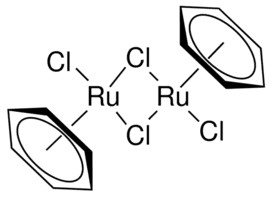
Benzeneruthenium(II) chloride dimer
Ru2(C6H6)2Cl4
Catalysis & Inorganic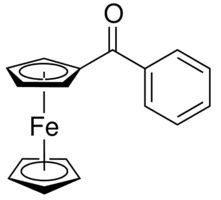
Benzoylferrocene
C17H14FeO
Catalysis & Inorganic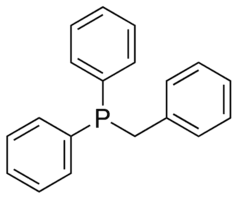
Benzyldiphenylphosphine
C6H5CH2P(C6H5)2
Catalysis & Inorganic
Beryllium
Be
Catalysis & Inorganic![Bicyclo[2.2.1]hepta-2,5-diene-rhodium(I) chloride dimer — chemical structure, CAS 12257-42-0; Catalysis & Inorganic, fine chemical supplied by Tech Serve Solutions](/_next/image?url=https%3A%2F%2Fpub-f4d920c906024441a773a96f7098e551.r2.dev%2Fimages%2Fproducts%2F12257-42-0.png&w=3840&q=75)
Bicyclo[2.2.1]hepta-2,5-diene-rhodium(I) chloride dimer
Catalysis & Inorganic
![Bis[(10,11-η)-5-[(11bS)-dinaphtho[2,1-d:1′,2′-f][1,3,2]dioxaphosphepin-4-yl- κP4]-5H-dibenz[b,f]azepine]rhodium(I) tetrafluorobo — chemical structure, CAS 1228149-03-8; Catalysis & Inorganic, fine chemical supplied by Tech Serve Solutions](/_next/image?url=https%3A%2F%2Fpub-f4d920c906024441a773a96f7098e551.r2.dev%2Fimages%2Fproducts%2F1228149-03-8.png&w=3840&q=75)
Bis[(10,11-η)-5-[(11bS)-dinaphtho[2,1-d:1′,2′-f][1,3,2]dioxaphosphepin-4-yl- κP4]-5H-dibenz[b,f]azepine]rhodium(I) tetrafluorobo
1-d:1′
Catalysis & Inorganic![Bis[(2-dimethylamino)phenyl]amine nickel(II) chloride (C16H20ClN3Ni) — chemical structure, CAS 1033772-47-2; Catalysis & Inorganic, fine chemical supplied by Tech Serve Solutions](/_next/image?url=https%3A%2F%2Fpub-f4d920c906024441a773a96f7098e551.r2.dev%2Fimages%2Fproducts%2F1033772-47-2.png&w=3840&q=75)
Bis[(2-dimethylamino)phenyl]amine nickel(II) chloride
C16H20ClN3Ni
Catalysis & Inorganic![Bis[(dicyclohexyl)(4-dimethylaminophenyl)phosphine] palladium(II) chloride — chemical structure, CAS 945375-77-9; Catalysis & Inorganic, fine chemical supplied by Tech Serve Solutions](/_next/image?url=https%3A%2F%2Fpub-f4d920c906024441a773a96f7098e551.r2.dev%2Fimages%2Fproducts%2F945375-77-9.png&w=3840&q=75)
Bis[(dicyclohexyl)(4-dimethylaminophenyl)phosphine] palladium(II) chloride
Catalysis & Inorganic
▶ Explore more

Bis(cyclopentadienyl)cobalt(III) hexafluorophosphate
C10H10CoF6P
Catalysis & Inorganic
1-(4-Chlorophenyl)biguanide hydrochloride
ClC6H4NHC(NH)NHC(NH)NH2 · HCl
Chemical Synthesis
Bis(cyclopentadienyl)dimethylzirconium(IV)
Catalysis & Inorganic

1-(4-Chlorophenyl)ethanol
ClC6H4CH(CH3)OH
Chemical Synthesis