
Benzyldiphenylphosphine
Benzyldiphenylphosphine (CAS 7650-91-1; C6H5CH2P(C6H5)2; molar mass 276.31 g/mol) is a tertiary organophosphine, a benzyl-substituted triarylphosphine that exists as a low-melting crystalline solid (m.p. 77–83 °C). It functions principally as an electron-rich monodentate ligand for transition-metal complexes and is widely employed in homogeneous catalysis, notably as a ligand in palladium-catalysed Suzuki cross-coupling. Tech Serve Solutions supplies it as a research and synthesis-grade reagent to laboratories and manufacturers worldwide.
- Synonyms
- BenzyldiphenylphosphineDiphenylbenzylphosphineBenzyl(diphenyl)phosphine(Benzyl)diphenylphosphineP-benzyldiphenylphosphine
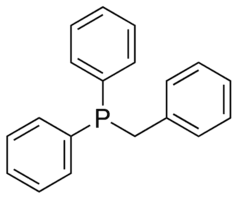
Ligand for Suzuki cross-coupling
Benzyldiphenylphosphine acts as a phosphine ligand in palladium-catalysed Suzuki–Miyaura coupling, helping to form carbon–carbon bonds between aryl or vinyl halides and boronic acids. Its electron-rich phosphorus centre supports the active metal catalyst during the catalytic cycle.
Ligand in homogeneous metal catalysis
As an electron-rich tertiary phosphine, it coordinates to transition metals such as palladium, platinum and other late metals to form defined catalyst complexes. This makes it a useful building block when preparing and tuning organometallic catalysts.
Reagent in organophosphorus synthesis
The nucleophilic phosphorus atom allows the compound to serve as an intermediate in organophosphorus chemistry, including the preparation of phosphonium salts and related derivatives. It is handled under standard inert-atmosphere precautions where required.
Laboratory research and method development
It is used in academic and industrial research for catalyst screening, ligand-effect studies and methodology development in cross-coupling and coordination chemistry. The compound has also been reported in the literature as an inhibitor of cathepsin B in antiarthritic studies.
| Molecular weight | 276.31 |
|---|---|
| Linear formula | C6H5CH2P(C6H5)2 |
| Application | Catalyst for:• Suzuki cross-coupling1• Antiarthritic agent (inhibitor of cathepsin B)2 |
| Melting point | 77-83 °C(lit.) |
| Protective equipment | Eyeshields, Gloves, type N95 (US), type P1 (EN143) respirator filter |
|---|---|
| Water hazard class (WGK, DE) | 3 |
Hazard information is provided for guidance. Always consult the product Safety Data Sheet (SDS), available on request, before handling.
Documentation
Every batch ships with a Certificate of Analysis covering assay, identity and purity; the grade is confirmed against your enquiry. Safety Data Sheets and technical data sheets are available on request.
Supply & logistics
Samples for technical evaluation; bulk MOQ by grade and packaging. In-stock material ships in 7–10 working days, worldwide, with full export documentation.
What is Benzyldiphenylphosphine used for?
+
Benzyldiphenylphosphine is used mainly as a tertiary phosphine ligand in transition-metal catalysis, most notably as a ligand for palladium-catalysed Suzuki cross-coupling. It also serves as a reagent in organophosphorus synthesis and as a research chemical for catalyst and coordination-chemistry studies.
What is the CAS number and molecular formula of Benzyldiphenylphosphine?
+
Its CAS number is 7650-91-1 and its molecular formula is C6H5CH2P(C6H5)2, with a molecular weight of 276.31 g/mol. The MDL number is MFCD00014083 and the PubChem Substance ID is 24872282.
What grade and purity does Tech Serve Solutions supply?
+
Tech Serve Solutions supplies Benzyldiphenylphosphine as a research and synthesis-grade reagent suitable for catalysis and laboratory use; it is a crystalline solid with a literature melting point of 77–83 °C. We do not represent it as USP, BP or EP pharmacopoeia grade. Current assay and a batch Certificate of Analysis are confirmed at the time of quotation.
Is Benzyldiphenylphosphine hazardous, and how should it be handled?
+
It should be handled by trained personnel using appropriate personal protective equipment, including eye protection (eyeshields), gloves and, where dust or aerosols may form, an N95 (US) or P1 (EN143) respirator filter. It carries a German Water Hazard Class (WGK) of 3, meaning it is severely hazardous to water, so contact with drains, soil and watercourses must be prevented. Always consult the current Safety Data Sheet before use.
How is Benzyldiphenylphosphine packed, shipped and exported?
+
It is supplied in tightly closed, appropriately labelled containers sized to the order, from laboratory quantities to bulk, with full documentation. As a water-hazardous (WGK 3) phosphine, it is packed and shipped in line with applicable transport regulations, and Tech Serve Solutions exports worldwide with the relevant compliance paperwork.
How do I request a sample or quote?
+
Contact Tech Serve Solutions with the quantity, required packaging and destination country, and our team will respond with availability, current specification and a quotation. Samples can be arranged where appropriate, subject to availability and shipping requirements.
▶ Related products
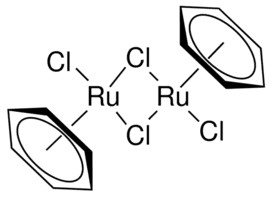
Benzeneruthenium(II) chloride dimer
Ru2(C6H6)2Cl4
Catalysis & Inorganic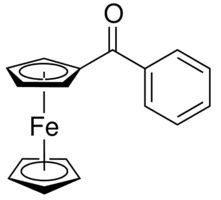
Benzoylferrocene
C17H14FeO
Catalysis & Inorganic
Beryllium
Be
Catalysis & Inorganic
Beryllium oxide
BeO
Catalysis & Inorganic![Bicyclo[2.2.1]hepta-2,5-diene-rhodium(I) chloride dimer — chemical structure, CAS 12257-42-0; Catalysis & Inorganic, fine chemical supplied by Tech Serve Solutions](/_next/image?url=https%3A%2F%2Fpub-f4d920c906024441a773a96f7098e551.r2.dev%2Fimages%2Fproducts%2F12257-42-0.png&w=3840&q=75)
Bicyclo[2.2.1]hepta-2,5-diene-rhodium(I) chloride dimer
Catalysis & Inorganic
![Bis[(10,11-η)-5-[(11bS)-dinaphtho[2,1-d:1′,2′-f][1,3,2]dioxaphosphepin-4-yl- κP4]-5H-dibenz[b,f]azepine]rhodium(I) tetrafluorobo — chemical structure, CAS 1228149-03-8; Catalysis & Inorganic, fine chemical supplied by Tech Serve Solutions](/_next/image?url=https%3A%2F%2Fpub-f4d920c906024441a773a96f7098e551.r2.dev%2Fimages%2Fproducts%2F1228149-03-8.png&w=3840&q=75)
Bis[(10,11-η)-5-[(11bS)-dinaphtho[2,1-d:1′,2′-f][1,3,2]dioxaphosphepin-4-yl- κP4]-5H-dibenz[b,f]azepine]rhodium(I) tetrafluorobo
1-d:1′
Catalysis & Inorganic![Bis[(2-dimethylamino)phenyl]amine nickel(II) chloride (C16H20ClN3Ni) — chemical structure, CAS 1033772-47-2; Catalysis & Inorganic, fine chemical supplied by Tech Serve Solutions](/_next/image?url=https%3A%2F%2Fpub-f4d920c906024441a773a96f7098e551.r2.dev%2Fimages%2Fproducts%2F1033772-47-2.png&w=3840&q=75)
Bis[(2-dimethylamino)phenyl]amine nickel(II) chloride
C16H20ClN3Ni
Catalysis & Inorganic![Bis[(dicyclohexyl)(4-dimethylaminophenyl)phosphine] palladium(II) chloride — chemical structure, CAS 945375-77-9; Catalysis & Inorganic, fine chemical supplied by Tech Serve Solutions](/_next/image?url=https%3A%2F%2Fpub-f4d920c906024441a773a96f7098e551.r2.dev%2Fimages%2Fproducts%2F945375-77-9.png&w=3840&q=75)
Bis[(dicyclohexyl)(4-dimethylaminophenyl)phosphine] palladium(II) chloride
Catalysis & Inorganic
▶ Explore more

Bis(cyclopentadienyl)cobalt(III) hexafluorophosphate
C10H10CoF6P
Catalysis & Inorganic
1-(4-Chlorophenyl)biguanide hydrochloride
ClC6H4NHC(NH)NHC(NH)NH2 · HCl
Chemical Synthesis
Bis(cyclopentadienyl)dimethylzirconium(IV)
Catalysis & Inorganic

1-(4-Chlorophenyl)ethanol
ClC6H4CH(CH3)OH
Chemical Synthesis