
Tris[N,N-bis(trimethylsilyl)amide]neodymium(III)
Tris[N,N-bis(trimethylsilyl)amide]neodymium(III), CAS 148274-47-9, is a specialized organometallic compound with the linear formula Nd(N(Si(CH3)3)2)3 and a molecular weight of 625.39. This neodymium complex serves as a valuable reagent in advanced chemical synthesis, particularly for creating novel lanthanide complexes, organometallic catalysts, and materials for micro/nanoelectronics applications, including thin film deposition.
- IUPAC
- 1,1,1-Trimethyl-N-(trimethylsilyl)silanamine neodymium(III) salt
- Synonyms
- Nd(N(Si(CH3)3)2)31,1,1-Trimethyl-N-(trimethylsilyl)silanamine neodymium(III) salt
![Tris[N,N-bis(trimethylsilyl)amide]neodymium(III) (Nd(N(Si(CH3)3)2)3) — chemical structure, CAS 148274-47-9; Chemistry, fine chemical supplied by Tech Serve Solutions](/_next/image?url=https%3A%2F%2Fpub-f4d920c906024441a773a96f7098e551.r2.dev%2Fimages%2Fproducts%2F148274-47-9.png&w=3840&q=75)
Precursor for Imidophosphinate Complexes
Serves as a key reagent in the synthesis of imidophosphinate complexes featuring lanthanide elements, enabling research in coordination chemistry and materials science.
Synthesis of Neodymium Methoxides
Utilised for the preparation of neodymium methoxides that incorporate thienyl substituents, facilitating the development of new organometallic compounds with tailored properties.
Development of Organolanthanide Complexes
Employed in the creation of phenylene-bridged binuclear organolanthanide complexes, advancing research in catalysis and coordination chemistry.
Near-Infrared Photoluminescent Materials
Acts as a precursor for neodymium(III) complexes exhibiting near-infrared photoluminescence, relevant for optical materials and sensor applications.
Catalysis and C-H Activation
Functions as a reagent in the development of rare-earth metal carboxylate-based catalysts and in regioselective C-H activation reactions, crucial for organic synthesis.
| Molecular weight | 625.39 |
|---|---|
| Linear formula | Nd(N(Si(CH3)3)2)3 |
| Assay | 97% |
| Form | solid |
| Application | Reagent for synthesis of:• Imidophosphinate complexes of lanthanides1• Neodymium methoxides containing thienyl substituents2• Phenylene-bridged binuclear organolanthanide complexes3• Near-infrared photoluminescent neodymium(III) complexes4Reagent for:• Rare-earth metal carboxylate-based catalysts5• Regioselective C-H activation6 |
| Melting point | 156-159 °C(lit.) |


Hazard statements
- H228Flammable solid
- H261In contact with water releases flammable gas
- H314Causes severe skin burns and eye damage
Precautionary statements
- P210Keep away from heat, sparks and open flames. No smoking
- P231Handle under inert gas
- P280Wear protective gloves, clothing and eye/face protection
- P305IF IN EYES
- P310Immediately call a POISON CENTER or doctor
- P422
| Protective equipment | Eyeshields, Faceshields, full-face particle respirator type N100 (US), Gloves, respirator cartridge type N100 (US), type P1 (EN143) respirator filter, type P3 (EN 143) respirator cartridges |
|---|---|
| Flash point | 2 °C / 35.6 °F |
| Transport (UN / ADR) | UN 3396 4.3/PG 2 |
| Water hazard class (WGK, DE) | 3 |
| Hazard codes (EU) | F,C |
| Risk statements (R) | 11-14/15-34 |
| Safety statements (S) | 7/8-16-26-36/37/39-43-45 |
| Supplemental hazards | Reacts violently with water. |
Hazard information is provided for guidance. Always consult the product Safety Data Sheet (SDS), available on request, before handling.
Documentation
Every batch ships with a Certificate of Analysis covering assay, identity and purity; the grade is confirmed against your enquiry. Safety Data Sheets and technical data sheets are available on request.
Supply & logistics
Samples for technical evaluation; bulk MOQ by grade and packaging. In-stock material ships in 7–10 working days, worldwide, with full export documentation.
What is Tris[N,N-bis(trimethylsilyl)amide]neodymium(III) used for?
+
This compound is used as a reagent in the synthesis of various lanthanide complexes, including imidophosphinate complexes, neodymium methoxides, and organolanthanide complexes. It is also employed in the development of rare-earth metal carboxylate-based catalysts and for regioselective C-H activation.
What is the CAS number and formula for Tris[N,N-bis(trimethylsilyl)amide]neodymium(III)?
+
The CAS number is 148274-47-9, and its linear formula is Nd(N(Si(CH3)3)2)3.
What grade and purity does Tech Serve Solutions supply?
+
Tech Serve Solutions supplies this product at a minimum purity of 97%. As a specialist chemical supplier, TSS does not represent this product as USP, BP, EP, or any other pharmacopoeia grade.
How should Tris[N,N-bis(trimethylsilyl)amide]neodymium(III) be handled safely?
+
This compound is highly flammable and reacts violently with water. It can cause severe skin burns and eye damage. Handling requires strict safety precautions, including working under an inert atmosphere, avoiding contact with water, and using appropriate personal protective equipment such as safety goggles, face shields, and chemical-resistant gloves. Respiratory protection is also essential. Refer to the Safety Data Sheet for comprehensive guidance.
How is Tris[N,N-bis(trimethylsilyl)amide]neodymium(III) packed and exported?
+
This hazardous material is packed and exported in compliance with all relevant international regulations for dangerous goods, including UN 3396 classification. TSS has extensive experience in global logistics for sensitive chemical compounds.
How can I request a quote or sample?
+
To request a quote or a sample, please visit the Tech Serve Solutions website and use the 'Request a Quote' or 'Sample Request' forms, providing the product name and CAS number (148274-47-9).
▶ Related products
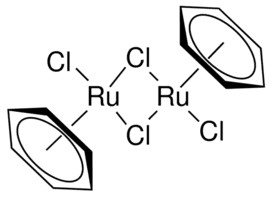
Benzeneruthenium(II) chloride dimer
Ru2(C6H6)2Cl4
Catalysis & Inorganic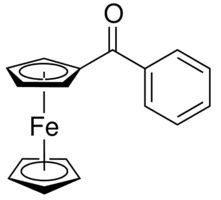
Benzoylferrocene
C17H14FeO
Catalysis & Inorganic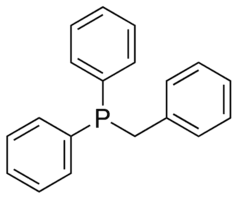
Benzyldiphenylphosphine
C6H5CH2P(C6H5)2
Catalysis & Inorganic
Beryllium
Be
Catalysis & Inorganic
Beryllium oxide
BeO
Catalysis & Inorganic![Bicyclo[2.2.1]hepta-2,5-diene-rhodium(I) chloride dimer — chemical structure, CAS 12257-42-0; Catalysis & Inorganic, fine chemical supplied by Tech Serve Solutions](/_next/image?url=https%3A%2F%2Fpub-f4d920c906024441a773a96f7098e551.r2.dev%2Fimages%2Fproducts%2F12257-42-0.png&w=3840&q=75)
Bicyclo[2.2.1]hepta-2,5-diene-rhodium(I) chloride dimer
Catalysis & Inorganic
![Bis[(10,11-η)-5-[(11bS)-dinaphtho[2,1-d:1′,2′-f][1,3,2]dioxaphosphepin-4-yl- κP4]-5H-dibenz[b,f]azepine]rhodium(I) tetrafluorobo — chemical structure, CAS 1228149-03-8; Catalysis & Inorganic, fine chemical supplied by Tech Serve Solutions](/_next/image?url=https%3A%2F%2Fpub-f4d920c906024441a773a96f7098e551.r2.dev%2Fimages%2Fproducts%2F1228149-03-8.png&w=3840&q=75)
Bis[(10,11-η)-5-[(11bS)-dinaphtho[2,1-d:1′,2′-f][1,3,2]dioxaphosphepin-4-yl- κP4]-5H-dibenz[b,f]azepine]rhodium(I) tetrafluorobo
1-d:1′
Catalysis & Inorganic![Bis[(2-dimethylamino)phenyl]amine nickel(II) chloride (C16H20ClN3Ni) — chemical structure, CAS 1033772-47-2; Catalysis & Inorganic, fine chemical supplied by Tech Serve Solutions](/_next/image?url=https%3A%2F%2Fpub-f4d920c906024441a773a96f7098e551.r2.dev%2Fimages%2Fproducts%2F1033772-47-2.png&w=3840&q=75)
Bis[(2-dimethylamino)phenyl]amine nickel(II) chloride
C16H20ClN3Ni
Catalysis & Inorganic▶ Explore more
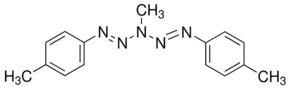
3-Methyl-1,5-di-p-tolyl-1,4-pentazadiene
Chemical Synthesis

3-Methyl-1,5-pentanediol
Chemical Synthesis
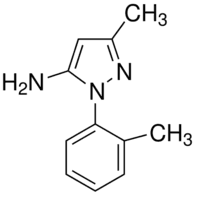
3-Methyl-1-(2-methylphenyl)-1H-pyrazol-5-amine
C11H13N3
Chemical Synthesis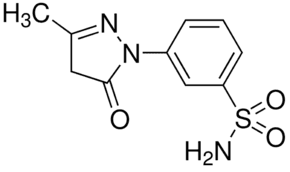
3-Methyl-1-(3′-sulfoamidophenyl)-5-pyrazolone
C10H11N3O3S
Chemical Synthesis