
Triphenylphosphine hydrobromide
Triphenylphosphine hydrobromide (CAS 6399-81-1), with the linear formula (C<sub>6</sub>H<sub>5</sub>)<sub>3</sub>P · HBr and a molecular weight of 343.20 g/mol, is a key reagent in organic synthesis. It serves as a source of triphenylphosphine, often used as a ligand in transition metal catalysis and in various organic transformations. Its hydrobromide salt form offers convenient handling and specific reactivity profiles for researchers and industrial chemists.
- IUPAC
- Ph3P · HBr,Triphenylphosphonium bromide
- Synonyms
- Ph3P · HBrTriphenylphosphonium bromide

Ligand in Catalysis
Triphenylphosphine hydrobromide can act as a precursor to triphenylphosphine ligands, which are widely employed in homogeneous catalysis, particularly in reactions like cross-coupling and hydroformylation involving transition metals.
Reagent in Organic Synthesis
This compound is utilised in various organic reactions, including Wittig-type reactions and as a precursor for preparing other organophosphorus compounds or modifying substrates.
Source of Triphenylphosphine
It provides a stable and easily handled source of triphenylphosphine for applications where direct handling of the free phosphine is less desirable due to its air sensitivity.
| Molecular weight | 343.20 |
|---|---|
| Linear formula | (C6H5)3P · HBr |
| Assay | ≥96.0% (T) |
| Grade | purum |
| Melting point | 196 °C (dec.)(lit.) |


Hazard statements
- H302Harmful if swallowed
- H314Causes severe skin burns and eye damage
Precautionary statements
- P280Wear protective gloves, clothing and eye/face protection
- P305IF IN EYES
- P310Immediately call a POISON CENTER or doctor
| Protective equipment | Eyeshields, Faceshields, full-face particle respirator type N100 (US), Gloves, respirator cartridge type N100 (US), type P1 (EN143) respirator filter, type P3 (EN 143) respirator cartridges |
|---|---|
| Transport (UN / ADR) | UN 3261 8 / PGIII |
| Water hazard class (WGK, DE) | 3 |
| Hazard codes (EU) | C |
| Risk statements (R) | 22-34 |
| Safety statements (S) | 26-36/37/39-45 |
Hazard information is provided for guidance. Always consult the product Safety Data Sheet (SDS), available on request, before handling.
Documentation
Every batch ships with a Certificate of Analysis covering assay, identity and purity; the grade is confirmed against your enquiry. Safety Data Sheets and technical data sheets are available on request.
Supply & logistics
Samples for technical evaluation; bulk MOQ by grade and packaging. In-stock material ships in 7–10 working days, worldwide, with full export documentation.
What is Triphenylphosphine hydrobromide used for?
+
Triphenylphosphine hydrobromide is primarily used as a reagent in organic synthesis and as a precursor for triphenylphosphine ligands in catalysis.
What is the CAS number and formula for Triphenylphosphine hydrobromide?
+
The CAS number is 6399-81-1 and the linear formula is (C<sub>6</sub>H<sub>5</sub>)<sub>3</sub>P · HBr.
What grade and purity does Tech Serve Solutions supply?
+
Tech Serve Solutions supplies Triphenylphosphine hydrobromide with a purity of ≥96.0% (T) and a 'purum' grade. We do not represent this product as meeting USP, BP, or EP pharmacopoeia standards.
How should Triphenylphosphine hydrobromide be handled safely?
+
Triphenylphosphine hydrobromide is corrosive and can cause severe skin burns and eye damage (H314), and is harmful if swallowed (H302). Appropriate personal protective equipment, including eyeshields, gloves, and respiratory protection, must be used. Handle in a well-ventilated area.
How is Triphenylphosphine hydrobromide packed and shipped?
+
This product is shipped according to UN 3261, Class 8, Packing Group III regulations. Specific packaging details for export are available upon request.
How can I request a sample or quote for Triphenylphosphine hydrobromide?
+
To request a sample or a quotation, please contact our sales team through the website or by phone, referencing the product name and CAS number 6399-81-1.
▶ Related products
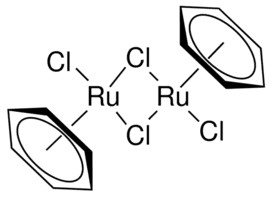
Benzeneruthenium(II) chloride dimer
Ru2(C6H6)2Cl4
Catalysis & Inorganic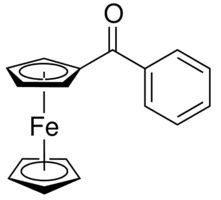
Benzoylferrocene
C17H14FeO
Catalysis & Inorganic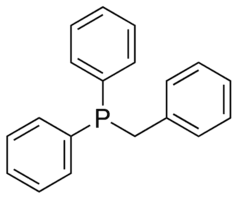
Benzyldiphenylphosphine
C6H5CH2P(C6H5)2
Catalysis & Inorganic
Beryllium
Be
Catalysis & Inorganic
Beryllium oxide
BeO
Catalysis & Inorganic![Bicyclo[2.2.1]hepta-2,5-diene-rhodium(I) chloride dimer — chemical structure, CAS 12257-42-0; Catalysis & Inorganic, fine chemical supplied by Tech Serve Solutions](/_next/image?url=https%3A%2F%2Fpub-f4d920c906024441a773a96f7098e551.r2.dev%2Fimages%2Fproducts%2F12257-42-0.png&w=3840&q=75)
Bicyclo[2.2.1]hepta-2,5-diene-rhodium(I) chloride dimer
Catalysis & Inorganic
![Bis[(10,11-η)-5-[(11bS)-dinaphtho[2,1-d:1′,2′-f][1,3,2]dioxaphosphepin-4-yl- κP4]-5H-dibenz[b,f]azepine]rhodium(I) tetrafluorobo — chemical structure, CAS 1228149-03-8; Catalysis & Inorganic, fine chemical supplied by Tech Serve Solutions](/_next/image?url=https%3A%2F%2Fpub-f4d920c906024441a773a96f7098e551.r2.dev%2Fimages%2Fproducts%2F1228149-03-8.png&w=3840&q=75)
Bis[(10,11-η)-5-[(11bS)-dinaphtho[2,1-d:1′,2′-f][1,3,2]dioxaphosphepin-4-yl- κP4]-5H-dibenz[b,f]azepine]rhodium(I) tetrafluorobo
1-d:1′
Catalysis & Inorganic![Bis[(2-dimethylamino)phenyl]amine nickel(II) chloride (C16H20ClN3Ni) — chemical structure, CAS 1033772-47-2; Catalysis & Inorganic, fine chemical supplied by Tech Serve Solutions](/_next/image?url=https%3A%2F%2Fpub-f4d920c906024441a773a96f7098e551.r2.dev%2Fimages%2Fproducts%2F1033772-47-2.png&w=3840&q=75)
Bis[(2-dimethylamino)phenyl]amine nickel(II) chloride
C16H20ClN3Ni
Catalysis & Inorganic▶ Explore more
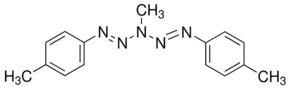
3-Methyl-1,5-di-p-tolyl-1,4-pentazadiene
Chemical Synthesis

3-Methyl-1,5-pentanediol
Chemical Synthesis
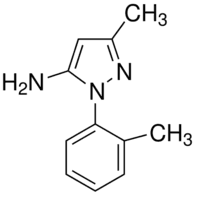
3-Methyl-1-(2-methylphenyl)-1H-pyrazol-5-amine
C11H13N3
Chemical Synthesis
3-Methyl-1-(3′-sulfoamidophenyl)-5-pyrazolone
C10H11N3O3S
Chemical Synthesis