
Palladium(II) chloride
Palladium(II) chloride (CAS: 7647-10-1, Cl2Pd) is a versatile chemical compound with a molecular weight of 177.33 g/mol. It is a key precursor in palladium catalysis, particularly for cross-coupling reactions. Supplied by TSS as a JIS special grade, it is instrumental in synthesizing advanced materials, including semiconducting polymers. Its applications span catalysis, inorganic chemistry, and complex organic synthesis.

Catalysis in Organic Synthesis
Palladium(II) chloride serves as a vital catalyst in numerous organic transformations, most notably in palladium-catalyzed cross-coupling reactions, enabling the formation of carbon-carbon and carbon-heteroatom bonds.
Synthesis of Semiconducting Polymers
This compound is employed in the creation of semiconducting metal-containing polymers, contributing to the development of materials with planar backbones and desirable electronic properties.
Precursor for Other Palladium Compounds
It acts as a foundational material for the synthesis of a variety of other organometallic palladium complexes and catalysts used in specialised chemical research and industrial processes.
| Molecular weight | 177.33 |
|---|---|
| Empirical formula | Cl2Pd |
| Assay | 59-60% Pd basis |
| Grade | JIS special grade |
| Density | 4 g/mL at 25 °C(lit.) |
| Concentration | 5 wt. % in 10 wt. % HCl |
| Application | Application Guide for Palladium Catalyzed Cross-Coupling ReactionsUsed in the synthesis of semiconducting metal-containing polymers in which the polypyrrole backbone has a conformational energy minimum and is nearly planar.1 |
| Melting point | 678-680 °C(lit.) |
Precautionary statements
- P280Wear protective gloves, clothing and eye/face protection
- P301IF SWALLOWED
Hazard information is provided for guidance. Always consult the product Safety Data Sheet (SDS), available on request, before handling.
| Availability | available only in Japan |
|---|
Documentation
Every batch ships with a Certificate of Analysis covering assay, identity and purity; the grade is confirmed against your enquiry. Safety Data Sheets and technical data sheets are available on request.
Supply & logistics
Samples for technical evaluation; bulk MOQ by grade and packaging. In-stock material ships in 7–10 working days, worldwide, with full export documentation.
What is Palladium(II) chloride primarily used for?
+
Palladium(II) chloride is primarily used as a catalyst in palladium-catalyzed cross-coupling reactions and in the synthesis of semiconducting metal-containing polymers.
What is the CAS number and chemical formula for Palladium(II) chloride?
+
The CAS number for Palladium(II) chloride is 7647-10-1, and its chemical formula is Cl2Pd.
What grade and purity does Tech Serve Solutions supply?
+
Tech Serve Solutions supplies Palladium(II) chloride in JIS special grade, with an assay of 59-60% Pd basis. TSS does not represent this product as USP, BP, or EP grade.
What are the safety precautions for handling Palladium(II) chloride?
+
Handle Palladium(II) chloride with appropriate personal protective equipment, including gloves and eye protection, as indicated by P280. In case of accidental ingestion, seek immediate medical attention (P301 + P310).
Is Palladium(II) chloride available for export?
+
Palladium(II) chloride is available only in Japan, as per our current distribution policy.
How can I request a quote or sample for Palladium(II) chloride?
+
To request a quote or sample of Palladium(II) chloride, please contact our sales department through the website's inquiry form or by phone.
▶ Related products
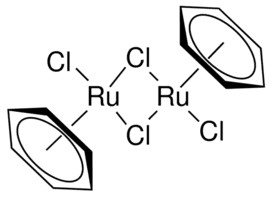
Benzeneruthenium(II) chloride dimer
Ru2(C6H6)2Cl4
Catalysis & Inorganic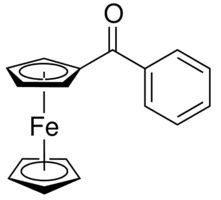
Benzoylferrocene
C17H14FeO
Catalysis & Inorganic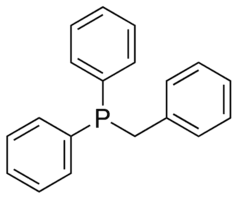
Benzyldiphenylphosphine
C6H5CH2P(C6H5)2
Catalysis & Inorganic
Beryllium
Be
Catalysis & Inorganic
Beryllium oxide
BeO
Catalysis & Inorganic![Bicyclo[2.2.1]hepta-2,5-diene-rhodium(I) chloride dimer — chemical structure, CAS 12257-42-0; Catalysis & Inorganic, fine chemical supplied by Tech Serve Solutions](/_next/image?url=https%3A%2F%2Fpub-f4d920c906024441a773a96f7098e551.r2.dev%2Fimages%2Fproducts%2F12257-42-0.png&w=3840&q=75)
Bicyclo[2.2.1]hepta-2,5-diene-rhodium(I) chloride dimer
Catalysis & Inorganic
![Bis[(10,11-η)-5-[(11bS)-dinaphtho[2,1-d:1′,2′-f][1,3,2]dioxaphosphepin-4-yl- κP4]-5H-dibenz[b,f]azepine]rhodium(I) tetrafluorobo — chemical structure, CAS 1228149-03-8; Catalysis & Inorganic, fine chemical supplied by Tech Serve Solutions](/_next/image?url=https%3A%2F%2Fpub-f4d920c906024441a773a96f7098e551.r2.dev%2Fimages%2Fproducts%2F1228149-03-8.png&w=3840&q=75)
Bis[(10,11-η)-5-[(11bS)-dinaphtho[2,1-d:1′,2′-f][1,3,2]dioxaphosphepin-4-yl- κP4]-5H-dibenz[b,f]azepine]rhodium(I) tetrafluorobo
1-d:1′
Catalysis & Inorganic![Bis[(2-dimethylamino)phenyl]amine nickel(II) chloride (C16H20ClN3Ni) — chemical structure, CAS 1033772-47-2; Catalysis & Inorganic, fine chemical supplied by Tech Serve Solutions](/_next/image?url=https%3A%2F%2Fpub-f4d920c906024441a773a96f7098e551.r2.dev%2Fimages%2Fproducts%2F1033772-47-2.png&w=3840&q=75)
Bis[(2-dimethylamino)phenyl]amine nickel(II) chloride
C16H20ClN3Ni
Catalysis & Inorganic▶ Explore more
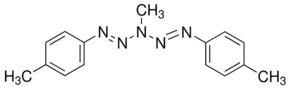
3-Methyl-1,5-di-p-tolyl-1,4-pentazadiene
Chemical Synthesis

3-Methyl-1,5-pentanediol
Chemical Synthesis
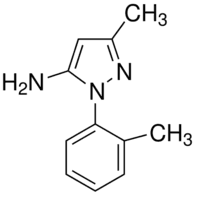
3-Methyl-1-(2-methylphenyl)-1H-pyrazol-5-amine
C11H13N3
Chemical Synthesis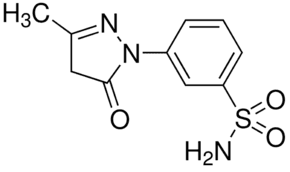
3-Methyl-1-(3′-sulfoamidophenyl)-5-pyrazolone
C10H11N3O3S
Chemical Synthesis