Methyl 6-hydroxy-5-nitropyridine-3-carboxylate
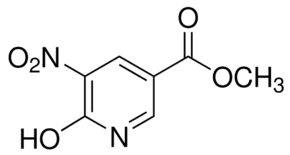
Methyl 6-hydroxy-5-nitropyridine-3-carboxylate (CAS 222970-61-8) is a functionalised nitropyridine building block with the molecular formula C7H6N2O5 and a molecular weight of 198.13 g/mol. It is the methyl ester of 6-hydroxy-5-nitronicotinic acid, combining a methoxycarbonyl group, a nitro group and a hydroxy/pyridone function on a single pyridine ring. This dense substitution makes it a versatile heterocyclic intermediate in pharmaceutical and fine-chemical synthesis. Tech Serve Solutions supplies it as a research-grade material at ≥96.5% (HPLC) assay.
- IUPAC
- 6-Hydroxy-5-nitronicotinic acid methyl ester,Methyl 6-hydroxy-5-nitronicotinate
- Synonyms
- Methyl 6-hydroxy-5-nitropyridine-3-carboxylateMethyl 6-hydroxy-5-nitronicotinate6-Hydroxy-5-nitronicotinic acid methyl esterMethyl 6-oxo-5-nitro-1,6-dihydropyridine-3-carboxylateCAS 222970-61-8
Heterocyclic building block
Used as a multifunctional pyridine scaffold in chemical synthesis, where its ester, nitro and hydroxy substituents provide several reactive handles for elaboration. It is well suited to the construction of more complex nitrogen heterocycles.
Pharmaceutical intermediate
Serves as an intermediate in the preparation of pyridine-based pharmaceutical candidates and related active-ingredient frameworks. The pre-installed functionality shortens routes to substituted nicotinic acid derivatives.
Nitro-group reduction to aminopyridines
The nitro group can be reduced to the corresponding amine, giving access to aminohydroxypyridine and diaminopyridine motifs that are common in medicinal-chemistry libraries.
Ester and hydroxy derivatisation
The methyl ester is available for hydrolysis, amidation or transesterification, while the 6-hydroxy/pyridone function supports O-alkylation, halogenation and further ring functionalisation.
Research and discovery chemistry
Applied in laboratory-scale exploratory and medicinal-chemistry programmes that require a compact, densely substituted pyridine starting material for analogue synthesis.
| Molecular weight | 198.13 |
|---|---|
| Empirical formula | C7H6N2O5 |
| Assay | ≥96.5% (HPLC)97% |

Hazard statements
- H314Causes severe skin burns and eye damage
Precautionary statements
- P280Wear protective gloves, clothing and eye/face protection
- P305IF IN EYES
- P310Immediately call a POISON CENTER or doctor
| Protective equipment | Eyeshields, Faceshields, full-face particle respirator type N100 (US), Gloves, respirator cartridge type N100 (US), type P1 (EN143) respirator filter, type P3 (EN 143) respirator cartridges |
|---|---|
| Transport (UN / ADR) | UN 3261 8 / PGIII |
| Water hazard class (WGK, DE) | 3 |
| Hazard codes (EU) | C |
| Risk statements (R) | 34 |
| Safety statements (S) | 26-36/37/39-45 |
Hazard information is provided for guidance. Always consult the product Safety Data Sheet (SDS), available on request, before handling.
Documentation
Every batch ships with a Certificate of Analysis covering assay, identity and purity; the grade is confirmed against your enquiry. Safety Data Sheets and technical data sheets are available on request.
Supply & logistics
Samples for technical evaluation; bulk MOQ by grade and packaging. In-stock material ships in 7–10 working days, worldwide, with full export documentation.
What is Methyl 6-hydroxy-5-nitropyridine-3-carboxylate used for?
+
It is used principally as a heterocyclic building block and pharmaceutical intermediate. The combination of a methyl ester, a nitro group and a hydroxy/pyridone function on one pyridine ring allows it to be elaborated into a wide range of substituted pyridine and nicotinic acid derivatives in fine-chemical and medicinal-chemistry synthesis.
What is the CAS number and molecular formula of Methyl 6-hydroxy-5-nitropyridine-3-carboxylate?
+
The CAS number is 222970-61-8. Its molecular formula is C7H6N2O5 (Hill notation) with a molecular weight of 198.13 g/mol and Beilstein registry number 195801. It is also known as methyl 6-hydroxy-5-nitronicotinate.
What grade and purity does Tech Serve Solutions supply?
+
Tech Serve Solutions supplies this compound as a research-grade material with an assay of ≥96.5% by HPLC (typically around 97%). We do not represent it as USP, BP or EP pharmacopoeia grade. A Certificate of Analysis is provided with each batch, and specifications can be confirmed at the time of enquiry.
What are the safety and handling requirements for this compound?
+
It is classified as corrosive (GHS05, signal word Danger) and carries hazard statement H314 — causes severe skin burns and eye damage. Handle it with eye and face protection, suitable gloves and respiratory protection, avoid contact and inhalation, and work under local exhaust ventilation. In case of skin or eye contact, rinse cautiously with water and seek medical attention. Always consult the Safety Data Sheet before use.
How is Methyl 6-hydroxy-5-nitropyridine-3-carboxylate packed, shipped and exported?
+
It is packed in securely sealed, labelled containers appropriate to the order quantity, from research quantities to bulk. As a Class 8 corrosive material (UN 3261, Packing Group III), it is shipped in compliance with applicable dangerous-goods regulations, accompanied by the Safety Data Sheet and Certificate of Analysis. Tech Serve Solutions exports worldwide with full documentation.
How do I request a sample or quote?
+
Contact Tech Serve Solutions with your required quantity, purity specification and destination, and our team will respond with availability, lead time and a formal quotation. Samples can be arranged for evaluation where appropriate.
▶ Related products

4-Amino-2-chloropyridine
C5H5ClN2
Heterocyclic Building Blocks
4-Ethynyl-1-methyl-1H-pyrazole
C6H6N2
Heterocyclic Building Blocks
4-Hydroxyquinoline-3-carboxylic acid ethyl ester
C12H11NO3
Heterocyclic Building Blocks
4-isocyanatopyridine
C6H4N2O
Heterocyclic Building Blocks
5-Chloro-2,8-dimethylquinoline
Heterocyclic Building Blocks

5-Chloro-2-methylene-1,3,3-trimethylindoline
Heterocyclic Building Blocks

5-Chloro-2-thiophenecarbonitrile
Heterocyclic Building Blocks

5-ethynyl-1H-pyrazole
C5H4N2
Heterocyclic Building Blocks