
Lead(II) tetrakis(4-cumylphenoxy)phthalocyanine
Lead(II) tetrakis(4-cumylphenoxy)phthalocyanine (CAS: 91083-54-4) is an organolead compound with the formula C92H72N8O4Pb and a molecular weight of 1560.81 g/mol. This phthalocyanine dye exhibits strong absorption at 713 nm, making it suitable for applications in infrared dyes and materials science. Its properties are leveraged in organic electronics and photonic materials.
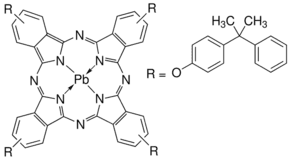
Infrared (IR) Dyes
This compound functions as an effective infrared dye due to its characteristic absorption spectrum, with a lambda max at 713 nm. It is utilized in applications requiring specific light absorption in the near-infrared region.
Materials Science
Its unique molecular structure and optical properties make it a candidate for advanced materials development. Applications may include specialized coatings or functional materials in optical and electronic devices.
Organic and Printed Electronics
The phthalocyanine structure is often explored in organic electronics. This compound may find use in the development of novel semiconducting or optoelectronic components.
Catalysis
Phthalocyanine complexes can exhibit catalytic activity in various chemical transformations. This lead-based variant could be investigated for specific catalytic processes in inorganic chemistry.
| Molecular weight | 1560.81 |
|---|---|
| Empirical formula | C92H72N8O4Pb |
| Composition | Dye content, 90% |
| Melting point | 255 °C (dec.)(lit.) |


Hazard statements
- H302Harmful if swallowed
- H332Harmful if inhaled
- H360May damage fertility or the unborn child
- H373May cause damage to organs through prolonged exposure
- H410Very toxic to aquatic life with long-lasting effects
Precautionary statements
- P201Obtain special instructions before use
- P273Avoid release to the environment
- P308IF exposed or concerned
- P501Dispose of contents and container per local regulations
| Protective equipment | dust mask type N95 (US), Eyeshields, Gloves, type P2 (EN 143) respirator cartridges |
|---|---|
| Transport (UN / ADR) | UN 3077 9 / PGIII |
| Water hazard class (WGK, DE) | 3 |
| Hazard codes (EU) | T,N |
| Risk statements (R) | 61-20/22-33-50/53-62 |
| Safety statements (S) | 53-45-60-61 |
Hazard information is provided for guidance. Always consult the product Safety Data Sheet (SDS), available on request, before handling.
| Absorption | λmax 713 nm |
|---|
Documentation
Every batch ships with a Certificate of Analysis covering assay, identity and purity; the grade is confirmed against your enquiry. Safety Data Sheets and technical data sheets are available on request.
Supply & logistics
Samples for technical evaluation; bulk MOQ by grade and packaging. In-stock material ships in 7–10 working days, worldwide, with full export documentation.
What is Lead(II) tetrakis(4-cumylphenoxy)phthalocyanine used for?
+
Lead(II) tetrakis(4-cumylphenoxy)phthalocyanine is used in applications such as infrared dyes, materials science, organic and printed electronics, and potentially in catalysis due to its absorption properties and molecular structure.
What is the CAS number and formula for Lead(II) tetrakis(4-cumylphenoxy)phthalocyanine?
+
The CAS number is 91083-54-4, and the empirical formula is C92H72N8O4Pb.
What grade and purity does Tech Serve Solutions supply?
+
Tech Serve Solutions supplies Lead(II) tetrakis(4-cumylphenoxy)phthalocyanine with a dye content of 90%. We do not represent this product as USP, BP, or EP grade.
What are the main safety concerns when handling Lead(II) tetrakis(4-cumylphenoxy)phthalocyanine?
+
This compound is classified as Danger with hazards including H302 (Harmful if swallowed), H332 (Harmful if inhaled), H360 (May damage fertility or the unborn child), H373 (May cause damage to organs through prolonged or repeated exposure), and H410 (Very toxic to aquatic life with long lasting effects). Appropriate personal protective equipment, including a dust mask (type N95 or P2 respirator cartridges), eyeshields, and gloves, must be used. Handle with extreme caution and ensure adequate ventilation.
How is this chemical packed and shipped?
+
This product is shipped as UN 3077, Environmentally hazardous substance, solid, n.o.s. (Lead(II) tetrakis(4-cumylphenoxy)phthalocyanine), 9, PGIII. It is packed to comply with international shipping regulations for hazardous materials.
How can I request a quote or sample?
+
To request a quote or a sample of Lead(II) tetrakis(4-cumylphenoxy)phthalocyanine, please contact our sales department through the Tech Serve Solutions website or by phone.
▶ Related products
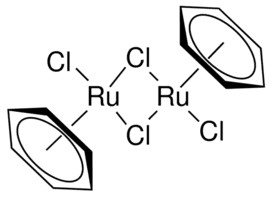
Benzeneruthenium(II) chloride dimer
Ru2(C6H6)2Cl4
Catalysis & Inorganic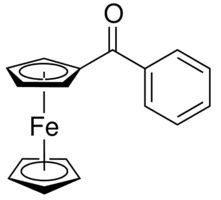
Benzoylferrocene
C17H14FeO
Catalysis & Inorganic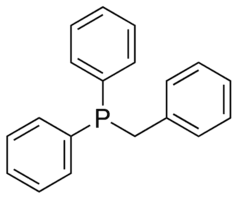
Benzyldiphenylphosphine
C6H5CH2P(C6H5)2
Catalysis & Inorganic
Beryllium
Be
Catalysis & Inorganic
Beryllium oxide
BeO
Catalysis & Inorganic![Bicyclo[2.2.1]hepta-2,5-diene-rhodium(I) chloride dimer — chemical structure, CAS 12257-42-0; Catalysis & Inorganic, fine chemical supplied by Tech Serve Solutions](/_next/image?url=https%3A%2F%2Fpub-f4d920c906024441a773a96f7098e551.r2.dev%2Fimages%2Fproducts%2F12257-42-0.png&w=3840&q=75)
Bicyclo[2.2.1]hepta-2,5-diene-rhodium(I) chloride dimer
Catalysis & Inorganic
![Bis[(10,11-η)-5-[(11bS)-dinaphtho[2,1-d:1′,2′-f][1,3,2]dioxaphosphepin-4-yl- κP4]-5H-dibenz[b,f]azepine]rhodium(I) tetrafluorobo — chemical structure, CAS 1228149-03-8; Catalysis & Inorganic, fine chemical supplied by Tech Serve Solutions](/_next/image?url=https%3A%2F%2Fpub-f4d920c906024441a773a96f7098e551.r2.dev%2Fimages%2Fproducts%2F1228149-03-8.png&w=3840&q=75)
Bis[(10,11-η)-5-[(11bS)-dinaphtho[2,1-d:1′,2′-f][1,3,2]dioxaphosphepin-4-yl- κP4]-5H-dibenz[b,f]azepine]rhodium(I) tetrafluorobo
1-d:1′
Catalysis & Inorganic![Bis[(2-dimethylamino)phenyl]amine nickel(II) chloride (C16H20ClN3Ni) — chemical structure, CAS 1033772-47-2; Catalysis & Inorganic, fine chemical supplied by Tech Serve Solutions](/_next/image?url=https%3A%2F%2Fpub-f4d920c906024441a773a96f7098e551.r2.dev%2Fimages%2Fproducts%2F1033772-47-2.png&w=3840&q=75)
Bis[(2-dimethylamino)phenyl]amine nickel(II) chloride
C16H20ClN3Ni
Catalysis & Inorganic▶ Explore more
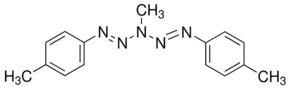
3-Methyl-1,5-di-p-tolyl-1,4-pentazadiene
Chemical Synthesis

3-Methyl-1,5-pentanediol
Chemical Synthesis
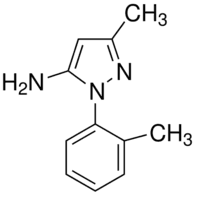
3-Methyl-1-(2-methylphenyl)-1H-pyrazol-5-amine
C11H13N3
Chemical Synthesis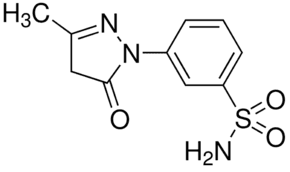
3-Methyl-1-(3′-sulfoamidophenyl)-5-pyrazolone
C10H11N3O3S
Chemical Synthesis