
Lead(II) methanesulfonate solution
Lead(II) methanesulfonate solution (CAS 17570-76-2) with a molecular formula of (CH3SO3)2Pb, presents as a clear liquid with a density of 1.7 g/mL at 25 °C and a refractive index of n20/D 1.423. This aqueous solution, typically supplied at 50 wt. % in water, is primarily recognised for its utility in chemical synthesis and as a catalyst in various chemical processes within inorganic chemistry. Its lead content necessitates careful handling.
- IUPAC
- Plumbous methanesulfonate
- Synonyms
- Plumbous methanesulfonate

Catalysis in Organic Synthesis
Lead(II) methanesulfonate solution serves as a catalyst in specific organic transformations, facilitating reactions where lead-based catalysts are effective. Its role is crucial in advancing synthetic methodologies within chemical research and development.
Inorganic Chemistry Reagent
As a soluble lead salt, this compound is employed in inorganic chemistry for reactions requiring lead ions in solution. It is instrumental in the study and synthesis of various lead-containing inorganic materials.
Chemical Synthesis Intermediate
The compound acts as a precursor or intermediate in the synthesis of more complex chemical entities. Its availability in solution form simplifies handling and integration into multi-step synthetic pathways.
| Molecular weight | 397.40 |
|---|---|
| Linear formula | (CH3SO3)2Pb |
| Density | 1.7 g/mL at 25 °C |
| Refractive index | n20/D 1.423 |
| Concentration | 50 wt. % in H2O |


Hazard statements
- H302Harmful if swallowed
- H315Causes skin irritation
- H318Causes serious eye damage
- H360DF
- H373May cause damage to organs through prolonged exposure
Precautionary statements
- P201Obtain special instructions before use
- P280Wear protective gloves, clothing and eye/face protection
- P305IF IN EYES
- P308IF exposed or concerned
| Transport (UN / ADR) | UN 3265 8/PG 2 |
|---|---|
| Water hazard class (WGK, DE) | 3 |
| Hazard codes (EU) | T |
| Risk statements (R) | 61-20/22-33-38-41-48/20/22-62 |
| Safety statements (S) | 53-26-36/37/39-45 |
Hazard information is provided for guidance. Always consult the product Safety Data Sheet (SDS), available on request, before handling.
Documentation
Every batch ships with a Certificate of Analysis covering assay, identity and purity; the grade is confirmed against your enquiry. Safety Data Sheets and technical data sheets are available on request.
Supply & logistics
Samples for technical evaluation; bulk MOQ by grade and packaging. In-stock material ships in 7–10 working days, worldwide, with full export documentation.
What is Lead(II) methanesulfonate solution used for?
+
Lead(II) methanesulfonate solution is used in catalysis and inorganic chemistry, as well as a general reagent in chemical synthesis. Its applications leverage the chemical properties of lead ions in a soluble format.
What is the CAS number and formula for Lead(II) methanesulfonate solution?
+
The CAS number for Lead(II) methanesulfonate solution is 17570-76-2. The linear formula is (CH3SO3)2Pb.
What grade and purity does Tech Serve Solutions supply?
+
Tech Serve Solutions supplies Lead(II) methanesulfonate solution at a concentration of 50 wt. % in H2O. It is not represented as USP, BP, EP, or any pharmacopoeia grade; it is suitable for technical and research purposes.
How is Lead(II) methanesulfonate solution handled and shipped?
+
Due to its hazardous nature (Danger signal word, H302, H315, H318, H360Df, H373), Lead(II) methanesulfonate solution requires careful handling. It is shipped according to UN 3265 regulations, classification 8/PG 2, with appropriate safety precautions.
Can I request a sample or quote for Lead(II) methanesulfonate solution?
+
Yes, samples and quotes for Lead(II) methanesulfonate solution can be requested through our website or by contacting our sales team directly. Please specify your requirements.
Is Lead(II) methanesulfonate solution a controlled substance?
+
The provided data does not indicate that Lead(II) methanesulfonate solution is a controlled substance. However, users should be aware of its reproductive toxicity (H360Df) and other significant hazards.
▶ Related products
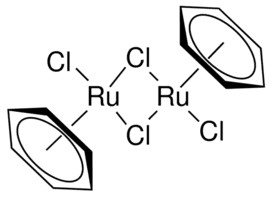
Benzeneruthenium(II) chloride dimer
Ru2(C6H6)2Cl4
Catalysis & Inorganic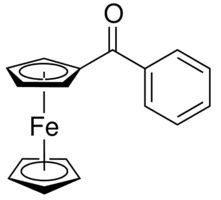
Benzoylferrocene
C17H14FeO
Catalysis & Inorganic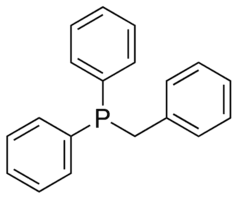
Benzyldiphenylphosphine
C6H5CH2P(C6H5)2
Catalysis & Inorganic
Beryllium
Be
Catalysis & Inorganic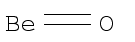
Beryllium oxide
BeO
Catalysis & Inorganic![Bicyclo[2.2.1]hepta-2,5-diene-rhodium(I) chloride dimer — chemical structure, CAS 12257-42-0; Catalysis & Inorganic, fine chemical supplied by Tech Serve Solutions](/_next/image?url=https%3A%2F%2Fpub-f4d920c906024441a773a96f7098e551.r2.dev%2Fimages%2Fproducts%2F12257-42-0.png&w=3840&q=75)
Bicyclo[2.2.1]hepta-2,5-diene-rhodium(I) chloride dimer
Catalysis & Inorganic
![Bis[(10,11-η)-5-[(11bS)-dinaphtho[2,1-d:1′,2′-f][1,3,2]dioxaphosphepin-4-yl- κP4]-5H-dibenz[b,f]azepine]rhodium(I) tetrafluorobo — chemical structure, CAS 1228149-03-8; Catalysis & Inorganic, fine chemical supplied by Tech Serve Solutions](/_next/image?url=https%3A%2F%2Fpub-f4d920c906024441a773a96f7098e551.r2.dev%2Fimages%2Fproducts%2F1228149-03-8.png&w=3840&q=75)
Bis[(10,11-η)-5-[(11bS)-dinaphtho[2,1-d:1′,2′-f][1,3,2]dioxaphosphepin-4-yl- κP4]-5H-dibenz[b,f]azepine]rhodium(I) tetrafluorobo
1-d:1′
Catalysis & Inorganic![Bis[(2-dimethylamino)phenyl]amine nickel(II) chloride (C16H20ClN3Ni) — chemical structure, CAS 1033772-47-2; Catalysis & Inorganic, fine chemical supplied by Tech Serve Solutions](/_next/image?url=https%3A%2F%2Fpub-f4d920c906024441a773a96f7098e551.r2.dev%2Fimages%2Fproducts%2F1033772-47-2.png&w=3840&q=75)
Bis[(2-dimethylamino)phenyl]amine nickel(II) chloride
C16H20ClN3Ni
Catalysis & Inorganic▶ Explore more
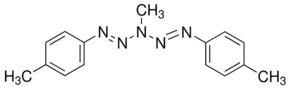
3-Methyl-1,5-di-p-tolyl-1,4-pentazadiene
Chemical Synthesis

3-Methyl-1,5-pentanediol
Chemical Synthesis
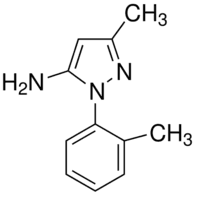
3-Methyl-1-(2-methylphenyl)-1H-pyrazol-5-amine
C11H13N3
Chemical Synthesis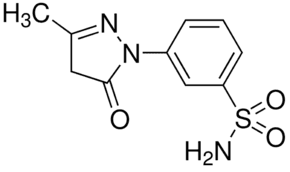
3-Methyl-1-(3′-sulfoamidophenyl)-5-pyrazolone
C10H11N3O3S
Chemical Synthesis