
Chloro(indenyl)bis(triphenylphosphine)ruthenium(II)
Chloro(indenyl)bis(triphenylphosphine)ruthenium(II), CAS 99897-61-7, is a ruthenium-based organometallic compound with a molecular weight of 776.25 g/mol. It serves as a valuable catalyst in organic synthesis, primarily recognised for its role in the olefination of carbonyl compounds and as a precursor for controlled radical polymerization. Its unique structure facilitates complex chemical transformations.
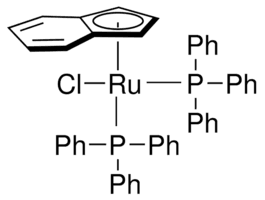
Olefination of Carbonyl Compounds
This compound acts as an effective catalyst for the olefination of carbonyl compounds. It enables the conversion of aldehydes and ketones into alkenes, a fundamental transformation in organic chemistry.
Living Radical Polymerization
It serves as a catalyst precursor in living radical polymerization techniques. This application allows for controlled polymer growth, leading to polymers with defined molecular weights and architectures.
Redox Isomerization Catalyst
The compound catalyses the redox isomerization of propargylic alcohols. This reaction is important for the synthesis of various unsaturated compounds and functional group interconversions.
| Molecular weight | 776.25 |
|---|---|
| Linear formula | C9H7 · RuCl · 2(C18H15P) |
| Impurities tested | ≤1 molar equivalent dichloromethane/acetone, may contain |
| Application | Catalyst for olefination of carbonyl compounds.7 Catalyst precursor for living radical polymerization.8 Catalyst for redox isomerization of propargylic alcohols.9 |

Hazard statements
- H351Suspected of causing cancer
Precautionary statements
- P281Use personal protective equipment as required
| Water hazard class (WGK, DE) | 3 |
|---|---|
| Hazard codes (EU) | Xn |
| Risk statements (R) | 40 |
| Safety statements (S) | 36/37 |
Hazard information is provided for guidance. Always consult the product Safety Data Sheet (SDS), available on request, before handling.
Documentation
Every batch ships with a Certificate of Analysis covering assay, identity and purity; the grade is confirmed against your enquiry. Safety Data Sheets and technical data sheets are available on request.
Supply & logistics
Samples for technical evaluation; bulk MOQ by grade and packaging. In-stock material ships in 7–10 working days, worldwide, with full export documentation.
What is Chloro(indenyl)bis(triphenylphosphine)ruthenium(II) used for?
+
Chloro(indenyl)bis(triphenylphosphine)ruthenium(II) is primarily used as a catalyst for the olefination of carbonyl compounds and as a catalyst precursor for living radical polymerization. It also catalyses the redox isomerization of propargylic alcohols.
What are the CAS number and formula for Chloro(indenyl)bis(triphenylphosphine)ruthenium(II)?
+
The CAS number is 99897-61-7. The linear formula is C₉H₇·RuCl·2(C₁₈H₁₅P).
What grade and purity does Tech Serve Solutions supply?
+
Tech Serve Solutions supplies this chemical for research and laboratory use. The exact grade and purity are available upon request; TSS does not represent this product as USP, BP, or EP grade.
How should Chloro(indenyl)bis(triphenylphosphine)ruthenium(II) be handled?
+
This compound is suspected of causing cancer (H351) and should be handled with appropriate precautions, including adequate ventilation and personal protective equipment (P281).
Is this chemical packed, shipped, or exported internationally?
+
Yes, Tech Serve Solutions is a global supplier and exporter of fine chemicals, including Chloro(indenyl)bis(triphenylphosphine)ruthenium(II), adhering to international shipping regulations.
How can I request a sample or quote?
+
To request a sample or quote for Chloro(indenyl)bis(triphenylphosphine)ruthenium(II), please contact our sales department through the website or provide your details for a prompt response.
▶ Related products
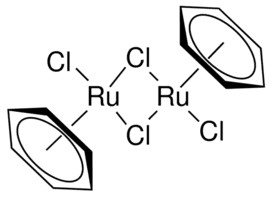
Benzeneruthenium(II) chloride dimer
Ru2(C6H6)2Cl4
Catalysis & Inorganic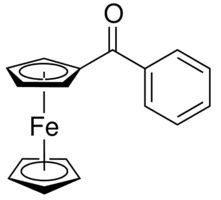
Benzoylferrocene
C17H14FeO
Catalysis & Inorganic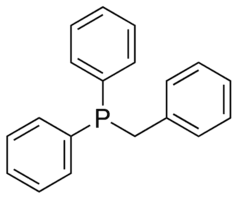
Benzyldiphenylphosphine
C6H5CH2P(C6H5)2
Catalysis & Inorganic
Beryllium
Be
Catalysis & Inorganic
Beryllium oxide
BeO
Catalysis & Inorganic![Bicyclo[2.2.1]hepta-2,5-diene-rhodium(I) chloride dimer — chemical structure, CAS 12257-42-0; Catalysis & Inorganic, fine chemical supplied by Tech Serve Solutions](/_next/image?url=https%3A%2F%2Fpub-f4d920c906024441a773a96f7098e551.r2.dev%2Fimages%2Fproducts%2F12257-42-0.png&w=3840&q=75)
Bicyclo[2.2.1]hepta-2,5-diene-rhodium(I) chloride dimer
Catalysis & Inorganic
![Bis[(10,11-η)-5-[(11bS)-dinaphtho[2,1-d:1′,2′-f][1,3,2]dioxaphosphepin-4-yl- κP4]-5H-dibenz[b,f]azepine]rhodium(I) tetrafluorobo — chemical structure, CAS 1228149-03-8; Catalysis & Inorganic, fine chemical supplied by Tech Serve Solutions](/_next/image?url=https%3A%2F%2Fpub-f4d920c906024441a773a96f7098e551.r2.dev%2Fimages%2Fproducts%2F1228149-03-8.png&w=3840&q=75)
Bis[(10,11-η)-5-[(11bS)-dinaphtho[2,1-d:1′,2′-f][1,3,2]dioxaphosphepin-4-yl- κP4]-5H-dibenz[b,f]azepine]rhodium(I) tetrafluorobo
1-d:1′
Catalysis & Inorganic![Bis[(2-dimethylamino)phenyl]amine nickel(II) chloride (C16H20ClN3Ni) — chemical structure, CAS 1033772-47-2; Catalysis & Inorganic, fine chemical supplied by Tech Serve Solutions](/_next/image?url=https%3A%2F%2Fpub-f4d920c906024441a773a96f7098e551.r2.dev%2Fimages%2Fproducts%2F1033772-47-2.png&w=3840&q=75)
Bis[(2-dimethylamino)phenyl]amine nickel(II) chloride
C16H20ClN3Ni
Catalysis & Inorganic▶ Explore more
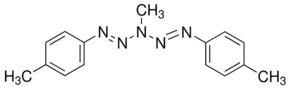
3-Methyl-1,5-di-p-tolyl-1,4-pentazadiene
Chemical Synthesis

3-Methyl-1,5-pentanediol
Chemical Synthesis
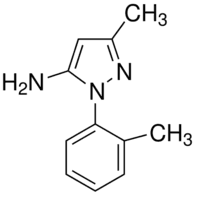
3-Methyl-1-(2-methylphenyl)-1H-pyrazol-5-amine
C11H13N3
Chemical Synthesis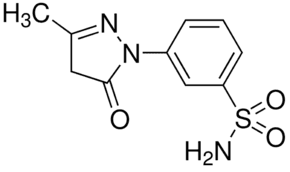
3-Methyl-1-(3′-sulfoamidophenyl)-5-pyrazolone
C10H11N3O3S
Chemical Synthesis