
Bis(cyclopentadienyl)zirconium(IV) bis(trifluoromethanesulfonate)tetrahydrofuran complex
Bis(cyclopentadienyl)zirconium(IV) bis(trifluoromethanesulfonate) tetrahydrofuran complex (CAS 89672-77-5; C12H10F6O6S2Zr · C4H8O; molar mass 591.65 g/mol) is an organometallic zirconocene triflate, supplied as a THF complex. It functions as a transition-metal Lewis acid catalyst and is used in Mukaiyama cross-aldol and Diels-Alder reactions and in polyoxometalate transfer chemistry. Tech Serve Solutions supplies it as a research-grade reagent at 97% assay for synthetic and catalysis laboratories.
- IUPAC
- Bis(cyclopentadienyl)zirconium(IV) bis(trifluoromethanesulfonate) THF complex,Di(cyclopentadienyl)zirconium(IV) bis(trifluoromethanesulfonate) THF complex,Zirconocene bis(trifluoromethanesulfonate) THF complex
- Synonyms
- Bis(cyclopentadienyl)zirconium(IV) bis(trifluoromethanesulfonate) THF complexDi(cyclopentadienyl)zirconium(IV) bis(trifluoromethanesulfonate) THF complexZirconocene bis(trifluoromethanesulfonate) THF complexZirconocene bis(triflate) tetrahydrofuran complexCp2Zr(OTf)2 · THF

Lewis acid catalyst
Acts as a transition-metal-based Lewis acid catalyst, activating carbonyl and related electrophiles in organic synthesis. The triflate ligands confer strong oxophilicity characteristic of zirconocene triflate species.
Mukaiyama cross-aldol reactions
Used as a catalyst for Mukaiyama cross-aldol reactions, promoting carbon–carbon bond formation between silyl enol ethers and aldehydes or ketones.
Diels-Alder reactions
Serves as a Lewis acid catalyst for Diels-Alder cycloadditions, assisting [4+2] additions to construct six-membered carbocyclic and heterocyclic frameworks.
Polyoxometalate transfer chemistry
Employed as a reactant for polyoxometalate transfer in the synthesis of zirconocene polyoxometalate compounds, supporting inorganic and organometallic research.
Glycoconjugate and bioconjugate synthesis
Reported as a reagent in the synthesis of β-hFSH bearing chitobiose units, illustrating its use in specialised carbohydrate and glycoprotein-directed research.
| Molecular weight | 591.65 |
|---|---|
| Empirical formula | C12H10F6O6S2Zr · C4H8O |
| Assay | 97% |
| Application | Reagent for synthesis of β-hFSH with Chitobiose units1Reactant for polyoxometalate transfer for synthesis of zirconocene polyoxometalate2Transition metal based Lewis acid catalyst3Catalyst for: • Mukaiyama cross-aldol reactions4• Diels-Alder reactions5 |

Hazard statements
- H315Causes skin irritation
- H319Causes serious eye irritation
- H335May cause respiratory irritation
Precautionary statements
- P261Avoid breathing dust, fume, gas or vapours
- P305IF IN EYES
| Protective equipment | dust mask type N95 (US), Eyeshields, full-face particle respirator type N100 (US), Gloves, respirator cartridge type N100 (US), type P1 (EN143) respirator filter, type P3 (EN 143) respirator cartridges |
|---|---|
| Flash point | 79 °C / 174.2 °F |
| Water hazard class (WGK, DE) | 3 |
| Hazard codes (EU) | Xi |
| Risk statements (R) | 36/37/38 |
| Safety statements (S) | 16-26-36 |
Hazard information is provided for guidance. Always consult the product Safety Data Sheet (SDS), available on request, before handling.
Documentation
Every batch ships with a Certificate of Analysis covering assay, identity and purity; the grade is confirmed against your enquiry. Safety Data Sheets and technical data sheets are available on request.
Supply & logistics
Samples for technical evaluation; bulk MOQ by grade and packaging. In-stock material ships in 7–10 working days, worldwide, with full export documentation.
What is Bis(cyclopentadienyl)zirconium(IV) bis(trifluoromethanesulfonate) tetrahydrofuran complex used for?
+
It is used as a transition-metal Lewis acid catalyst in organic synthesis, notably for Mukaiyama cross-aldol and Diels-Alder reactions. It also serves as a reactant in polyoxometalate transfer chemistry to form zirconocene polyoxometalates and as a reagent in specialised glycoconjugate synthesis.
What is the CAS number and molecular formula of this compound?
+
The CAS number is 89672-77-5 and the empirical formula is C12H10F6O6S2Zr · C4H8O (Hill notation), corresponding to a molecular weight of 591.65 g/mol. The MDL number is MFCD00192583 and the PubChem Substance ID is 24865920.
What grade and purity does Tech Serve Solutions supply?
+
Tech Serve Solutions supplies this material as a research-grade reagent with a typical assay of 97%. It is offered for synthetic and catalysis applications; we do not represent it as USP, BP or EP pharmacopoeial grade.
What are the safety and handling requirements?
+
It carries GHS07 with the signal word Warning and hazard statements H315 (causes skin irritation), H319 (causes serious eye irritation) and H335 (may cause respiratory irritation). Avoid dust formation; use gloves, eye protection and appropriate respiratory protection (P261, P305+P351+P338). It is rated WGK 3 (highly hazardous to water) and has a flash point of 79 °C, so keep away from ignition sources and water bodies. Consult the SDS before use.
How is this compound packed, shipped and exported?
+
It is packed in tightly sealed containers appropriate to the order quantity, with moisture-protective and clearly labelled packaging suitable for an air- and moisture-sensitive organometallic. Tech Serve Solutions ships and exports worldwide with the relevant documentation and SDS, observing applicable dangerous-goods and water-hazard (WGK 3) handling requirements.
How do I request a sample or quote?
+
Contact Tech Serve Solutions with your required quantity, purity and destination, and our team will respond with availability, lead time and export details. Sample and bulk enquiries are both welcome.
▶ Related products
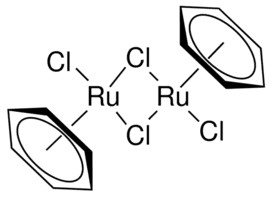
Benzeneruthenium(II) chloride dimer
Ru2(C6H6)2Cl4
Catalysis & Inorganic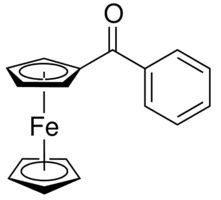
Benzoylferrocene
C17H14FeO
Catalysis & Inorganic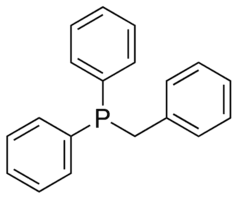
Benzyldiphenylphosphine
C6H5CH2P(C6H5)2
Catalysis & Inorganic
Beryllium
Be
Catalysis & Inorganic
Beryllium oxide
BeO
Catalysis & Inorganic![Bicyclo[2.2.1]hepta-2,5-diene-rhodium(I) chloride dimer — chemical structure, CAS 12257-42-0; Catalysis & Inorganic, fine chemical supplied by Tech Serve Solutions](/_next/image?url=https%3A%2F%2Fpub-f4d920c906024441a773a96f7098e551.r2.dev%2Fimages%2Fproducts%2F12257-42-0.png&w=3840&q=75)
Bicyclo[2.2.1]hepta-2,5-diene-rhodium(I) chloride dimer
Catalysis & Inorganic
![Bis[(10,11-η)-5-[(11bS)-dinaphtho[2,1-d:1′,2′-f][1,3,2]dioxaphosphepin-4-yl- κP4]-5H-dibenz[b,f]azepine]rhodium(I) tetrafluorobo — chemical structure, CAS 1228149-03-8; Catalysis & Inorganic, fine chemical supplied by Tech Serve Solutions](/_next/image?url=https%3A%2F%2Fpub-f4d920c906024441a773a96f7098e551.r2.dev%2Fimages%2Fproducts%2F1228149-03-8.png&w=3840&q=75)
Bis[(10,11-η)-5-[(11bS)-dinaphtho[2,1-d:1′,2′-f][1,3,2]dioxaphosphepin-4-yl- κP4]-5H-dibenz[b,f]azepine]rhodium(I) tetrafluorobo
1-d:1′
Catalysis & Inorganic![Bis[(2-dimethylamino)phenyl]amine nickel(II) chloride (C16H20ClN3Ni) — chemical structure, CAS 1033772-47-2; Catalysis & Inorganic, fine chemical supplied by Tech Serve Solutions](/_next/image?url=https%3A%2F%2Fpub-f4d920c906024441a773a96f7098e551.r2.dev%2Fimages%2Fproducts%2F1033772-47-2.png&w=3840&q=75)
Bis[(2-dimethylamino)phenyl]amine nickel(II) chloride
C16H20ClN3Ni
Catalysis & Inorganic▶ Explore more

Bis(cyclopentadienyl)cobalt(III) hexafluorophosphate
C10H10CoF6P
Catalysis & Inorganic
1-(4-Chlorophenyl)biguanide hydrochloride
ClC6H4NHC(NH)NHC(NH)NH2 · HCl
Chemical Synthesis
Bis(cyclopentadienyl)dimethylzirconium(IV)
Catalysis & Inorganic

1-(4-Chlorophenyl)ethanol
ClC6H4CH(CH3)OH
Chemical Synthesis