Zirconium carboxyethyl acrylate
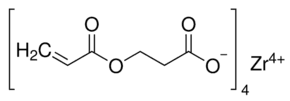
Zirconium carboxyethyl acrylate (CAS: 123633-53-4), with the linear formula Zr(CH2CHCO2CH2CH2CO2)4 and a molecular weight of 663.69 g/mol, is a Zirconium compound supplied as a 60% solution in n-propanol. It is characterised by its high refractive index properties and finds utility as a monomer in polymer science and materials science. This compound is primarily used in chemical synthesis and catalysis.
Polymer Science Applications
As a monomer, Zirconium carboxyethyl acrylate can be utilised in the synthesis of polymers with unique optical and material properties. Its incorporation into polymer chains may enhance refractive index and contribute to specialized material functionalities.
Materials Science and Photonics
The compound's potential for high refractive index makes it a candidate for applications in photonic and optical materials. It may be explored for use in developing optical components, waveguides, and other advanced materials.
Chemical Synthesis and Catalysis
Zirconium carboxyethyl acrylate serves as a building block in various chemical synthesis pathways. It can also be investigated for its role in catalysis, particularly in inorganic chemistry applications.
| Molecular weight | 663.69 |
|---|---|
| Linear formula | Zr(CH2CHCO2CH2CH2CO2)4 |
| Boiling point | 100-121 °C |
| Density | 1.101 g/mL at 25 °C |
| Concentration | 60% (n-propanol) |
| Contains / stabiliser | 500 ppm methyl hydroquinone as inhibitor |
| Application | Please see product no. 686204 for additional application and usage information (Aldrich Technical Bulletin AL-238) |


Hazard statements
- H225Highly flammable liquid and vapour
- H315Causes skin irritation
- H318Causes serious eye damage
- H335May cause respiratory irritation
Precautionary statements
- P210Keep away from heat, sparks and open flames. No smoking
- P261Avoid breathing dust, fume, gas or vapours
- P280Wear protective gloves, clothing and eye/face protection
- P305IF IN EYES
| Protective equipment | Eyeshields, Faceshields, full-face respirator (US), Gloves, multi-purpose combination respirator cartridge (US), type ABEK (EN14387) respirator filter |
|---|---|
| Flash point | 15 °C / 59 °F |
| Transport (UN / ADR) | UN 1993C 3 / PGIII |
| Water hazard class (WGK, DE) | 3 |
| Hazard codes (EU) | F,Xi |
| Risk statements (R) | 11-37/38-41-67 |
| Safety statements (S) | 16-26-39 |
Hazard information is provided for guidance. Always consult the product Safety Data Sheet (SDS), available on request, before handling.
Documentation
Every batch ships with a Certificate of Analysis covering assay, identity and purity; the grade is confirmed against your enquiry. Safety Data Sheets and technical data sheets are available on request.
Supply & logistics
Samples for technical evaluation; bulk MOQ by grade and packaging. In-stock material ships in 7–10 working days, worldwide, with full export documentation.
What is Zirconium carboxyethyl acrylate used for?
+
Zirconium carboxyethyl acrylate is used in polymer science, materials science, chemical synthesis, and catalysis, particularly for its high refractive index properties in photonic and optical materials.
What is the CAS number and formula for Zirconium carboxyethyl acrylate?
+
The CAS number is 123633-53-4, and its linear formula is Zr(CH2CHCO2CH2CH2CO2)4.
What grade and purity does Tech Serve Solutions supply?
+
Tech Serve Solutions supplies Zirconium carboxyethyl acrylate as a 60% solution in n-propanol, containing 500 ppm methyl hydroquinone as inhibitor. TSS does not represent this product as USP, BP, or EP grade.
How should Zirconium carboxyethyl acrylate be handled safely?
+
Zirconium carboxyethyl acrylate is a Danger hazard. It is flammable (H225), causes skin irritation (H315), serious eye damage (H318), and may cause respiratory irritation and drowsiness (H335 + H336). Use appropriate personal protective equipment, including eyeshields, gloves, and a suitable respirator. Handle in a well-ventilated area away from ignition sources.
Is Zirconium carboxyethyl acrylate a controlled substance?
+
The provided data does not indicate that Zirconium carboxyethyl acrylate is a controlled substance.
How is Zirconium carboxyethyl acrylate packed, shipped, and exported?
+
Zirconium carboxyethyl acrylate is shipped under UN 1993 C 3 / PGIII. For specific packing and export details, please contact TSS directly.
How can I request a quote or sample for Zirconium carboxyethyl acrylate?
+
To request a quote or a sample of Zirconium carboxyethyl acrylate, please contact Tech Serve Solutions through our website or sales department.
▶ Related products
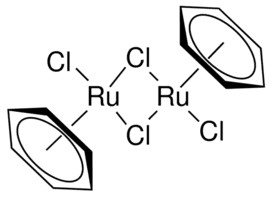
Benzeneruthenium(II) chloride dimer
Ru2(C6H6)2Cl4
Catalysis & Inorganic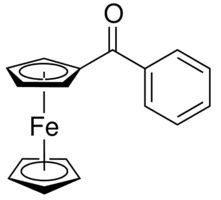
Benzoylferrocene
C17H14FeO
Catalysis & Inorganic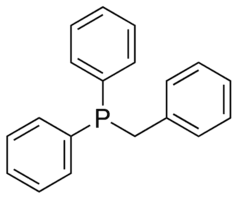
Benzyldiphenylphosphine
C6H5CH2P(C6H5)2
Catalysis & Inorganic
Beryllium
Be
Catalysis & Inorganic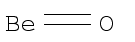
Beryllium oxide
BeO
Catalysis & Inorganic![Bicyclo[2.2.1]hepta-2,5-diene-rhodium(I) chloride dimer — chemical structure, CAS 12257-42-0; Catalysis & Inorganic, fine chemical supplied by Tech Serve Solutions](/_next/image?url=https%3A%2F%2Fpub-f4d920c906024441a773a96f7098e551.r2.dev%2Fimages%2Fproducts%2F12257-42-0.png&w=3840&q=75)
Bicyclo[2.2.1]hepta-2,5-diene-rhodium(I) chloride dimer
Catalysis & Inorganic
![Bis[(10,11-η)-5-[(11bS)-dinaphtho[2,1-d:1′,2′-f][1,3,2]dioxaphosphepin-4-yl- κP4]-5H-dibenz[b,f]azepine]rhodium(I) tetrafluorobo — chemical structure, CAS 1228149-03-8; Catalysis & Inorganic, fine chemical supplied by Tech Serve Solutions](/_next/image?url=https%3A%2F%2Fpub-f4d920c906024441a773a96f7098e551.r2.dev%2Fimages%2Fproducts%2F1228149-03-8.png&w=3840&q=75)
Bis[(10,11-η)-5-[(11bS)-dinaphtho[2,1-d:1′,2′-f][1,3,2]dioxaphosphepin-4-yl- κP4]-5H-dibenz[b,f]azepine]rhodium(I) tetrafluorobo
1-d:1′
Catalysis & Inorganic![Bis[(2-dimethylamino)phenyl]amine nickel(II) chloride (C16H20ClN3Ni) — chemical structure, CAS 1033772-47-2; Catalysis & Inorganic, fine chemical supplied by Tech Serve Solutions](/_next/image?url=https%3A%2F%2Fpub-f4d920c906024441a773a96f7098e551.r2.dev%2Fimages%2Fproducts%2F1033772-47-2.png&w=3840&q=75)
Bis[(2-dimethylamino)phenyl]amine nickel(II) chloride
C16H20ClN3Ni
Catalysis & Inorganic