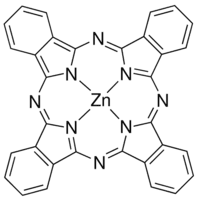
Zinc phthalocyanine
Zinc phthalocyanine (CAS: 14320-04-8, Formula: C32H16N8Zn) is a synthetic pigment and an organometallic compound with a molecular weight of 577.91 g/mol. This phthalocyanine derivative is known for its strong absorption in the visible spectrum, particularly around 701 nm. Its electronic properties make it valuable in materials science, especially for applications in organic electronics and as a donor material in photovoltaic devices. Tech Serve Solutions offers this compound for research and industrial applications.
- IUPAC
- Phthalocyanine zinc salt
Organic Photovoltaics (OPV)
Zinc phthalocyanine serves as a donor material in organic photovoltaic cells. Devices utilising this compound have demonstrated power conversion efficiencies (PCE) of up to 3.9%, with a short-circuit current density (Jsc) of 11.7 mA/cm2 and an open-circuit voltage (Voc) of 0.54 V.
Infrared Dyes and Photonic Materials
Its significant absorption at specific wavelengths, including 701 nm, makes it suitable for applications as an infrared dye. This property is beneficial in the development of photonic and optical materials requiring specific light absorption characteristics.
Chemical Synthesis and Catalysis
As a phthalocyanine derivative, zinc phthalocyanine can be employed in various chemical synthesis pathways and as a catalyst in certain inorganic chemistry applications. Its robust structure lends itself to catalytic processes.
Organic and Printed Electronics
The compound's electronic properties, including its HOMO (5.17 eV) and LUMO (3.78 eV) energy levels, are crucial for its use in organic and printed electronics, contributing to the development of advanced electronic components.
| Molecular weight | 577.91 |
|---|---|
| Empirical formula | C32H16N8Zn |
| Composition | Dye content, 97% |
| Protective equipment | Eyeshields, Gloves, type N95 (US), type P1 (EN143) respirator filter |
|---|---|
| Water hazard class (WGK, DE) | 3 |
Hazard information is provided for guidance. Always consult the product Safety Data Sheet (SDS), available on request, before handling.
| Absorption | λmax 701 nm |
|---|---|
| Orbital Energy | HOMO 5.17 eV (CV)LUMO 3.78 eV (CV) |
| Opv Device Performance | ITO/ZnPc:P60 (1:1)/Bphen/Ag1• Short-circuit current density (Jsc): 11.7 mA/cm2• Open-circuit voltage (Voc): 0.54 V• Fill Factor (FF): 0.62• Power Conversion Efficiency (PCE): 3.9 % |
Documentation
Every batch ships with a Certificate of Analysis covering assay, identity and purity; the grade is confirmed against your enquiry. Safety Data Sheets and technical data sheets are available on request.
Supply & logistics
Samples for technical evaluation; bulk MOQ by grade and packaging. In-stock material ships in 7–10 working days, worldwide, with full export documentation.
What is Zinc Phthalocyanine used for?
+
Zinc Phthalocyanine is used in organic photovoltaics (OPV) as a donor material, in infrared dyes, photonic materials, chemical synthesis, catalysis, and organic electronics.
What are the CAS number and formula for Zinc Phthalocyanine?
+
The CAS number for Zinc Phthalocyanine is 14320-04-8, and its empirical formula is C32H16N8Zn.
What grade and purity does Tech Serve Solutions supply?
+
Tech Serve Solutions supplies Zinc Phthalocyanine with a dye content of 97%. We do not represent this product as USP, BP, or EP grade.
What are the safety and handling recommendations for Zinc Phthalocyanine?
+
For safe handling, use eyeshields and gloves. A type N95 (US) or type P1 (EN143) respirator filter is recommended. The compound has a WGK Germany classification of 3.
How is Zinc Phthalocyanine packed, shipped, and exported?
+
Tech Serve Solutions can provide information on packing, shipping, and export procedures upon request, adhering to all relevant regulations.
How can I request a quote or sample of Zinc Phthalocyanine?
+
To request a quote or sample, please contact our sales team through the website or by phone, providing your specific requirements.
▶ Related products
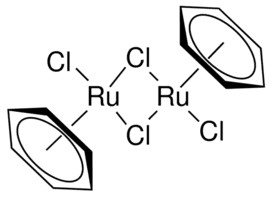
Benzeneruthenium(II) chloride dimer
Ru2(C6H6)2Cl4
Catalysis & Inorganic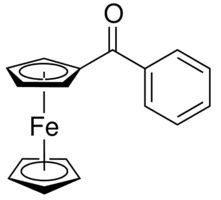
Benzoylferrocene
C17H14FeO
Catalysis & Inorganic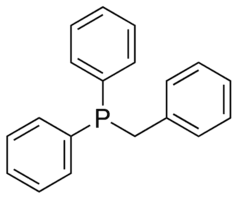
Benzyldiphenylphosphine
C6H5CH2P(C6H5)2
Catalysis & Inorganic
Beryllium
Be
Catalysis & Inorganic
Beryllium oxide
BeO
Catalysis & Inorganic![Bicyclo[2.2.1]hepta-2,5-diene-rhodium(I) chloride dimer — chemical structure, CAS 12257-42-0; Catalysis & Inorganic, fine chemical supplied by Tech Serve Solutions](/_next/image?url=https%3A%2F%2Fpub-f4d920c906024441a773a96f7098e551.r2.dev%2Fimages%2Fproducts%2F12257-42-0.png&w=3840&q=75)
Bicyclo[2.2.1]hepta-2,5-diene-rhodium(I) chloride dimer
Catalysis & Inorganic
![Bis[(10,11-η)-5-[(11bS)-dinaphtho[2,1-d:1′,2′-f][1,3,2]dioxaphosphepin-4-yl- κP4]-5H-dibenz[b,f]azepine]rhodium(I) tetrafluorobo — chemical structure, CAS 1228149-03-8; Catalysis & Inorganic, fine chemical supplied by Tech Serve Solutions](/_next/image?url=https%3A%2F%2Fpub-f4d920c906024441a773a96f7098e551.r2.dev%2Fimages%2Fproducts%2F1228149-03-8.png&w=3840&q=75)
Bis[(10,11-η)-5-[(11bS)-dinaphtho[2,1-d:1′,2′-f][1,3,2]dioxaphosphepin-4-yl- κP4]-5H-dibenz[b,f]azepine]rhodium(I) tetrafluorobo
1-d:1′
Catalysis & Inorganic![Bis[(2-dimethylamino)phenyl]amine nickel(II) chloride (C16H20ClN3Ni) — chemical structure, CAS 1033772-47-2; Catalysis & Inorganic, fine chemical supplied by Tech Serve Solutions](/_next/image?url=https%3A%2F%2Fpub-f4d920c906024441a773a96f7098e551.r2.dev%2Fimages%2Fproducts%2F1033772-47-2.png&w=3840&q=75)
Bis[(2-dimethylamino)phenyl]amine nickel(II) chloride
C16H20ClN3Ni
Catalysis & Inorganic