
Zinc phosphate
Zinc phosphate (CAS: 7779-90-0, Zn₃(PO₄)₂) is an inorganic compound with a molecular weight of 386.11 g/mol. Supplied by Tech Serve Solutions as a powder and chunks with a high assay of 99.998% (trace metals basis), it is primarily utilized as a corrosion inhibitor, particularly in protective coatings and primers. Its applications extend to catalysis, chemical synthesis, and as a dopant or host material in various advanced applications.

Corrosion Inhibition
Zinc phosphate serves as an effective corrosion inhibitor, widely incorporated into paints, primers, and coatings. It forms a protective layer on metal surfaces, significantly enhancing their resistance to rust and degradation.
Chemical Synthesis
As a versatile inorganic compound, zinc phosphate finds application in various chemical synthesis processes. It can act as a reactant or intermediate in the production of other zinc-based compounds and materials.
Dopant and Host Material
In materials science, zinc phosphate is used as a dopant to modify the properties of other materials. It also serves as a host material in the development of phosphors and other advanced functional materials, including those for alternative energy applications.
Catalysis
Zinc phosphate can function as a catalyst or catalyst support in certain chemical reactions. Its properties make it suitable for applications within inorganic chemistry and industrial catalytic processes.
| Molecular weight | 386.11 |
|---|---|
| Linear formula | Zn3(PO4)2 |
| Assay | 99.998% trace metals basis |
| Form | powder and chunks |
| Density | 4.0 g/mL(lit.) |
| Solubility | H2O: insoluble(lit.) |
| Melting point | 900 °C(lit.) |

Hazard statements
- H410Very toxic to aquatic life with long-lasting effects
Precautionary statements
- P273Avoid release to the environment
- P501Dispose of contents and container per local regulations
| Protective equipment | Eyeshields, Gloves |
|---|---|
| Transport (UN / ADR) | UN 3077 9 / PGIII |
| Water hazard class (WGK, DE) | 2 |
| Hazard codes (EU) | N |
| Risk statements (R) | 50/53 |
| Safety statements (S) | 60-61 |
Hazard information is provided for guidance. Always consult the product Safety Data Sheet (SDS), available on request, before handling.
Documentation
Every batch ships with a Certificate of Analysis covering assay, identity and purity; the grade is confirmed against your enquiry. Safety Data Sheets and technical data sheets are available on request.
Supply & logistics
Samples for technical evaluation; bulk MOQ by grade and packaging. In-stock material ships in 7–10 working days, worldwide, with full export documentation.
What is Zinc Phosphate primarily used for?
+
Zinc phosphate is primarily used as a corrosion inhibitor in paints, primers, and coatings. It also finds applications in chemical synthesis, as a dopant, host material, and in catalysis.
What are the CAS number and formula for Zinc Phosphate?
+
The CAS number for Zinc Phosphate is 7779-90-0, and its chemical formula is Zn₃(PO₄)₂.
What grade and purity does Tech Serve Solutions supply?
+
Tech Serve Solutions supplies Zinc Phosphate with an assay of 99.998% on a trace metals basis. This is a high-purity material suitable for research and demanding industrial applications. We do not represent this product as USP, BP, or EP grade unless explicitly stated.
How should Zinc Phosphate be handled safely?
+
Zinc Phosphate is classified with GHS09 symbol and a Warning signal word, carrying hazard statement H410 (Very toxic to aquatic life with long lasting effects). Handle with care, using Eyeshields and Gloves. Ensure proper disposal to avoid environmental contamination, as indicated by precautionary statements P273 and P501.
How is Zinc Phosphate packed and exported?
+
Zinc Phosphate is supplied in forms including powder and chunks. As a UN 3077 / Class 9 / PG III substance, it is handled and exported in compliance with international transportation regulations.
How can I request a quote or sample for Zinc Phosphate?
+
To request a quote or a sample of Zinc Phosphate, please contact the Tech Serve Solutions sales team through our website or direct contact information.
▶ Related products
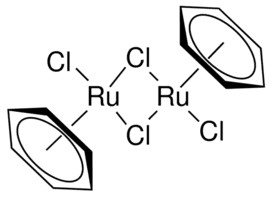
Benzeneruthenium(II) chloride dimer
Ru2(C6H6)2Cl4
Catalysis & Inorganic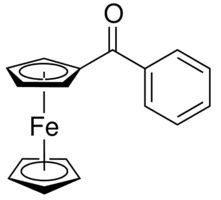
Benzoylferrocene
C17H14FeO
Catalysis & Inorganic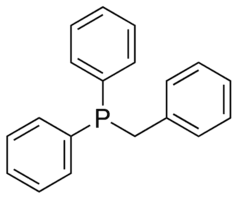
Benzyldiphenylphosphine
C6H5CH2P(C6H5)2
Catalysis & Inorganic
Beryllium
Be
Catalysis & Inorganic
Beryllium oxide
BeO
Catalysis & Inorganic![Bicyclo[2.2.1]hepta-2,5-diene-rhodium(I) chloride dimer — chemical structure, CAS 12257-42-0; Catalysis & Inorganic, fine chemical supplied by Tech Serve Solutions](/_next/image?url=https%3A%2F%2Fpub-f4d920c906024441a773a96f7098e551.r2.dev%2Fimages%2Fproducts%2F12257-42-0.png&w=3840&q=75)
Bicyclo[2.2.1]hepta-2,5-diene-rhodium(I) chloride dimer
Catalysis & Inorganic
![Bis[(10,11-η)-5-[(11bS)-dinaphtho[2,1-d:1′,2′-f][1,3,2]dioxaphosphepin-4-yl- κP4]-5H-dibenz[b,f]azepine]rhodium(I) tetrafluorobo — chemical structure, CAS 1228149-03-8; Catalysis & Inorganic, fine chemical supplied by Tech Serve Solutions](/_next/image?url=https%3A%2F%2Fpub-f4d920c906024441a773a96f7098e551.r2.dev%2Fimages%2Fproducts%2F1228149-03-8.png&w=3840&q=75)
Bis[(10,11-η)-5-[(11bS)-dinaphtho[2,1-d:1′,2′-f][1,3,2]dioxaphosphepin-4-yl- κP4]-5H-dibenz[b,f]azepine]rhodium(I) tetrafluorobo
1-d:1′
Catalysis & Inorganic![Bis[(2-dimethylamino)phenyl]amine nickel(II) chloride (C16H20ClN3Ni) — chemical structure, CAS 1033772-47-2; Catalysis & Inorganic, fine chemical supplied by Tech Serve Solutions](/_next/image?url=https%3A%2F%2Fpub-f4d920c906024441a773a96f7098e551.r2.dev%2Fimages%2Fproducts%2F1033772-47-2.png&w=3840&q=75)
Bis[(2-dimethylamino)phenyl]amine nickel(II) chloride
C16H20ClN3Ni
Catalysis & Inorganic▶ Explore more

Bis(cyclopentadienyl)cobalt(III) hexafluorophosphate
C10H10CoF6P
Catalysis & Inorganic
1-(4-Chlorophenyl)biguanide hydrochloride
ClC6H4NHC(NH)NHC(NH)NH2 · HCl
Chemical Synthesis
Bis(cyclopentadienyl)dimethylzirconium(IV)
Catalysis & Inorganic

1-(4-Chlorophenyl)ethanol
ClC6H4CH(CH3)OH
Chemical Synthesis