
Zinc oxide
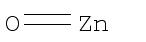
Zinc oxide (CAS: 1314-13-2, Formula: ZnO, Molar Mass: 81.39) is a white, insoluble inorganic compound. It is widely recognized for its semiconductor properties and UV-blocking capabilities. This versatile material finds significant use in chemical synthesis, catalysis, and in the preparation of advanced inorganic framework materials with potential applications in adsorption and ion exchange.
Preparation of Novel Framework Materials
Zinc oxide is employed in the preparation of NaZnSiO3OH, a chiral framework material. This material demonstrates potential applications in areas such as ion exchange and adsorption.
Chemical Synthesis
As a key inorganic compound, zinc oxide serves as a reactant or precursor in various chemical synthesis pathways. Its properties make it valuable in producing other zinc-containing compounds and materials.
Catalysis and Inorganic Chemistry
Its catalytic properties and role in inorganic chemistry make zinc oxide a subject of research and application in various chemical processes. It is a fundamental component in numerous inorganic reactions.
| Molecular weight | 81.39 |
|---|---|
| Linear formula | ZnO |
| Assay | ≥99.0% |
| Density | 1.25 g/mL±0.05 g/mL at 25 °C |
| Concentration | 40 wt. % in ethanol |
| Particle size | <100 nm |
| Application | Employed in the preparation of NaZnSiO3OH, a novel chiral framework material which has potential application in ion exchange, adsorption or catalysis.1 |

Hazard statements
- H410Very toxic to aquatic life with long-lasting effects
Precautionary statements
- P273Avoid release to the environment
- P501Dispose of contents and container per local regulations
| Transport (UN / ADR) | UN 3077 9 / PGIII |
|---|---|
| Water hazard class (WGK, DE) | 2 |
| Hazard codes (EU) | N |
| Risk statements (R) | 50/53 |
| Safety statements (S) | 60-61 |
Hazard information is provided for guidance. Always consult the product Safety Data Sheet (SDS), available on request, before handling.
| Surface Area | 15-25 m2/g |
|---|---|
| Avg Part Size | <35 nm (APS) |
Documentation
Every batch ships with a Certificate of Analysis covering assay, identity and purity; the grade is confirmed against your enquiry. Safety Data Sheets and technical data sheets are available on request.
Supply & logistics
Samples for technical evaluation; bulk MOQ by grade and packaging. In-stock material ships in 7–10 working days, worldwide, with full export documentation.
What is Zinc Oxide used for?
+
Zinc oxide is used in the preparation of novel framework materials like NaZnSiO3OH, which have potential applications in ion exchange and adsorption, and it serves as a key component in chemical synthesis and catalysis within inorganic chemistry.
What is the CAS number and formula for Zinc Oxide?
+
The CAS number for Zinc Oxide is 1314-13-2, and its chemical formula is ZnO.
What grade and purity does Tech Serve Solutions supply for Zinc Oxide?
+
Tech Serve Solutions supplies Zinc Oxide with an assay of ≥99.0%. We do not represent this product as USP, BP, or EP grade.
What are the safety and handling precautions for Zinc Oxide?
+
Zinc Oxide is classified with GHS symbol GHS09 and signal word Warning. It carries hazard statement H410 (Very toxic to aquatic life with long lasting effects). Handle with appropriate personal protective equipment and avoid release into the environment. Refer to the Safety Data Sheet for comprehensive guidance.
Does Tech Serve Solutions export Zinc Oxide?
+
Yes, Tech Serve Solutions is a specialist global supplier and exporter of fine chemicals, including Zinc Oxide.
How can I request a sample or quote for Zinc Oxide?
+
Please contact our sales team or use the online inquiry form on our website to request a sample or a quote for Zinc Oxide.
▶ Related products
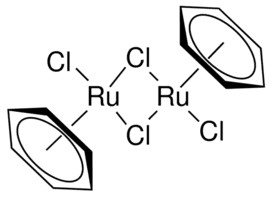
Benzeneruthenium(II) chloride dimer
Ru2(C6H6)2Cl4
Catalysis & Inorganic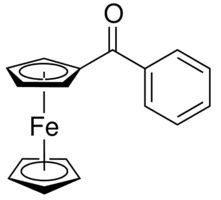
Benzoylferrocene
C17H14FeO
Catalysis & Inorganic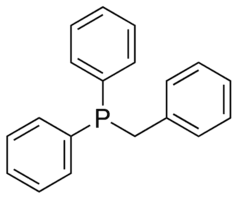
Benzyldiphenylphosphine
C6H5CH2P(C6H5)2
Catalysis & Inorganic
Beryllium
Be
Catalysis & Inorganic
Beryllium oxide
BeO
Catalysis & Inorganic![Bicyclo[2.2.1]hepta-2,5-diene-rhodium(I) chloride dimer — chemical structure, CAS 12257-42-0; Catalysis & Inorganic, fine chemical supplied by Tech Serve Solutions](/_next/image?url=https%3A%2F%2Fpub-f4d920c906024441a773a96f7098e551.r2.dev%2Fimages%2Fproducts%2F12257-42-0.png&w=3840&q=75)
Bicyclo[2.2.1]hepta-2,5-diene-rhodium(I) chloride dimer
Catalysis & Inorganic
![Bis[(10,11-η)-5-[(11bS)-dinaphtho[2,1-d:1′,2′-f][1,3,2]dioxaphosphepin-4-yl- κP4]-5H-dibenz[b,f]azepine]rhodium(I) tetrafluorobo — chemical structure, CAS 1228149-03-8; Catalysis & Inorganic, fine chemical supplied by Tech Serve Solutions](/_next/image?url=https%3A%2F%2Fpub-f4d920c906024441a773a96f7098e551.r2.dev%2Fimages%2Fproducts%2F1228149-03-8.png&w=3840&q=75)
Bis[(10,11-η)-5-[(11bS)-dinaphtho[2,1-d:1′,2′-f][1,3,2]dioxaphosphepin-4-yl- κP4]-5H-dibenz[b,f]azepine]rhodium(I) tetrafluorobo
1-d:1′
Catalysis & Inorganic![Bis[(2-dimethylamino)phenyl]amine nickel(II) chloride (C16H20ClN3Ni) — chemical structure, CAS 1033772-47-2; Catalysis & Inorganic, fine chemical supplied by Tech Serve Solutions](/_next/image?url=https%3A%2F%2Fpub-f4d920c906024441a773a96f7098e551.r2.dev%2Fimages%2Fproducts%2F1033772-47-2.png&w=3840&q=75)
Bis[(2-dimethylamino)phenyl]amine nickel(II) chloride
C16H20ClN3Ni
Catalysis & Inorganic▶ Explore more

Bis(cyclopentadienyl)cobalt(III) hexafluorophosphate
C10H10CoF6P
Catalysis & Inorganic
1-(4-Chlorophenyl)biguanide hydrochloride
ClC6H4NHC(NH)NHC(NH)NH2 · HCl
Chemical Synthesis
Bis(cyclopentadienyl)dimethylzirconium(IV)
Catalysis & Inorganic

1-(4-Chlorophenyl)ethanol
ClC6H4CH(CH3)OH
Chemical Synthesis