
Zinc chloride
Zinc chloride (CAS 7646-85-7), with the linear formula ZnCl₂, is a white crystalline solid with a molecular weight of 136.30. It exhibits good solubility in water and is widely recognised for its utility as a catalyst and dehydrating agent in various chemical syntheses. This compound plays a crucial role in organic chemistry and industrial processes.
- IUPAC
- Dichlorozinc
- Synonyms
- Dichlorozinc

Catalysis in Organic Synthesis
Zinc chloride serves as an effective Lewis acid catalyst in numerous organic transformations, including Friedel-Crafts reactions, esterifications, and the synthesis of heterocyclic compounds. Its ability to coordinate with electron-rich species facilitates a wide range of synthetic pathways.
Dehydrating Agent
Due to its hygroscopic nature, zinc chloride is an excellent dehydrating agent, particularly useful in reactions where the removal of water is critical for driving equilibrium or preventing side reactions. It is employed in processes such as the preparation of anhydrous ethers and in certain textile treatments.
Flux for Soldering and Galvanising
In industrial applications, zinc chloride acts as a flux, cleaning metal surfaces by removing oxides prior to soldering or galvanising. This ensures better adhesion and a more durable finish for metal products.
Intermediate in Chemical Manufacturing
It functions as a key intermediate in the production of other zinc compounds and various chemicals. Its reactivity and properties make it a versatile building block in the chemical industry.
| Molecular weight | 136.30 |
|---|---|
| Linear formula | ZnCl2 |
| Assay | ≥97.0% (AT) |
| Density | 1.07 g/mL at 25 °C |
| Solubility | H2O: soluble0.14 g/mL at 20 °C, clear, colorless |
| pH | 4-5.5 (25 °C, 1 M in H2O) |
| Concentration | 1.9 M in 2-methyltetrahydrofuran25 % (w/w) |
| Melting point | 293 °C(lit.) |
| Vapour pressure | 1 mmHg (428 °C) |
| Particle size | −10 mesh |
| Impurities tested | DNases, none detectedRNases, none detectedphosphatases, none detectedproteases, none detected≤10 mg/kg total nitrogen (N) |
| Suitability | in accordance for filter test |
Precautionary statements
- P273Avoid release to the environment
- P280Wear protective gloves, clothing and eye/face protection
- P305IF IN EYES
- P310Immediately call a POISON CENTER or doctor
- P501Dispose of contents and container per local regulations
| Cation traces | As: ≤2 mg/kgCa: ≤100 mg/kgFe: ≤10 mg/kgPb: ≤50 mg/kg |
|---|---|
| Anion traces | sulfate (SO42-): ≤100 mg/kg |
Hazard information is provided for guidance. Always consult the product Safety Data Sheet (SDS), available on request, before handling.
Documentation
Every batch ships with a Certificate of Analysis covering assay, identity and purity; the grade is confirmed against your enquiry. Safety Data Sheets and technical data sheets are available on request.
Supply & logistics
Samples for technical evaluation; bulk MOQ by grade and packaging. In-stock material ships in 7–10 working days, worldwide, with full export documentation.
What is Zinc chloride primarily used for?
+
Zinc chloride (CAS 7646-85-7) is primarily used as a catalyst and dehydrating agent in chemical synthesis, and as a flux in soldering and galvanising applications.
What are the CAS number and formula for Zinc chloride?
+
The CAS number for Zinc chloride is 7646-85-7, and its linear formula is ZnCl₂.
What grade and purity does Tech Serve Solutions supply?
+
Tech Serve Solutions supplies Zinc chloride with an assay of ≥97.0% (AT). TSS does not represent this product as USP, BP, or EP grade.
What are the key safety considerations when handling Zinc chloride?
+
Zinc chloride is corrosive and harmful. Handle with appropriate personal protective equipment, including gloves, eye protection, and protective clothing. Avoid contact with skin and eyes, and ensure adequate ventilation. Refer to the Safety Data Sheet (SDS) for full details.
How is Zinc chloride packed and shipped by TSS?
+
Zinc chloride is carefully packed to meet international shipping standards and is exported globally by Tech Serve Solutions to meet diverse customer needs.
How can I request a sample or quote for Zinc chloride?
+
To request a sample or a quote for Zinc chloride, please contact our sales team through the TSS website or by phone, providing your specific requirements.
▶ Related products
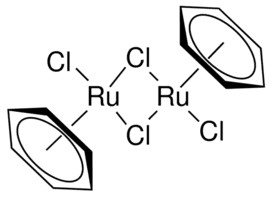
Benzeneruthenium(II) chloride dimer
Ru2(C6H6)2Cl4
Catalysis & Inorganic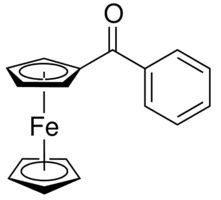
Benzoylferrocene
C17H14FeO
Catalysis & Inorganic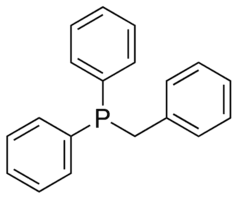
Benzyldiphenylphosphine
C6H5CH2P(C6H5)2
Catalysis & Inorganic
Beryllium
Be
Catalysis & Inorganic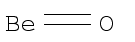
Beryllium oxide
BeO
Catalysis & Inorganic![Bicyclo[2.2.1]hepta-2,5-diene-rhodium(I) chloride dimer — chemical structure, CAS 12257-42-0; Catalysis & Inorganic, fine chemical supplied by Tech Serve Solutions](/_next/image?url=https%3A%2F%2Fpub-f4d920c906024441a773a96f7098e551.r2.dev%2Fimages%2Fproducts%2F12257-42-0.png&w=3840&q=75)
Bicyclo[2.2.1]hepta-2,5-diene-rhodium(I) chloride dimer
Catalysis & Inorganic
![Bis[(10,11-η)-5-[(11bS)-dinaphtho[2,1-d:1′,2′-f][1,3,2]dioxaphosphepin-4-yl- κP4]-5H-dibenz[b,f]azepine]rhodium(I) tetrafluorobo — chemical structure, CAS 1228149-03-8; Catalysis & Inorganic, fine chemical supplied by Tech Serve Solutions](/_next/image?url=https%3A%2F%2Fpub-f4d920c906024441a773a96f7098e551.r2.dev%2Fimages%2Fproducts%2F1228149-03-8.png&w=3840&q=75)
Bis[(10,11-η)-5-[(11bS)-dinaphtho[2,1-d:1′,2′-f][1,3,2]dioxaphosphepin-4-yl- κP4]-5H-dibenz[b,f]azepine]rhodium(I) tetrafluorobo
1-d:1′
Catalysis & Inorganic![Bis[(2-dimethylamino)phenyl]amine nickel(II) chloride (C16H20ClN3Ni) — chemical structure, CAS 1033772-47-2; Catalysis & Inorganic, fine chemical supplied by Tech Serve Solutions](/_next/image?url=https%3A%2F%2Fpub-f4d920c906024441a773a96f7098e551.r2.dev%2Fimages%2Fproducts%2F1033772-47-2.png&w=3840&q=75)
Bis[(2-dimethylamino)phenyl]amine nickel(II) chloride
C16H20ClN3Ni
Catalysis & Inorganic▶ Explore more

Bis(cyclopentadienyl)cobalt(III) hexafluorophosphate
C10H10CoF6P
Catalysis & Inorganic
1-(4-Chlorophenyl)biguanide hydrochloride
ClC6H4NHC(NH)NHC(NH)NH2 · HCl
Chemical Synthesis
Bis(cyclopentadienyl)dimethylzirconium(IV)
Catalysis & Inorganic

1-(4-Chlorophenyl)ethanol
ClC6H4CH(CH3)OH
Chemical Synthesis