
Vanadium(V) oxide
Vanadium(V) oxide (CAS: 1314-62-1), with the chemical formula V2O5 and a molecular weight of 181.88 g/mol, is a significant inorganic compound. It appears as a yellow to red crystalline solid. This compound is primarily utilised as a catalyst in industrial chemical processes, notably in the production of sulphuric acid and in selective ammoxidation reactions. Its applications extend to materials science for specialised ceramic applications.
- IUPAC
- Divanadium pentaoxide,Divanadium pentoxide,Pentaoxodivanadium,Vandia
- Synonyms
- Divanadium pentaoxideDivanadium pentoxidePentaoxodivanadiumVandia
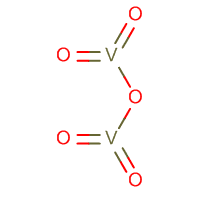
Catalysis
Vanadium(V) oxide is a crucial component in heterogeneous catalysts, particularly for the selective ammoxidation of propylene to acrylonitrile and the conversion of toluene to benzonitrile. It is also used in the production of sulphuric acid via the contact process.
Materials Science
As a precursor for bismuth vanadate phases, V2O5 contributes to the development of advanced ceramic materials. These materials show potential for use in solid oxide fuel cells, water-vapor electrolyzers, and oxygen sensors due to their oxide ion conductivity.
Chemical Synthesis
It serves as a versatile reagent in various chemical synthesis pathways, contributing to the creation of complex inorganic compounds and functional materials.
| Molecular weight | 181.88 |
|---|---|
| Linear formula | V2O5 |
| Assay | 99.99% trace metals basis |
| Density | 3.35 g/mL at 25 °C(lit.) |
| Application | Selective ammoxidation catalysts for such reactions as conversion of toluene to benzonitrile or propylene to acrylonitrile were prepared by a sol-gel method from V2O5, Sb2O3 and high purity hydrogen peroxide.1 Preparation of new stabilized, oxide ion-conducting, bismuth vanadate phases by a microwave assisted method, fromV2O5, Bi2O3 and other solid oxides, was reported. These ceramics show promise in solid oxide fuel cells, water-vapor electrolyzers and oxygen sensors.2 |
| Melting point | 690 °C(lit.) |


Hazard statements
- H302Harmful if swallowed
- H318Causes serious eye damage
- H335May cause respiratory irritation
- H341Suspected of causing genetic defects
- H361D
- H372Causes damage to organs through prolonged exposure
- H411Toxic to aquatic life with long-lasting effects
Precautionary statements
- P261Avoid breathing dust, fume, gas or vapours
- P273Avoid release to the environment
- P280Wear protective gloves, clothing and eye/face protection
- P305IF IN EYES
- P314Get medical attention if you feel unwell
| Protective equipment | Eyeshields, Faceshields, full-face particle respirator type N100 (US), Gloves, respirator cartridge type N100 (US), type P1 (EN143) respirator filter, type P3 (EN 143) respirator cartridges |
|---|---|
| Transport (UN / ADR) | UN 2862 6.1 / PGIII |
| Water hazard class (WGK, DE) | 3 |
| Hazard codes (EU) | T,N |
| Risk statements (R) | 63-20/22-37-41-48/23-51/53-68 |
| Safety statements (S) | 36/37-38-45-61 |
Hazard information is provided for guidance. Always consult the product Safety Data Sheet (SDS), available on request, before handling.
Documentation
Every batch ships with a Certificate of Analysis covering assay, identity and purity; the grade is confirmed against your enquiry. Safety Data Sheets and technical data sheets are available on request.
Supply & logistics
Samples for technical evaluation; bulk MOQ by grade and packaging. In-stock material ships in 7–10 working days, worldwide, with full export documentation.
What is Vanadium(V) oxide used for?
+
Vanadium(V) oxide is widely used as a catalyst in industrial processes such as the production of sulphuric acid and the selective ammoxidation of hydrocarbons. It also finds applications in materials science for developing advanced ceramics used in fuel cells and sensors.
What is the CAS number and chemical formula for Vanadium(V) oxide?
+
The CAS number for Vanadium(V) oxide is 1314-62-1, and its chemical formula is V2O5.
What grade and purity does Tech Serve Solutions supply?
+
Tech Serve Solutions supplies Vanadium(V) oxide with an assay of 99.99% on a trace metals basis. TSS does not represent this product as USP, BP, or EP grade.
How is Vanadium(V) oxide safely handled?
+
Vanadium(V) oxide is classified as Danger, with hazards including H302 + H332 (harmful if swallowed or inhaled), H318 (causes serious eye damage), H335 (may cause respiratory irritation), H341 (suspected of causing genetic defects), H361d (suspected of damaging fertility or the unborn child), H372 (causes damage to organs through prolonged or repeated exposure), and H411 (toxic to aquatic life with long lasting effects). Appropriate personal protective equipment, including eyeshields, face shields, and suitable respirators, must be used. Handle in a well-ventilated area and avoid release to the environment.
How is Vanadium(V) oxide packed, shipped, and exported?
+
Vanadium(V) oxide is shipped according to regulations for hazardous materials, specifically UN 2862, Class 6.1, Packing Group III. TSS can facilitate global export for your requirements.
How can I request a quote or sample?
+
To request a quote or sample of Vanadium(V) oxide, please contact the Tech Serve Solutions sales team through our website or direct inquiry channels.
▶ Related products
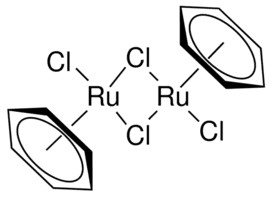
Benzeneruthenium(II) chloride dimer
Ru2(C6H6)2Cl4
Catalysis & Inorganic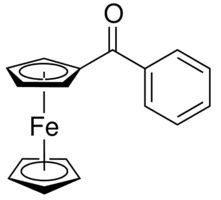
Benzoylferrocene
C17H14FeO
Catalysis & Inorganic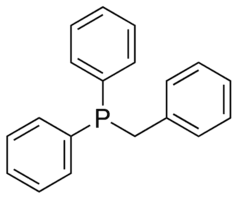
Benzyldiphenylphosphine
C6H5CH2P(C6H5)2
Catalysis & Inorganic
Beryllium
Be
Catalysis & Inorganic
Beryllium oxide
BeO
Catalysis & Inorganic![Bicyclo[2.2.1]hepta-2,5-diene-rhodium(I) chloride dimer — chemical structure, CAS 12257-42-0; Catalysis & Inorganic, fine chemical supplied by Tech Serve Solutions](/_next/image?url=https%3A%2F%2Fpub-f4d920c906024441a773a96f7098e551.r2.dev%2Fimages%2Fproducts%2F12257-42-0.png&w=3840&q=75)
Bicyclo[2.2.1]hepta-2,5-diene-rhodium(I) chloride dimer
Catalysis & Inorganic
![Bis[(10,11-η)-5-[(11bS)-dinaphtho[2,1-d:1′,2′-f][1,3,2]dioxaphosphepin-4-yl- κP4]-5H-dibenz[b,f]azepine]rhodium(I) tetrafluorobo — chemical structure, CAS 1228149-03-8; Catalysis & Inorganic, fine chemical supplied by Tech Serve Solutions](/_next/image?url=https%3A%2F%2Fpub-f4d920c906024441a773a96f7098e551.r2.dev%2Fimages%2Fproducts%2F1228149-03-8.png&w=3840&q=75)
Bis[(10,11-η)-5-[(11bS)-dinaphtho[2,1-d:1′,2′-f][1,3,2]dioxaphosphepin-4-yl- κP4]-5H-dibenz[b,f]azepine]rhodium(I) tetrafluorobo
1-d:1′
Catalysis & Inorganic![Bis[(2-dimethylamino)phenyl]amine nickel(II) chloride (C16H20ClN3Ni) — chemical structure, CAS 1033772-47-2; Catalysis & Inorganic, fine chemical supplied by Tech Serve Solutions](/_next/image?url=https%3A%2F%2Fpub-f4d920c906024441a773a96f7098e551.r2.dev%2Fimages%2Fproducts%2F1033772-47-2.png&w=3840&q=75)
Bis[(2-dimethylamino)phenyl]amine nickel(II) chloride
C16H20ClN3Ni
Catalysis & Inorganic▶ Explore more

Bis(cyclopentadienyl)cobalt(III) hexafluorophosphate
C10H10CoF6P
Catalysis & Inorganic
1-(4-Chlorophenyl)biguanide hydrochloride
ClC6H4NHC(NH)NHC(NH)NH2 · HCl
Chemical Synthesis
Bis(cyclopentadienyl)dimethylzirconium(IV)
Catalysis & Inorganic

1-(4-Chlorophenyl)ethanol
ClC6H4CH(CH3)OH
Chemical Synthesis