Tris[N,N-bis(trimethylsilyl)amide]cerium(III)
Tris[N,N-bis(trimethylsilyl)amide]cerium(III) (CAS: 41836-21-9), with the linear formula Ce(N(Si(CH3)3)2)3 and a molecular weight of 621.27 g/mol, is a highly reactive organometallic compound. Supplied as a solid with 96% purity, it serves as a crucial reactant in the synthesis of various cerium compounds, including amidocerium(IV) oxides and lanthanide complexes with specific electronic properties. It is also utilized in redox reactions for producing tetravalent cerium derivatives.
- IUPAC
- 1,1,1-Trimethyl-N-(trimethylsilyl)silanamine cerium(III) salt
- Synonyms
- Ce(N(Si(CH3)3)2)31,1,1-Trimethyl-N-(trimethylsilyl)silanamine cerium(III) salt
![Tris[N,N-bis(trimethylsilyl)amide]cerium(III) (Ce(N(Si(CH3)3)2)3) — chemical structure, CAS 41836-21-9; Chemistry, fine chemical supplied by Tech Serve Solutions](/_next/image?url=https%3A%2F%2Fpub-f4d920c906024441a773a96f7098e551.r2.dev%2Fimages%2Fproducts%2F41836-21-9.png&w=3840&q=75)
Synthesis of Amidocerium(IV) Oxides
Tris[N,N-bis(trimethylsilyl)amide]cerium(III) acts as a precursor for the synthesis of amidocerium(IV) oxides, contributing to the development of novel ceramic materials.
Ligand Synthesis
This compound is employed in the preparation of sterically encumbered N-heterocyclic carbene ligands, important for advanced catalytic applications.
Lanthanide Complex Formation
It serves as a reactant for creating lanthanide imidodiphosphinate complexes exhibiting electroluminescent properties and lanthanide complexes with oxazoline-phenoxide hybrid chelates.
Oxidation Reactions
Tris[N,N-bis(trimethylsilyl)amide]cerium(III) is used in one-electron oxidation processes to generate tetravalent cerium compounds, useful in various chemical transformations.
| Molecular weight | 621.27 |
|---|---|
| Linear formula | Ce(N(Si(CH3)3)2)3 |
| Assay | 96% |
| Form | solid |
| Application | Reactant for synthesis of:• Amidocerium(IV) oxides1• Sterically encumbered N-heterocyclic carbene ligands2• Lanthanide imidodiphosphinate complexes with electroluminescent properties3• Lanthanide complexes of an oxazoline-phenoxide hybrid chelate4Reactant for:• One-electron oxidation to produce tetravalent cerium compounds5• Addition-elimination reactions across the M-C bond of metal N-heterocyclic carbenes6 |
| Melting point | 132-140 °C(lit.) |


Hazard statements
- H228Flammable solid
- H261In contact with water releases flammable gas
- H314Causes severe skin burns and eye damage
Precautionary statements
- P210Keep away from heat, sparks and open flames. No smoking
- P231Handle under inert gas
- P280Wear protective gloves, clothing and eye/face protection
- P305IF IN EYES
- P310Immediately call a POISON CENTER or doctor
- P422
| Protective equipment | Eyeshields, Faceshields, full-face particle respirator type N100 (US), Gloves, respirator cartridge type N100 (US), type P1 (EN143) respirator filter, type P3 (EN 143) respirator cartridges |
|---|---|
| Flash point | 2 °C / 35.6 °F |
| Transport (UN / ADR) | UN 3396 4.3/PG 2 |
| Water hazard class (WGK, DE) | 3 |
| Hazard codes (EU) | F,C |
| Risk statements (R) | 11-14/15-34 |
| Safety statements (S) | 7/8-16-26-36/37/39-43-45 |
| Supplemental hazards | Reacts violently with water. |
Hazard information is provided for guidance. Always consult the product Safety Data Sheet (SDS), available on request, before handling.
Documentation
Every batch ships with a Certificate of Analysis covering assay, identity and purity; the grade is confirmed against your enquiry. Safety Data Sheets and technical data sheets are available on request.
Supply & logistics
Samples for technical evaluation; bulk MOQ by grade and packaging. In-stock material ships in 7–10 working days, worldwide, with full export documentation.
What is Tris[N,N-bis(trimethylsilyl)amide]cerium(III) used for?
+
It is used as a reactant for synthesizing amidocerium(IV) oxides, sterically encumbered N-heterocyclic carbene ligands, and lanthanide complexes with specific properties. It also acts as a reactant in one-electron oxidation reactions to produce tetravalent cerium compounds.
What is the CAS number and chemical formula?
+
The CAS number is 41836-21-9, and the linear chemical formula is Ce(N(Si(CH3)3)2)3.
What grade and purity does Tech Serve Solutions supply?
+
Tech Serve Solutions supplies Tris[N,N-bis(trimethylsilyl)amide]cerium(III) at 96% purity. This is a research-grade material, and we do not represent it as USP, BP, or EP grade.
What are the primary safety concerns when handling this chemical?
+
This compound is a Danger hazard, flammable solid (H228), reacts violently with water (H261, supplemental hazard statement), and causes severe skin burns and eye damage (H314). Extreme caution and appropriate personal protective equipment are required.
How is this chemical shipped or exported?
+
This product is classified under UN 3396, hazard class 4.3 (Dangerous when wet substance), packing group II. It is exported in compliance with all relevant international shipping regulations for hazardous materials.
How can I request a quote or sample?
+
To request a quote or a sample, please contact our sales department through the TSS website or by calling our direct line. Please specify the product name and CAS number.
▶ Related products
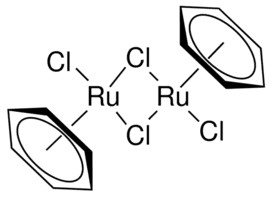
Benzeneruthenium(II) chloride dimer
Ru2(C6H6)2Cl4
Catalysis & Inorganic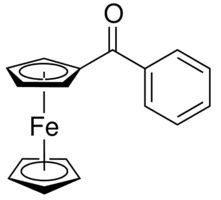
Benzoylferrocene
C17H14FeO
Catalysis & Inorganic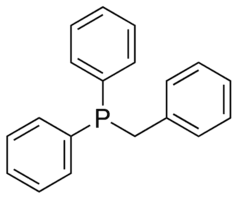
Benzyldiphenylphosphine
C6H5CH2P(C6H5)2
Catalysis & Inorganic
Beryllium
Be
Catalysis & Inorganic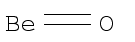
Beryllium oxide
BeO
Catalysis & Inorganic![Bicyclo[2.2.1]hepta-2,5-diene-rhodium(I) chloride dimer — chemical structure, CAS 12257-42-0; Catalysis & Inorganic, fine chemical supplied by Tech Serve Solutions](/_next/image?url=https%3A%2F%2Fpub-f4d920c906024441a773a96f7098e551.r2.dev%2Fimages%2Fproducts%2F12257-42-0.png&w=3840&q=75)
Bicyclo[2.2.1]hepta-2,5-diene-rhodium(I) chloride dimer
Catalysis & Inorganic
![Bis[(10,11-η)-5-[(11bS)-dinaphtho[2,1-d:1′,2′-f][1,3,2]dioxaphosphepin-4-yl- κP4]-5H-dibenz[b,f]azepine]rhodium(I) tetrafluorobo — chemical structure, CAS 1228149-03-8; Catalysis & Inorganic, fine chemical supplied by Tech Serve Solutions](/_next/image?url=https%3A%2F%2Fpub-f4d920c906024441a773a96f7098e551.r2.dev%2Fimages%2Fproducts%2F1228149-03-8.png&w=3840&q=75)
Bis[(10,11-η)-5-[(11bS)-dinaphtho[2,1-d:1′,2′-f][1,3,2]dioxaphosphepin-4-yl- κP4]-5H-dibenz[b,f]azepine]rhodium(I) tetrafluorobo
1-d:1′
Catalysis & Inorganic![Bis[(2-dimethylamino)phenyl]amine nickel(II) chloride (C16H20ClN3Ni) — chemical structure, CAS 1033772-47-2; Catalysis & Inorganic, fine chemical supplied by Tech Serve Solutions](/_next/image?url=https%3A%2F%2Fpub-f4d920c906024441a773a96f7098e551.r2.dev%2Fimages%2Fproducts%2F1033772-47-2.png&w=3840&q=75)
Bis[(2-dimethylamino)phenyl]amine nickel(II) chloride
C16H20ClN3Ni
Catalysis & Inorganic