Tris(acetonitrile)tricarbonyltungsten(0)
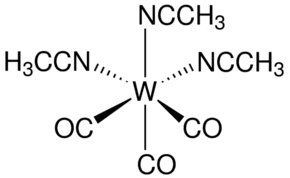
Tris(acetonitrile)tricarbonyltungsten(0) (CAS: 16800-47-8) is an organometallic compound with the linear formula W(NCCH3)3(CO)3 and a molecular weight of 391.03 g/mol. This tungsten carbonyl complex serves as a valuable catalyst in organic synthesis, particularly for allylic substitutions. It is also employed as a reactant in the preparation of various complex inorganic and organometallic structures, contributing to advancements in catalysis and material science.
- IUPAC
- Tris(acetonitrile)tungsten(0)
- Synonyms
- Tris(acetonitrile)tungsten(0)
Catalysis of Allylic Substitutions
This tungsten complex acts as an effective catalyst for promoting allylic substitution reactions. Its unique electronic and steric properties facilitate the transformation of allylic substrates, finding use in the synthesis of complex organic molecules.
Synthesis of Disilyl-substituted Cyclopentadienes
Tris(acetonitrile)tricarbonyltungsten(0) is utilised as a reactant in the preparation of mixed disilyl-substituted cyclopentadiene derivatives. These compounds can serve as ligands in organometallic chemistry and catalysis.
Preparation of Ansa Compounds
The compound is involved in the synthesis of catalytically active ansa compounds that feature cycloalkyl moieties. These specialised complexes are important in homogeneous catalysis due to their defined structures.
Assembly of Mixed Metal Dinuclear Carbonyl Complexes
It serves as a precursor for the stepwise assembly of mixed metal dinuclear carbonyl complexes. This allows for the construction of intricate multi-metallic frameworks with potential catalytic or material applications.
Cycloaddition Reactions
This tungsten complex participates in the cycloaddition of M(CO)3-coordinated-cyanoazepine with alkynes, leading to the formation of novel heterocyclic ring systems.
| Molecular weight | 391.03 |
|---|---|
| Linear formula | W(NCCH3)3(CO)3 |
| Application | Catalyst for allylic substitutions1Reactant for: • Mixed disilyl-substituted cyclopentadiene derivatives2• Synthesis of catalytically active ansa compounds with cycloalkyl moieties3• Stepwise assembly of mixed metal dinuclear carbonyl complexes4• Cycloaddition of M(CO)3-coordinated-cyanoazepine with alkynes5 |
| Melting point | >300 °C(lit.) |

Hazard statements
- H300Fatal if swallowed
- H310Fatal in contact with skin
- H330Fatal if inhaled
Precautionary statements
- P260Do not breathe dust, fume, gas, mist, vapours or spray
- P264Wash thoroughly after handling
- P280Wear protective gloves, clothing and eye/face protection
- P284Wear respiratory protection
- P302IF ON SKIN
- P310Immediately call a POISON CENTER or doctor
| Protective equipment | Eyeshields, Faceshields, full-face particle respirator type N100 (US), Gloves, respirator cartridge type N100 (US), type P1 (EN143) respirator filter, type P3 (EN 143) respirator cartridges |
|---|---|
| Transport (UN / ADR) | UN 3466 6.1 / PGI |
| Water hazard class (WGK, DE) | 3 |
| Hazard codes (EU) | T+ |
| Risk statements (R) | 26/27/28 |
| Safety statements (S) | 7/9-28-36/37-45 |
Hazard information is provided for guidance. Always consult the product Safety Data Sheet (SDS), available on request, before handling.
Documentation
Every batch ships with a Certificate of Analysis covering assay, identity and purity; the grade is confirmed against your enquiry. Safety Data Sheets and technical data sheets are available on request.
Supply & logistics
Samples for technical evaluation; bulk MOQ by grade and packaging. In-stock material ships in 7–10 working days, worldwide, with full export documentation.
What is Tris(acetonitrile)tricarbonyltungsten(0) used for?
+
Tris(acetonitrile)tricarbonyltungsten(0) is primarily used as a catalyst for allylic substitutions and as a reactant in the synthesis of various organometallic compounds, including mixed disilyl-substituted cyclopentadiene derivatives and ansa compounds.
What is the CAS number and formula for Tris(acetonitrile)tricarbonyltungsten(0)?
+
The CAS number is 16800-47-8 and its linear formula is W(NCCH3)3(CO)3.
What grade and purity does Tech Serve Solutions supply?
+
Tech Serve Solutions supplies Tris(acetonitrile)tricarbonyltungsten(0) as a research-grade chemical. We do not represent this product as USP, BP, EP, or any other pharmacopoeia standard.
How should Tris(acetonitrile)tricarbonyltungsten(0) be handled?
+
Tris(acetonitrile)tricarbonyltungsten(0) is classified as acutely toxic if swallowed, in contact with skin, or if inhaled (H300, H310, H330). Strict adherence to safety protocols is essential, including the use of appropriate personal protective equipment such as eyeshields, face shields, gloves, and a full-face particle respirator (e.g., type N100 US, or P3 EN143).
How is Tris(acetonitrile)tricarbonyltungsten(0) packed and shipped?
+
This compound is shipped as a UN 3466 substance, Hazard Class 6.1, Packing Group I. TSS ensures compliant packaging and export documentation for international shipments.
How can I request a sample or quote for Tris(acetonitrile)tricarbonyltungsten(0)?
+
To request a sample or a formal quotation, please contact our sales department via the website or direct email, providing your specific requirements and shipping details.
▶ Related products
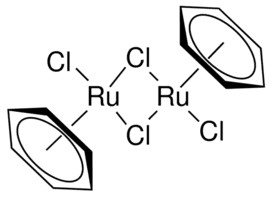
Benzeneruthenium(II) chloride dimer
Ru2(C6H6)2Cl4
Catalysis & Inorganic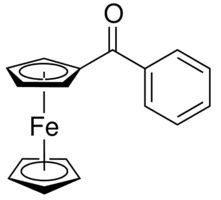
Benzoylferrocene
C17H14FeO
Catalysis & Inorganic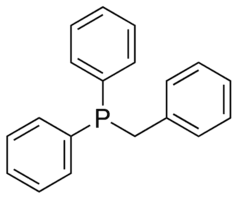
Benzyldiphenylphosphine
C6H5CH2P(C6H5)2
Catalysis & Inorganic
Beryllium
Be
Catalysis & Inorganic
Beryllium oxide
BeO
Catalysis & Inorganic![Bicyclo[2.2.1]hepta-2,5-diene-rhodium(I) chloride dimer — chemical structure, CAS 12257-42-0; Catalysis & Inorganic, fine chemical supplied by Tech Serve Solutions](/_next/image?url=https%3A%2F%2Fpub-f4d920c906024441a773a96f7098e551.r2.dev%2Fimages%2Fproducts%2F12257-42-0.png&w=3840&q=75)
Bicyclo[2.2.1]hepta-2,5-diene-rhodium(I) chloride dimer
Catalysis & Inorganic
![Bis[(10,11-η)-5-[(11bS)-dinaphtho[2,1-d:1′,2′-f][1,3,2]dioxaphosphepin-4-yl- κP4]-5H-dibenz[b,f]azepine]rhodium(I) tetrafluorobo — chemical structure, CAS 1228149-03-8; Catalysis & Inorganic, fine chemical supplied by Tech Serve Solutions](/_next/image?url=https%3A%2F%2Fpub-f4d920c906024441a773a96f7098e551.r2.dev%2Fimages%2Fproducts%2F1228149-03-8.png&w=3840&q=75)
Bis[(10,11-η)-5-[(11bS)-dinaphtho[2,1-d:1′,2′-f][1,3,2]dioxaphosphepin-4-yl- κP4]-5H-dibenz[b,f]azepine]rhodium(I) tetrafluorobo
1-d:1′
Catalysis & Inorganic![Bis[(2-dimethylamino)phenyl]amine nickel(II) chloride (C16H20ClN3Ni) — chemical structure, CAS 1033772-47-2; Catalysis & Inorganic, fine chemical supplied by Tech Serve Solutions](/_next/image?url=https%3A%2F%2Fpub-f4d920c906024441a773a96f7098e551.r2.dev%2Fimages%2Fproducts%2F1033772-47-2.png&w=3840&q=75)
Bis[(2-dimethylamino)phenyl]amine nickel(II) chloride
C16H20ClN3Ni
Catalysis & Inorganic