
Tris[μ-[(1,2-η:4,5-η)-(1E,4E)-1,5-bis(4-methoxyphenyl)-1,4-pentadien-3-one]]di-palladium
Tris[μ-[(1,2-η:4,5-η)-(1E,4E)-1,5-bis(4-methoxyphenyl)-1,4-pentadien-3-one]]di-palladium (CAS 52552-56-4) is a palladium complex with the empirical formula C57H54O9Pd2. This organometallic compound serves as a valuable catalyst in various chemical syntheses. Its specific structure and reactivity make it suitable for applications requiring precise control over catalytic processes, particularly in organic transformations.
- IUPAC
- 1,5-Bis(4-methoxyphenyl)-1,4-pentadien-3-one palladium complex
- Synonyms
- 1,5-Bis(4-methoxyphenyl)-1,4-pentadien-3-one palladium complex52552-56-4C57H54O9Pd2
![Tris[μ-[(1,2-η:4,5-η)-(1E,4E)-1,5-bis(4-methoxyphenyl)-1,4-pentadien-3-one]]di-palladium (5-η)-(1E) — chemical structure, CAS 52552-56-4; Chemistry, fine chemical supplied by Tech Serve Solutions](/_next/image?url=https%3A%2F%2Fpub-f4d920c906024441a773a96f7098e551.r2.dev%2Fimages%2Fproducts%2F52552-56-4.png&w=3840&q=75)
Homogeneous Catalysis
This palladium complex functions as an effective homogeneous catalyst in organic synthesis. It facilitates a range of coupling reactions and other transformations requiring precise catalytic activity.
Chemical Synthesis Intermediate
Used as a reagent in the synthesis of complex organic molecules, particularly in academic research and industrial development settings. Its specific coordination chemistry enables tailored synthetic routes.
Palladium-Catalyzed Reactions
Applicable in various palladium-catalyzed cross-coupling reactions. The unique ligand structure can influence selectivity and efficiency in these synthetic methodologies.
| Empirical formula | C57H54O9Pd2 |
|---|---|
| Melting point | 138-145 °C |

Hazard statements
- H302Harmful if swallowed
- H315Causes skin irritation
- H319Causes serious eye irritation
- H335May cause respiratory irritation
Precautionary statements
- P261Avoid breathing dust, fume, gas or vapours
- P280Wear protective gloves, clothing and eye/face protection
- P305IF IN EYES
| Water hazard class (WGK, DE) | 3 |
|---|---|
| Hazard codes (EU) | Xn |
| Risk statements (R) | 20/21/22-36/37/38 |
| Safety statements (S) | 26-36/37 |
Hazard information is provided for guidance. Always consult the product Safety Data Sheet (SDS), available on request, before handling.
Documentation
Every batch ships with a Certificate of Analysis covering assay, identity and purity; the grade is confirmed against your enquiry. Safety Data Sheets and technical data sheets are available on request.
Supply & logistics
Samples for technical evaluation; bulk MOQ by grade and packaging. In-stock material ships in 7–10 working days, worldwide, with full export documentation.
What is Tris[μ-[(1,2-η:4,5-η)-(1E,4E)-1,5-bis(4-methoxyphenyl)-1,4-pentadien-3-one]]di-palladium used for?
+
This compound is primarily used as a catalyst in various chemical synthesis applications, particularly in homogeneous catalysis and palladium-catalyzed reactions.
What are the CAS number and formula for this product?
+
The CAS number is 52552-56-4, and the empirical formula is C57H54O9Pd2.
What grade and purity does Tech Serve Solutions supply?
+
Tech Serve Solutions supplies this compound as a research-grade chemical. We do not represent it as meeting USP, BP, EP, or any other pharmacopoeial standards.
How should Tris[μ-[(1,2-η:4,5-η)-(1E,4E)-1,5-bis(4-methoxyphenyl)-1,4-pentadien-3-one]]di-palladium be handled?
+
This compound is classified as harmful if swallowed, in contact with skin, or if inhaled (H302 + H312 + H332). It also causes skin irritation (H315), serious eye irritation (H319), and may cause respiratory irritation (H335). Handle with appropriate personal protective equipment, including gloves, eye protection, and respiratory protection, in a well-ventilated area.
Is this product available for export?
+
Yes, Tech Serve Solutions is a global supplier and exporter of fine chemicals, including this palladium complex.
How can I request a sample or quote?
+
To request a sample or a quote, please contact our sales team through the website or by phone, providing the product name and CAS number.
▶ Related products

Benzeneruthenium(II) chloride dimer
Ru2(C6H6)2Cl4
Catalysis & Inorganic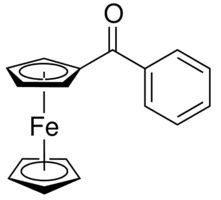
Benzoylferrocene
C17H14FeO
Catalysis & Inorganic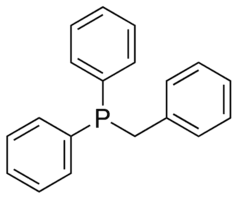
Benzyldiphenylphosphine
C6H5CH2P(C6H5)2
Catalysis & Inorganic
Beryllium
Be
Catalysis & Inorganic
Beryllium oxide
BeO
Catalysis & Inorganic![Bicyclo[2.2.1]hepta-2,5-diene-rhodium(I) chloride dimer — chemical structure, CAS 12257-42-0; Catalysis & Inorganic, fine chemical supplied by Tech Serve Solutions](/_next/image?url=https%3A%2F%2Fpub-f4d920c906024441a773a96f7098e551.r2.dev%2Fimages%2Fproducts%2F12257-42-0.png&w=3840&q=75)
Bicyclo[2.2.1]hepta-2,5-diene-rhodium(I) chloride dimer
Catalysis & Inorganic
![Bis[(10,11-η)-5-[(11bS)-dinaphtho[2,1-d:1′,2′-f][1,3,2]dioxaphosphepin-4-yl- κP4]-5H-dibenz[b,f]azepine]rhodium(I) tetrafluorobo — chemical structure, CAS 1228149-03-8; Catalysis & Inorganic, fine chemical supplied by Tech Serve Solutions](/_next/image?url=https%3A%2F%2Fpub-f4d920c906024441a773a96f7098e551.r2.dev%2Fimages%2Fproducts%2F1228149-03-8.png&w=3840&q=75)
Bis[(10,11-η)-5-[(11bS)-dinaphtho[2,1-d:1′,2′-f][1,3,2]dioxaphosphepin-4-yl- κP4]-5H-dibenz[b,f]azepine]rhodium(I) tetrafluorobo
1-d:1′
Catalysis & Inorganic![Bis[(2-dimethylamino)phenyl]amine nickel(II) chloride (C16H20ClN3Ni) — chemical structure, CAS 1033772-47-2; Catalysis & Inorganic, fine chemical supplied by Tech Serve Solutions](/_next/image?url=https%3A%2F%2Fpub-f4d920c906024441a773a96f7098e551.r2.dev%2Fimages%2Fproducts%2F1033772-47-2.png&w=3840&q=75)
Bis[(2-dimethylamino)phenyl]amine nickel(II) chloride
C16H20ClN3Ni
Catalysis & Inorganic▶ Explore more

Bis(cyclopentadienyl)cobalt(III) hexafluorophosphate
C10H10CoF6P
Catalysis & Inorganic
1-(4-Chlorophenyl)biguanide hydrochloride
ClC6H4NHC(NH)NHC(NH)NH2 · HCl
Chemical Synthesis
Bis(cyclopentadienyl)dimethylzirconium(IV)
Catalysis & Inorganic

1-(4-Chlorophenyl)ethanol
ClC6H4CH(CH3)OH
Chemical Synthesis