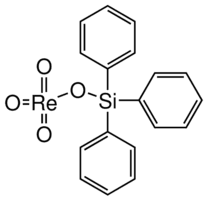
Trioxo(triphenylsilyloxy)rhenium(VII)
Trioxo(triphenylsilyloxy)rhenium(VII) (CAS 60624-60-4), with a molecular weight of 509.60, is a rhenium-based compound utilised in advanced chemical synthesis. Its primary applications lie in its catalytic activity for various organic transformations, including cycloisomerization and Prins reactions. This compound is a specialised reagent for researchers and industrial chemists seeking precise catalytic control in complex synthetic pathways.
Catalysis for Cycloisomerization Reactions
This rhenium complex serves as an effective catalyst for promoting cycloisomerization reactions. It facilitates the formation of cyclic structures from unsaturated precursors, a key transformation in organic synthesis.
Catalyst in Prins Dimerization
Trioxo(triphenylsilyloxy)rhenium(VII) catalyses the Prins dimerization reaction. This application is valuable for the synthesis of specific diols and related cyclic ethers.
Prins Cyclization Reactions
The compound acts as a catalyst in Prins cyclization reactions, enabling the efficient synthesis of substituted tetrahydropyrans and related heterocyclic compounds from alkenes and aldehydes.
| Molecular weight | 509.60 |
|---|---|
| Empirical formula | C18H15O4ReSi |
| Storage temperature | 2-8°C |
| Application | Catalyst for:• Cycloisomerization reactions1• Prins dimerization2• Prins cyclization reactions3 |
| Melting point | 108-110 °C |
Documentation
Every batch ships with a Certificate of Analysis covering assay, identity and purity; the grade is confirmed against your enquiry. Safety Data Sheets and technical data sheets are available on request.
Supply & logistics
Samples for technical evaluation; bulk MOQ by grade and packaging. In-stock material ships in 7–10 working days, worldwide, with full export documentation.
What is Trioxo(triphenylsilyloxy)rhenium(VII) used for?
+
Trioxo(triphenylsilyloxy)rhenium(VII) is primarily used as a catalyst for cycloisomerization reactions, Prins dimerization, and Prins cyclization reactions in chemical synthesis.
What is the CAS number and formula for Trioxo(triphenylsilyloxy)rhenium(VII)?
+
The CAS number is 60624-60-4. The empirical formula (Hill notation) is C18H15O4ReSi.
What grade and purity does Tech Serve Solutions supply?
+
Tech Serve Solutions supplies this chemical for research and laboratory use. We do not represent it as USP, BP, EP, or any other pharmacopoeia grade, as this is not specified in the product data.
How should Trioxo(triphenylsilyloxy)rhenium(VII) be handled and stored?
+
This compound is classified under WGK 2 in Germany, indicating it is hazardous to water. It requires careful handling to avoid environmental release. Store at 2-8°C as recommended.
Is Trioxo(triphenylsilyloxy)rhenium(VII) shipped internationally?
+
Yes, Tech Serve Solutions specialises in the global supply and export of fine chemicals, including Trioxo(triphenylsilyloxy)rhenium(VII).
How can I request a sample or quote for Trioxo(triphenylsilyloxy)rhenium(VII)?
+
Please contact our sales team directly through our website or by phone to request a sample or a detailed quotation.
▶ Related products
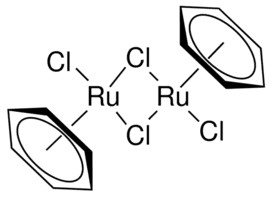
Benzeneruthenium(II) chloride dimer
Ru2(C6H6)2Cl4
Catalysis & Inorganic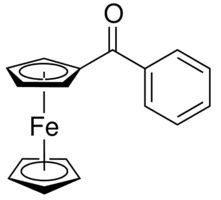
Benzoylferrocene
C17H14FeO
Catalysis & Inorganic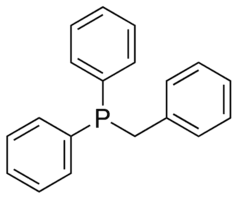
Benzyldiphenylphosphine
C6H5CH2P(C6H5)2
Catalysis & Inorganic
Beryllium
Be
Catalysis & Inorganic
Beryllium oxide
BeO
Catalysis & Inorganic![Bicyclo[2.2.1]hepta-2,5-diene-rhodium(I) chloride dimer — chemical structure, CAS 12257-42-0; Catalysis & Inorganic, fine chemical supplied by Tech Serve Solutions](/_next/image?url=https%3A%2F%2Fpub-f4d920c906024441a773a96f7098e551.r2.dev%2Fimages%2Fproducts%2F12257-42-0.png&w=3840&q=75)
Bicyclo[2.2.1]hepta-2,5-diene-rhodium(I) chloride dimer
Catalysis & Inorganic
![Bis[(10,11-η)-5-[(11bS)-dinaphtho[2,1-d:1′,2′-f][1,3,2]dioxaphosphepin-4-yl- κP4]-5H-dibenz[b,f]azepine]rhodium(I) tetrafluorobo — chemical structure, CAS 1228149-03-8; Catalysis & Inorganic, fine chemical supplied by Tech Serve Solutions](/_next/image?url=https%3A%2F%2Fpub-f4d920c906024441a773a96f7098e551.r2.dev%2Fimages%2Fproducts%2F1228149-03-8.png&w=3840&q=75)
Bis[(10,11-η)-5-[(11bS)-dinaphtho[2,1-d:1′,2′-f][1,3,2]dioxaphosphepin-4-yl- κP4]-5H-dibenz[b,f]azepine]rhodium(I) tetrafluorobo
1-d:1′
Catalysis & Inorganic![Bis[(2-dimethylamino)phenyl]amine nickel(II) chloride (C16H20ClN3Ni) — chemical structure, CAS 1033772-47-2; Catalysis & Inorganic, fine chemical supplied by Tech Serve Solutions](/_next/image?url=https%3A%2F%2Fpub-f4d920c906024441a773a96f7098e551.r2.dev%2Fimages%2Fproducts%2F1033772-47-2.png&w=3840&q=75)
Bis[(2-dimethylamino)phenyl]amine nickel(II) chloride
C16H20ClN3Ni
Catalysis & Inorganic