
Triirondodecacarbonyl
Triirondodecacarbonyl (CAS: 17685-52-8), with the chemical formula Fe3(CO)12 and a molecular weight of 503.66 g/mol, is an organometallic iron compound. It is a key reagent in inorganic chemistry and catalysis, particularly recognised for its role in chemical synthesis and non-precious metal catalysis. Its applications include facilitating specific chemical transformations and serving as a precursor in organometallic research.
- IUPAC
- Dodecacarbonyltriiron,tri-Irondodecacarbonyl
- Synonyms
- DodecacarbonyltriironTri-Irondodecacarbonyl
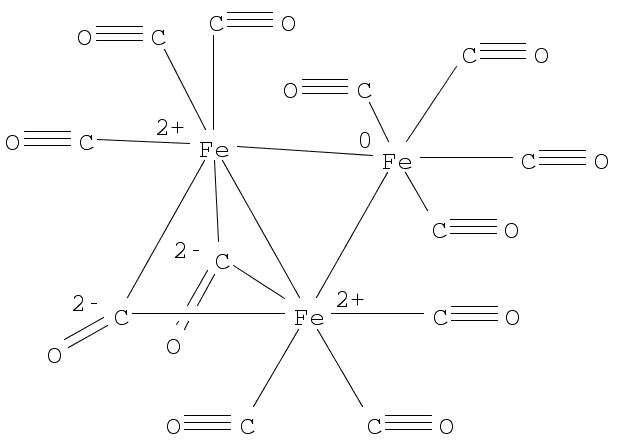
Sulfur Elimination in Organosulfur Chemistry
Triirondodecacarbonyl facilitates the elimination of sulfur from substituted thiophene complexes. This reaction is significant for generating ferroles, contributing to the synthesis of novel organometallic compounds.
Organometallic Synthesis with Heterocycles
The compound reacts with tellurium-nitrogen heterocycles, such as benzoisotellurazole. This reactivity opens up new avenues in organometallic chemistry, enabling the synthesis of complex molecular architectures.
Catalysis Research
As an iron-containing compound, Triirondodecacarbonyl is of interest in non-precious metal catalysis research. It serves as a valuable tool for exploring catalytic processes and developing new synthetic methodologies.
| Molecular weight | 503.66 |
|---|---|
| Linear formula | Fe3(CO)12 |
| Storage temperature | 2-8°C |
| Contains / stabiliser | 1-10% methyl alcohol |
| Application | Eliminates sulfur from substituted thiophene complexes, leading to ferroles.1 Access to new areas of organometallic chemistry is promising using the reaction of Fe3(CO)12 with tellurium-nitrogen heterocycles such as benzoisotellurazole.2 |
| Melting point | 165 °C (dec.)(lit.) |


Hazard statements
- H228Flammable solid
- H302Harmful if swallowed
- H370Causes damage to organs
Precautionary statements
- P210Keep away from heat, sparks and open flames. No smoking
- P260Do not breathe dust, fume, gas, mist, vapours or spray
- P307
| Flash point | 9 °C / 48.2 °F |
|---|---|
| Transport (UN / ADR) | UN 3175 4.1 / PGII |
| Water hazard class (WGK, DE) | 3 |
| Hazard codes (EU) | F,T |
| Risk statements (R) | 11-20/21/22-39/23/24/25 |
| Safety statements (S) | 36/37 |
Hazard information is provided for guidance. Always consult the product Safety Data Sheet (SDS), available on request, before handling.
Documentation
Every batch ships with a Certificate of Analysis covering assay, identity and purity; the grade is confirmed against your enquiry. Safety Data Sheets and technical data sheets are available on request.
Supply & logistics
Samples for technical evaluation; bulk MOQ by grade and packaging. In-stock material ships in 7–10 working days, worldwide, with full export documentation.
What is Triirondodecacarbonyl used for?
+
Triirondodecacarbonyl is used in chemical synthesis, particularly for eliminating sulfur from thiophene complexes to form ferroles and in reactions with tellurium-nitrogen heterocycles for organometallic synthesis. It is also studied for its applications in non-precious metal catalysis.
What are the CAS number and chemical formula for Triirondodecacarbonyl?
+
The CAS number is 17685-52-8 and the chemical formula is Fe3(CO)12.
What grade and purity does Tech Serve Solutions supply?
+
Tech Serve Solutions supplies Triirondodecacarbonyl as a research-grade chemical. The specific assay or purity is not detailed beyond its composition, and TSS does not represent it as USP, BP, or EP grade.
What are the safety considerations for handling Triirondodecacarbonyl?
+
Triirondodecacarbonyl is a Danger substance, classified with hazard statements H228 (Flammable solid), H302 + H332 (Harmful if swallowed or inhaled), and H370 (Causes damage to organs). It is flammable and requires careful handling, with recommended precautionary statements including P210 (Keep away from heat/sparks/open flames/hot surfaces. No smoking), P260 (Do not breathe dust/fume/gas/mist/vapours/spray), and P307 + P311 (IF exposed: Call a POISON CENTER/doctor).
How is Triirondodecacarbonyl shipped and exported?
+
Triirondodecacarbonyl is shipped and exported according to relevant regulations, identified under UN 3175, Class 4.1, Packing Group II. It requires storage at 2-8°C and contains 1-10% methyl alcohol.
How can I request a quote or sample of Triirondodecacarbonyl?
+
To request a quote or sample of Triirondodecacarbonyl, please contact the Tech Serve Solutions sales team through the provided contact channels on our website.
▶ Related products
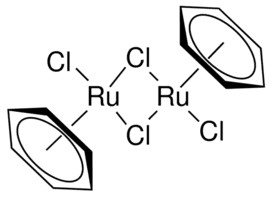
Benzeneruthenium(II) chloride dimer
Ru2(C6H6)2Cl4
Catalysis & Inorganic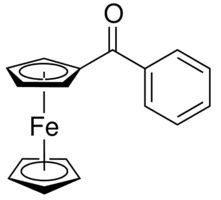
Benzoylferrocene
C17H14FeO
Catalysis & Inorganic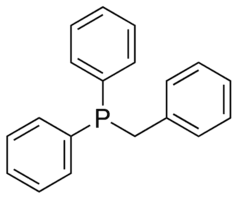
Benzyldiphenylphosphine
C6H5CH2P(C6H5)2
Catalysis & Inorganic
Beryllium
Be
Catalysis & Inorganic
Beryllium oxide
BeO
Catalysis & Inorganic![Bicyclo[2.2.1]hepta-2,5-diene-rhodium(I) chloride dimer — chemical structure, CAS 12257-42-0; Catalysis & Inorganic, fine chemical supplied by Tech Serve Solutions](/_next/image?url=https%3A%2F%2Fpub-f4d920c906024441a773a96f7098e551.r2.dev%2Fimages%2Fproducts%2F12257-42-0.png&w=3840&q=75)
Bicyclo[2.2.1]hepta-2,5-diene-rhodium(I) chloride dimer
Catalysis & Inorganic
![Bis[(10,11-η)-5-[(11bS)-dinaphtho[2,1-d:1′,2′-f][1,3,2]dioxaphosphepin-4-yl- κP4]-5H-dibenz[b,f]azepine]rhodium(I) tetrafluorobo — chemical structure, CAS 1228149-03-8; Catalysis & Inorganic, fine chemical supplied by Tech Serve Solutions](/_next/image?url=https%3A%2F%2Fpub-f4d920c906024441a773a96f7098e551.r2.dev%2Fimages%2Fproducts%2F1228149-03-8.png&w=3840&q=75)
Bis[(10,11-η)-5-[(11bS)-dinaphtho[2,1-d:1′,2′-f][1,3,2]dioxaphosphepin-4-yl- κP4]-5H-dibenz[b,f]azepine]rhodium(I) tetrafluorobo
1-d:1′
Catalysis & Inorganic![Bis[(2-dimethylamino)phenyl]amine nickel(II) chloride (C16H20ClN3Ni) — chemical structure, CAS 1033772-47-2; Catalysis & Inorganic, fine chemical supplied by Tech Serve Solutions](/_next/image?url=https%3A%2F%2Fpub-f4d920c906024441a773a96f7098e551.r2.dev%2Fimages%2Fproducts%2F1033772-47-2.png&w=3840&q=75)
Bis[(2-dimethylamino)phenyl]amine nickel(II) chloride
C16H20ClN3Ni
Catalysis & Inorganic▶ Explore more

Bis(cyclopentadienyl)cobalt(III) hexafluorophosphate
C10H10CoF6P
Catalysis & Inorganic
1-(4-Chlorophenyl)biguanide hydrochloride
ClC6H4NHC(NH)NHC(NH)NH2 · HCl
Chemical Synthesis
Bis(cyclopentadienyl)dimethylzirconium(IV)
Catalysis & Inorganic

1-(4-Chlorophenyl)ethanol
ClC6H4CH(CH3)OH
Chemical Synthesis