
Tricyclopentylphosphine
Tricyclopentylphosphine (CAS: 7650-88-6), with the molecular formula C15H27P and a molecular weight of 238.35 g/mol, is a basic phosphine ligand. This organophosphorus compound finds significant utility as a cocatalyst in various transition metal-catalysed reactions. Its applications span nickel, rhodium, and palladium-mediated transformations, including cross-coupling, cycloaddition, and allylation reactions, facilitating complex organic synthesis.

Cocatalyst in Nickel-Catalysed Reactions
Tricyclopentylphosphine serves as an effective cocatalyst in nickel-catalysed transformations, such as the cycloaddition of enones and alkynes, and the alkenylation of imidazoles. It also plays a role in the hydrocarbamoylation of alkynes mediated by nickel/Lewis-acid catalysis.
Ligand in Palladium-Catalysed Cross-Coupling
This phosphine is employed as a ligand in palladium-catalyzed Negishi cross-coupling reactions. These reactions are crucial for forming carbon-carbon bonds in the synthesis of complex organic molecules.
Cocatalyst in Rhodium-Catalysed Allylation
It functions as a cocatalyst in rhodium-catalyzed allylation reactions, specifically in the addition of aldehydes to homoallylic alcohols. This application is valuable for constructing chiral centres and building molecular complexity.
Phosphine-Catalysed Synthesis
Tricyclopentylphosphine can be used in phosphine-catalysed synthetic routes, including the preparation of 6-substituted 2-pyrones. Its catalytic activity aids in the efficient formation of heterocyclic compounds.
| Molecular weight | 238.35 |
|---|---|
| Empirical formula | C15H27P |
| Assay | 97% |
| Density | 0.986 g/mL at 20 °C(lit.)0.979 g/mL at 25 °C |
| Refractive index | n20/D 1.538(lit.) |
| Application | Cocatalyst for:• Nickel-catalyzed cycloaddition of enones and alkynes1• Rhodium-catalyzed allylation of aldehydes with homoallylic alcohols2• Hydrocarbamoylation of alkynes by nickel/Lewis-acid catalysis3• Alkenylation of imidazoles by nickel/Lewis acid catalysis• Palladium-catalyzed Negishi cross-coupling reactions4• PHosphine-catalyzed synthesis of 6-substituted 2-pyrones5 |


Hazard statements
- H250Catches fire spontaneously if exposed to air
- H314Causes severe skin burns and eye damage
Precautionary statements
- P222Do not allow contact with air
- P231Handle under inert gas
- P280Wear protective gloves, clothing and eye/face protection
- P305IF IN EYES
- P310Immediately call a POISON CENTER or doctor
- P422
| Protective equipment | Faceshields, full-face respirator (US), Gloves, Goggles, multi-purpose combination respirator cartridge (US), type ABEK (EN14387) respirator filter |
|---|---|
| Flash point | 210 °C / 410 °F |
| Transport (UN / ADR) | UN 2845 4.2 |
| Water hazard class (WGK, DE) | 3 |
| Hazard codes (EU) | F,C |
| Risk statements (R) | 17-34 |
| Safety statements (S) | 26-36/37/39-45 |
Hazard information is provided for guidance. Always consult the product Safety Data Sheet (SDS), available on request, before handling.
Documentation
Every batch ships with a Certificate of Analysis covering assay, identity and purity; the grade is confirmed against your enquiry. Safety Data Sheets and technical data sheets are available on request.
Supply & logistics
Samples for technical evaluation; bulk MOQ by grade and packaging. In-stock material ships in 7–10 working days, worldwide, with full export documentation.
What is Tricyclopentylphosphine used for?
+
Tricyclopentylphosphine (CAS: 7650-88-6) is primarily used as a cocatalyst and ligand in various transition metal-catalysed organic synthesis reactions, including cross-coupling, cycloaddition, and allylation.
What is the CAS number and formula for Tricyclopentylphosphine?
+
The CAS number for Tricyclopentylphosphine is 7650-88-6, and its molecular formula is C15H27P.
What grade and purity does Tech Serve Solutions supply?
+
Tech Serve Solutions supplies Tricyclopentylphosphine with an assay of 97%. This product is supplied for research and laboratory use and is not represented as USP, BP, EP, or any other pharmacopoeia grade.
What are the safety considerations for handling Tricyclopentylphosphine?
+
Tricyclopentylphosphine is classified as Danger, indicated by GHS symbols GHS02 and GHS05. It carries hazard statements H250 (Spontaneously flammable in air) and H314 (Causes severe skin burns and eye damage). Strict adherence to safety protocols, including the use of appropriate personal protective equipment such as gloves, goggles, and respiratory protection, is mandatory.
How is Tricyclopentylphosphine packed, shipped, and exported?
+
Tricyclopentylphosphine is packaged in accordance with international regulations for hazardous materials, including UN 2845 (Substances, pyrophoric, solid, water-reactive, n.o.s.). TSS can facilitate global export, ensuring compliance with all relevant shipping and customs requirements.
How can I request a sample or quote for Tricyclopentylphosphine?
+
To request a sample or obtain a quote for Tricyclopentylphosphine, please contact our sales department through the website or via email, providing your specific requirements and shipping details.
▶ Related products

Benzeneruthenium(II) chloride dimer
Ru2(C6H6)2Cl4
Catalysis & Inorganic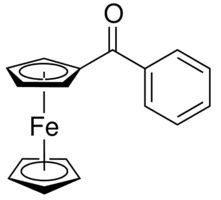
Benzoylferrocene
C17H14FeO
Catalysis & Inorganic
Benzyldiphenylphosphine
C6H5CH2P(C6H5)2
Catalysis & Inorganic
Beryllium
Be
Catalysis & Inorganic
Beryllium oxide
BeO
Catalysis & Inorganic![Bicyclo[2.2.1]hepta-2,5-diene-rhodium(I) chloride dimer — chemical structure, CAS 12257-42-0; Catalysis & Inorganic, fine chemical supplied by Tech Serve Solutions](/_next/image?url=https%3A%2F%2Fpub-f4d920c906024441a773a96f7098e551.r2.dev%2Fimages%2Fproducts%2F12257-42-0.png&w=3840&q=75)
Bicyclo[2.2.1]hepta-2,5-diene-rhodium(I) chloride dimer
Catalysis & Inorganic
![Bis[(10,11-η)-5-[(11bS)-dinaphtho[2,1-d:1′,2′-f][1,3,2]dioxaphosphepin-4-yl- κP4]-5H-dibenz[b,f]azepine]rhodium(I) tetrafluorobo — chemical structure, CAS 1228149-03-8; Catalysis & Inorganic, fine chemical supplied by Tech Serve Solutions](/_next/image?url=https%3A%2F%2Fpub-f4d920c906024441a773a96f7098e551.r2.dev%2Fimages%2Fproducts%2F1228149-03-8.png&w=3840&q=75)
Bis[(10,11-η)-5-[(11bS)-dinaphtho[2,1-d:1′,2′-f][1,3,2]dioxaphosphepin-4-yl- κP4]-5H-dibenz[b,f]azepine]rhodium(I) tetrafluorobo
1-d:1′
Catalysis & Inorganic![Bis[(2-dimethylamino)phenyl]amine nickel(II) chloride (C16H20ClN3Ni) — chemical structure, CAS 1033772-47-2; Catalysis & Inorganic, fine chemical supplied by Tech Serve Solutions](/_next/image?url=https%3A%2F%2Fpub-f4d920c906024441a773a96f7098e551.r2.dev%2Fimages%2Fproducts%2F1033772-47-2.png&w=3840&q=75)
Bis[(2-dimethylamino)phenyl]amine nickel(II) chloride
C16H20ClN3Ni
Catalysis & Inorganic▶ Explore more

Bis(cyclopentadienyl)cobalt(III) hexafluorophosphate
C10H10CoF6P
Catalysis & Inorganic
1-(4-Chlorophenyl)biguanide hydrochloride
ClC6H4NHC(NH)NHC(NH)NH2 · HCl
Chemical Synthesis
Bis(cyclopentadienyl)dimethylzirconium(IV)
Catalysis & Inorganic

1-(4-Chlorophenyl)ethanol
ClC6H4CH(CH3)OH
Chemical Synthesis