
Tricarbonyldichlororuthenium(II) dimer
Tricarbonyldichlororuthenium(II) dimer (CAS: 22594-69-0), with the formula [Ru(CO)3Cl2]2 and a molecular weight of 512.01 g/mol, is a ruthenium catalyst. It functions as a carbon monoxide-releasing molecule (CO-RMs), finding significant use in pharmacological studies investigating its effects on coagulation, fibrinolysis, and thrombus formation. It is also explored for its role in bacterial killing mechanisms.
- IUPAC
- CORM-2
![Tricarbonyldichlororuthenium(II) dimer ([Ru(CO)3Cl2]2) — chemical structure, CAS 22594-69-0; Chemistry, fine chemical supplied by Tech Serve Solutions](/_next/image?url=https%3A%2F%2Fpub-f4d920c906024441a773a96f7098e551.r2.dev%2Fimages%2Fproducts%2F22594-69-0.png&w=3840&q=75)
Pharmacological Research - Coagulation and Fibrinolysis
This compound is employed in studies to understand its capacity to enhance blood coagulation and mitigate susceptibility to fibrinolysis, offering insights into haemostatic mechanisms.
Pharmacological Research - P2X4 Receptor Investigations
It serves as a tool in research exploring the P2X4 receptor, a potential therapeutic target, investigating the compound's interactions and effects within cellular signalling pathways.
Pharmacological Research - Thrombus Modulation
Investigated for its potential to modify the growth or disintegration of blood clots, this dimer aids in understanding thrombosis and potential therapeutic interventions.
Enzyme Substrate Studies
The compound's ability to enhance fibrinogen's interaction with thrombin is studied, contributing to the understanding of enzymatic cascades in coagulation.
Gasotransmitter Signalling Research
Used to investigate the regulation of ion transport, particularly in the context of gasotransmitters and their physiological roles.
Antimicrobial Studies
Acts as a carbon monoxide donor in research examining reactive oxygen species-mediated bacterial killing, exploring novel antimicrobial strategies.
| Molecular weight | 512.01 |
|---|---|
| Linear formula | [Ru(CO)3Cl2]2 |
| Application | Carbon monoxide-releasing molecule used for pharamological studies including:• Enhancement of coagulation and attenuation of vulnerability to fibrinolysis1• Investigations of P2X4 as a possible target2• Possible modification of thrombus growth or disintegration3• Enhances fibrinogen as a substrate for thrombin4• Regulation of ion transport by gasotransmitters5Used as a CO donor for reactive oxygen species mediated bacterial killing6 |

Hazard statements
- H302Harmful if swallowed
- H312Harmful in contact with skin
- H315Causes skin irritation
- H319Causes serious eye irritation
- H332Harmful if inhaled
- H335May cause respiratory irritation
Precautionary statements
- P261Avoid breathing dust, fume, gas or vapours
- P280Wear protective gloves, clothing and eye/face protection
- P305IF IN EYES
| Protective equipment | dust mask type N95 (US), Eyeshields, Gloves |
|---|---|
| Water hazard class (WGK, DE) | 3 |
| Hazard codes (EU) | Xn |
| Risk statements (R) | 20/21/22-36/37/38 |
| Safety statements (S) | 26-37/39 |
Hazard information is provided for guidance. Always consult the product Safety Data Sheet (SDS), available on request, before handling.
Documentation
Every batch ships with a Certificate of Analysis covering assay, identity and purity; the grade is confirmed against your enquiry. Safety Data Sheets and technical data sheets are available on request.
Supply & logistics
Samples for technical evaluation; bulk MOQ by grade and packaging. In-stock material ships in 7–10 working days, worldwide, with full export documentation.
What is Tricarbonyldichlororuthenium(II) dimer used for?
+
Tricarbonyldichlororuthenium(II) dimer (CAS: 22594-69-0) is primarily used as a carbon monoxide-releasing molecule (CO-RM) in pharmacological research. Its applications include studies on coagulation, fibrinolysis, thrombus modulation, P2X4 receptor investigations, ion transport regulation, and as a CO donor for antimicrobial research.
What is the CAS number and chemical formula for Tricarbonyldichlororuthenium(II) dimer?
+
The CAS number is 22594-69-0 and the chemical formula is [Ru(CO)3Cl2]2.
What grade and purity does Tech Serve Solutions supply?
+
Tech Serve Solutions supplies this product for research and laboratory use. The specific grade and purity are available upon request, and it is not represented as USP, BP, EP, or pharmacopoeia grade.
What are the safety considerations when handling Tricarbonyldichlororuthenium(II) dimer?
+
This compound is harmful if swallowed, in contact with skin, or if inhaled, and causes skin and serious eye irritation, as well as respiratory irritation (H302, H312, H332, H315, H319, H335). Handle with appropriate personal protective equipment, including a dust mask type N95 (US), eyeshields, and gloves, in a well-ventilated area.
How is Tricarbonyldichlororuthenium(II) dimer packed, shipped, and exported?
+
This chemical is carefully packed according to international shipping regulations for hazardous materials. Tech Serve Solutions, established in 1998, is a specialist global supplier and exporter, ensuring compliant and secure delivery worldwide.
How can I request a sample or quote for Tricarbonyldichlororuthenium(II) dimer?
+
To request a sample or a quotation, please contact our sales department via the website or by calling our direct line. Our team will promptly provide you with the necessary information and pricing.
▶ Related products
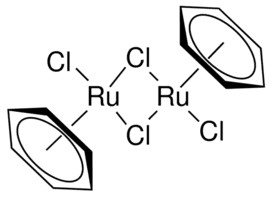
Benzeneruthenium(II) chloride dimer
Ru2(C6H6)2Cl4
Catalysis & Inorganic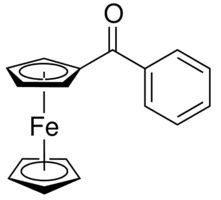
Benzoylferrocene
C17H14FeO
Catalysis & Inorganic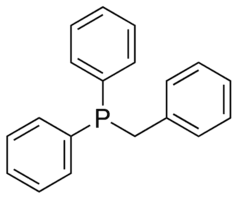
Benzyldiphenylphosphine
C6H5CH2P(C6H5)2
Catalysis & Inorganic
Beryllium
Be
Catalysis & Inorganic
Beryllium oxide
BeO
Catalysis & Inorganic![Bicyclo[2.2.1]hepta-2,5-diene-rhodium(I) chloride dimer — chemical structure, CAS 12257-42-0; Catalysis & Inorganic, fine chemical supplied by Tech Serve Solutions](/_next/image?url=https%3A%2F%2Fpub-f4d920c906024441a773a96f7098e551.r2.dev%2Fimages%2Fproducts%2F12257-42-0.png&w=3840&q=75)
Bicyclo[2.2.1]hepta-2,5-diene-rhodium(I) chloride dimer
Catalysis & Inorganic
![Bis[(10,11-η)-5-[(11bS)-dinaphtho[2,1-d:1′,2′-f][1,3,2]dioxaphosphepin-4-yl- κP4]-5H-dibenz[b,f]azepine]rhodium(I) tetrafluorobo — chemical structure, CAS 1228149-03-8; Catalysis & Inorganic, fine chemical supplied by Tech Serve Solutions](/_next/image?url=https%3A%2F%2Fpub-f4d920c906024441a773a96f7098e551.r2.dev%2Fimages%2Fproducts%2F1228149-03-8.png&w=3840&q=75)
Bis[(10,11-η)-5-[(11bS)-dinaphtho[2,1-d:1′,2′-f][1,3,2]dioxaphosphepin-4-yl- κP4]-5H-dibenz[b,f]azepine]rhodium(I) tetrafluorobo
1-d:1′
Catalysis & Inorganic![Bis[(2-dimethylamino)phenyl]amine nickel(II) chloride (C16H20ClN3Ni) — chemical structure, CAS 1033772-47-2; Catalysis & Inorganic, fine chemical supplied by Tech Serve Solutions](/_next/image?url=https%3A%2F%2Fpub-f4d920c906024441a773a96f7098e551.r2.dev%2Fimages%2Fproducts%2F1033772-47-2.png&w=3840&q=75)
Bis[(2-dimethylamino)phenyl]amine nickel(II) chloride
C16H20ClN3Ni
Catalysis & Inorganic▶ Explore more

Bis(cyclopentadienyl)cobalt(III) hexafluorophosphate
C10H10CoF6P
Catalysis & Inorganic
1-(4-Chlorophenyl)biguanide hydrochloride
ClC6H4NHC(NH)NHC(NH)NH2 · HCl
Chemical Synthesis
Bis(cyclopentadienyl)dimethylzirconium(IV)
Catalysis & Inorganic

1-(4-Chlorophenyl)ethanol
ClC6H4CH(CH3)OH
Chemical Synthesis