Tri-tert-butylphosphine
Tri-tert-butylphosphine (CAS: 13716-12-6), with the chemical formula [(CH3)3C]3P and a molecular weight of 202.32 g/mol, is a bulky, electron-rich phosphine ligand. Its steric bulk and electronic properties make it highly effective in promoting challenging catalytic reactions. It is widely employed as a ligand in palladium-catalyzed cross-coupling reactions, facilitating the formation of carbon-carbon and carbon-heteroatom bonds.
- IUPAC
- P(t-Bu)3
![Tri-tert-butylphosphine ([(CH3)3C]3P) — chemical structure, CAS 13716-12-6; Chemistry, fine chemical supplied by Tech Serve Solutions](/_next/image?url=https%3A%2F%2Fpub-f4d920c906024441a773a96f7098e551.r2.dev%2Fimages%2Fproducts%2F13716-12-6.png&w=3840&q=75)
Palladium-Catalyzed Cross-Coupling Reactions
Tri-tert-butylphosphine serves as an essential ligand in various palladium-catalyzed coupling reactions, including Suzuki-Miyaura, Heck, and Buchwald-Hartwig amination reactions. Its steric and electronic profile enhances catalyst activity and stability for challenging substrates.
Catalysis in Organic Synthesis
This phosphine ligand is instrumental in promoting difficult bond formations. It is particularly noted for its utility in the palladium-catalyzed coupling of arylboronic acids with phenyliodonium ylides of hydroxyquinones, and the alpha-arylation of enol ethers with aryl halides.
Ligand for Addition Reactions
Beyond cross-coupling, Tri-tert-butylphosphine can act as a ligand in various addition reactions, contributing to stereoselectivity and efficiency in complex organic transformations.
| Molecular weight | 202.32 |
|---|---|
| Linear formula | [(CH3)3C]3P |
| Assay | 98% |
| Boiling point | 102-103 °C/13 mmHg(lit.) |
| Density | 0.834 g/mL at 20 °C(lit.) |
| Concentration | 1.0 M in toluene |
| Application | Preferred ligand in the palladium-catalyzed coupling of arylboronic acids with phenyliodonium ylides of hydroxyquinones.1 Also used with Pd2(dba)3 for the α-arylation of trimethylsilyl enol ethers with aryl halides.2 |
| Melting point | 30-35 °C(lit.) |


Hazard statements
- H250Catches fire spontaneously if exposed to air
- H314Causes severe skin burns and eye damage
Precautionary statements
- P222Do not allow contact with air
- P231Handle under inert gas
- P280Wear protective gloves, clothing and eye/face protection
- P305IF IN EYES
- P310Immediately call a POISON CENTER or doctor
- P422
| Protective equipment | Eyeshields, Faceshields, full-face particle respirator type N100 (US), Gloves, respirator cartridge type N100 (US), type P1 (EN143) respirator filter, type P3 (EN 143) respirator cartridges |
|---|---|
| Flash point | -17 °C / 1.4 °F |
| Transport (UN / ADR) | UN 2846 4.2 / PGI |
| Water hazard class (WGK, DE) | 3 |
| Hazard codes (EU) | F,C |
| Risk statements (R) | 17-34 |
| Safety statements (S) | 16-26-27-36/37/39-43-45 |
Hazard information is provided for guidance. Always consult the product Safety Data Sheet (SDS), available on request, before handling.
| Ligand For | Addition ReactionsBuchwald-Hartwig Cross Coupling ReactionHeck ReactionNegishi CouplingSonogashira CouplingStille CouplingSuzuki-Miyaura Coupling |
|---|
Documentation
Every batch ships with a Certificate of Analysis covering assay, identity and purity; the grade is confirmed against your enquiry. Safety Data Sheets and technical data sheets are available on request.
Supply & logistics
Samples for technical evaluation; bulk MOQ by grade and packaging. In-stock material ships in 7–10 working days, worldwide, with full export documentation.
What is Tri-tert-butylphosphine used for?
+
Tri-tert-butylphosphine is primarily used as a bulky, electron-rich phosphine ligand in palladium-catalyzed cross-coupling reactions (e.g., Suzuki-Miyaura, Heck, Buchwald-Hartwig), addition reactions, and facilitating challenging bond formations in organic synthesis.
What is the CAS number and formula for Tri-tert-butylphosphine?
+
The CAS number for Tri-tert-butylphosphine is 13716-12-6 and its linear formula is [(CH3)3C]3P.
What grade and purity does Tech Serve Solutions supply?
+
Tech Serve Solutions supplies Tri-tert-butylphosphine with an assay of 98%. We do not represent this product as USP, BP, EP, or any other pharmacopoeia grade unless explicitly stated.
How is Tri-tert-butylphosphine handled and stored?
+
Tri-tert-butylphosphine is highly flammable and pyrophoric, igniting spontaneously in air (H250), and causes severe skin burns and eye damage (H314). It must be handled under an inert atmosphere (e.g., nitrogen or argon) using appropriate personal protective equipment, including eyeshields, gloves, and respiratory protection. Store in a cool, well-ventilated place away from ignition sources, in a tightly sealed container.
How is Tri-tert-butylphosphine packed, shipped, and exported?
+
Tri-tert-butylphosphine is carefully packed and prepared for safe transportation in compliance with international regulations. As a specialist global supplier, Tech Serve Solutions expertly handles the export of this chemical.
How can I request a quote or sample of Tri-tert-butylphosphine?
+
To request a quote or a sample, please contact our sales team through the website or by phone. We are ready to assist with your specific requirements.
▶ Related products
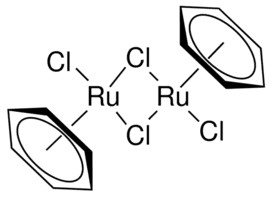
Benzeneruthenium(II) chloride dimer
Ru2(C6H6)2Cl4
Catalysis & Inorganic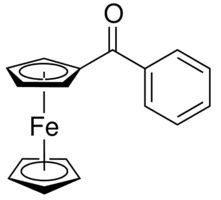
Benzoylferrocene
C17H14FeO
Catalysis & Inorganic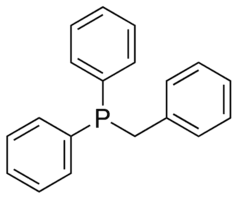
Benzyldiphenylphosphine
C6H5CH2P(C6H5)2
Catalysis & Inorganic
Beryllium
Be
Catalysis & Inorganic
Beryllium oxide
BeO
Catalysis & Inorganic![Bicyclo[2.2.1]hepta-2,5-diene-rhodium(I) chloride dimer — chemical structure, CAS 12257-42-0; Catalysis & Inorganic, fine chemical supplied by Tech Serve Solutions](/_next/image?url=https%3A%2F%2Fpub-f4d920c906024441a773a96f7098e551.r2.dev%2Fimages%2Fproducts%2F12257-42-0.png&w=3840&q=75)
Bicyclo[2.2.1]hepta-2,5-diene-rhodium(I) chloride dimer
Catalysis & Inorganic
![Bis[(10,11-η)-5-[(11bS)-dinaphtho[2,1-d:1′,2′-f][1,3,2]dioxaphosphepin-4-yl- κP4]-5H-dibenz[b,f]azepine]rhodium(I) tetrafluorobo — chemical structure, CAS 1228149-03-8; Catalysis & Inorganic, fine chemical supplied by Tech Serve Solutions](/_next/image?url=https%3A%2F%2Fpub-f4d920c906024441a773a96f7098e551.r2.dev%2Fimages%2Fproducts%2F1228149-03-8.png&w=3840&q=75)
Bis[(10,11-η)-5-[(11bS)-dinaphtho[2,1-d:1′,2′-f][1,3,2]dioxaphosphepin-4-yl- κP4]-5H-dibenz[b,f]azepine]rhodium(I) tetrafluorobo
1-d:1′
Catalysis & Inorganic![Bis[(2-dimethylamino)phenyl]amine nickel(II) chloride (C16H20ClN3Ni) — chemical structure, CAS 1033772-47-2; Catalysis & Inorganic, fine chemical supplied by Tech Serve Solutions](/_next/image?url=https%3A%2F%2Fpub-f4d920c906024441a773a96f7098e551.r2.dev%2Fimages%2Fproducts%2F1033772-47-2.png&w=3840&q=75)
Bis[(2-dimethylamino)phenyl]amine nickel(II) chloride
C16H20ClN3Ni
Catalysis & Inorganic