
trans-Bis(dicyclohexylamine)palladium(II) acetate
trans-Bis(dicyclohexylamine)palladium(II) acetate (CAS: 628339-96-8, Formula: C28H52N2O4Pd) is a palladium(II) complex widely utilized as a catalyst in organic synthesis. Its structure, featuring palladium coordinated to acetate and dicyclohexylamine ligands, makes it effective in various cross-coupling reactions. This compound is essential for facilitating carbon-carbon bond formation, finding application in the synthesis of complex organic molecules, particularly in academic research and industrial process development.
- IUPAC
- DAPCy
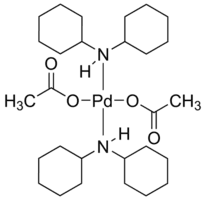
Catalyst for Aryl Iodide Coupling
This palladium complex catalyzes the coupling of aryl iodides with triarylbismuth compounds, enabling the formation of new carbon-carbon bonds.
Synthesis of Carbazoles
It is employed in the synthesis of 3,6-diphenyl-9-hexyl-9H-carbazole derivatives, which are important structural motifs in materials science.
Suzuki Coupling Reactions
The compound serves as an effective catalyst for Suzuki coupling, including the reaction of dihexylfluorene derivatives and the coupling of dibromopyrone with boronic acids.
| Empirical formula | C28H52N2O4Pd |
|---|---|
| Application | Catalyst for:• Coupling of aryl iodides with triarylbismuths1• Synthesis of 3,6-diphenyl-9-hexyl-9H-carazole derivatives2• Suzuki coupling of dihexylfluorene derivatives3• Suzuki-Miyaura coupling of dibromopyrone with boronic acids4 |
| Melting point | 150-154 °C |
Documentation
Every batch ships with a Certificate of Analysis covering assay, identity and purity; the grade is confirmed against your enquiry. Safety Data Sheets and technical data sheets are available on request.
Supply & logistics
Samples for technical evaluation; bulk MOQ by grade and packaging. In-stock material ships in 7–10 working days, worldwide, with full export documentation.
What is trans-Bis(dicyclohexylamine)palladium(II) acetate used for?
+
trans-Bis(dicyclohexylamine)palladium(II) acetate is primarily used as a catalyst in various organic synthesis reactions, particularly in coupling reactions such as the Suzuki coupling, and in the synthesis of specific carbazole derivatives.
What is the CAS number and formula for this product?
+
The CAS number is 628339-96-8 and the empirical formula is C28H52N2O4Pd.
What grade and purity does Tech Serve Solutions supply?
+
Tech Serve Solutions supplies this product for research and development purposes. The specific purity and grade are detailed on the Certificate of Analysis. It is not supplied as USP, BP, EP, or pharmaceutical grade.
What are the safety and handling considerations for this chemical?
+
This compound is classified under WGK Germany 1. Handle with appropriate personal protective equipment in a well-ventilated area. Consult the Safety Data Sheet for detailed hazard information and handling procedures.
How is this product typically packed and shipped?
+
This chemical is carefully packed according to international shipping regulations for hazardous materials and exported globally by Tech Serve Solutions.
How can I request a sample or a quote?
+
To request a sample or a quote, please contact our sales team through the website or by phone, providing the product name and CAS number.
▶ Related products
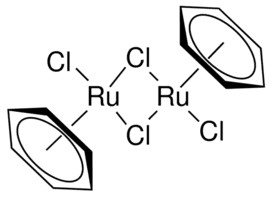
Benzeneruthenium(II) chloride dimer
Ru2(C6H6)2Cl4
Catalysis & Inorganic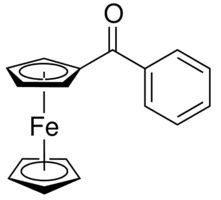
Benzoylferrocene
C17H14FeO
Catalysis & Inorganic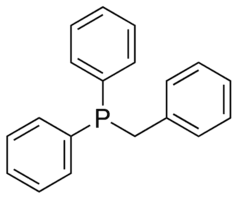
Benzyldiphenylphosphine
C6H5CH2P(C6H5)2
Catalysis & Inorganic
Beryllium
Be
Catalysis & Inorganic
Beryllium oxide
BeO
Catalysis & Inorganic![Bicyclo[2.2.1]hepta-2,5-diene-rhodium(I) chloride dimer — chemical structure, CAS 12257-42-0; Catalysis & Inorganic, fine chemical supplied by Tech Serve Solutions](/_next/image?url=https%3A%2F%2Fpub-f4d920c906024441a773a96f7098e551.r2.dev%2Fimages%2Fproducts%2F12257-42-0.png&w=3840&q=75)
Bicyclo[2.2.1]hepta-2,5-diene-rhodium(I) chloride dimer
Catalysis & Inorganic
![Bis[(10,11-η)-5-[(11bS)-dinaphtho[2,1-d:1′,2′-f][1,3,2]dioxaphosphepin-4-yl- κP4]-5H-dibenz[b,f]azepine]rhodium(I) tetrafluorobo — chemical structure, CAS 1228149-03-8; Catalysis & Inorganic, fine chemical supplied by Tech Serve Solutions](/_next/image?url=https%3A%2F%2Fpub-f4d920c906024441a773a96f7098e551.r2.dev%2Fimages%2Fproducts%2F1228149-03-8.png&w=3840&q=75)
Bis[(10,11-η)-5-[(11bS)-dinaphtho[2,1-d:1′,2′-f][1,3,2]dioxaphosphepin-4-yl- κP4]-5H-dibenz[b,f]azepine]rhodium(I) tetrafluorobo
1-d:1′
Catalysis & Inorganic![Bis[(2-dimethylamino)phenyl]amine nickel(II) chloride (C16H20ClN3Ni) — chemical structure, CAS 1033772-47-2; Catalysis & Inorganic, fine chemical supplied by Tech Serve Solutions](/_next/image?url=https%3A%2F%2Fpub-f4d920c906024441a773a96f7098e551.r2.dev%2Fimages%2Fproducts%2F1033772-47-2.png&w=3840&q=75)
Bis[(2-dimethylamino)phenyl]amine nickel(II) chloride
C16H20ClN3Ni
Catalysis & Inorganic▶ Explore more

Bis(cyclopentadienyl)cobalt(III) hexafluorophosphate
C10H10CoF6P
Catalysis & Inorganic
1-(4-Chlorophenyl)biguanide hydrochloride
ClC6H4NHC(NH)NHC(NH)NH2 · HCl
Chemical Synthesis
Bis(cyclopentadienyl)dimethylzirconium(IV)
Catalysis & Inorganic

1-(4-Chlorophenyl)ethanol
ClC6H4CH(CH3)OH
Chemical Synthesis