Thallium(I) chloride
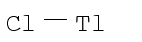
Thallium(I) chloride (CAS 7791-12-0), with the linear formula TlCl and a molecular weight of 239.84 g/mol, is a white powder. It is primarily utilised in chemical synthesis for the preparation of unique cage and dinuclear complexes. These complexes, featuring thallium-cyclodiphosphazanes, exhibit intriguing metal-metal interactions, making TlCl a valuable reagent in inorganic chemistry and materials science research.
- IUPAC
- Thallous chloride
- Synonyms
- Thallous chloride
Preparation of Novel Complexes
Thallium(I) chloride is instrumental in synthesising cage and dinuclear complexes, specifically thallium-cyclodiphosphazanes. These structures are of interest for studying metal-metal interactions in inorganic chemistry.
Materials Science Research
The unique coordination chemistry and potential metal-metal interactions offered by thallium complexes make TlCl a useful compound for exploratory research in materials science.
Catalysis Investigations
As a thallium salt, it can be employed in fundamental research for developing new catalytic systems, particularly where thallium's electronic properties might be advantageous.
| Molecular weight | 239.84 |
|---|---|
| Linear formula | TlCl |
| Assay | 99.999% trace metals basis |
| Form | powder |
| Boiling point | 720 °C/1 atm(lit.) |
| Density | 7 g/mL at 25 °C(lit.) |
| Solubility | ethanol: insoluble(lit.) |
| Melting point | 430 °C(lit.) |
| Vapour pressure | 10 mmHg (517 °C) |
| Application | Used to prepare cage, dinuclear complexes (TI-cyclodiphosphazanes) which possess interesting metal-metal interactions. |


Hazard statements
- H300Fatal if swallowed
- H330Fatal if inhaled
- H373May cause damage to organs through prolonged exposure
- H411Toxic to aquatic life with long-lasting effects
Precautionary statements
- P260Do not breathe dust, fume, gas, mist, vapours or spray
- P264Wash thoroughly after handling
- P273Avoid release to the environment
- P284Wear respiratory protection
- P301IF SWALLOWED
- P310Immediately call a POISON CENTER or doctor
| Protective equipment | Eyeshields, Faceshields, full-face particle respirator type N100 (US), Gloves, respirator cartridge type N100 (US), type P1 (EN143) respirator filter, type P3 (EN 143) respirator cartridges |
|---|---|
| Transport (UN / ADR) | UN 1707 6.1 / PGII |
| Water hazard class (WGK, DE) | 3 |
| Hazard codes (EU) | T+,N |
| Risk statements (R) | 26/28-33-51/53 |
| Safety statements (S) | 13-28-45-61 |
Hazard information is provided for guidance. Always consult the product Safety Data Sheet (SDS), available on request, before handling.
Documentation
Every batch ships with a Certificate of Analysis covering assay, identity and purity; the grade is confirmed against your enquiry. Safety Data Sheets and technical data sheets are available on request.
Supply & logistics
Samples for technical evaluation; bulk MOQ by grade and packaging. In-stock material ships in 7–10 working days, worldwide, with full export documentation.
What is Thallium(I) chloride used for?
+
Thallium(I) chloride is used in chemical synthesis to prepare cage and dinuclear complexes, such as thallium-cyclodiphosphazanes, which exhibit interesting metal-metal interactions. It is also valuable in inorganic chemistry and materials science research.
What is the CAS number and formula for Thallium(I) chloride?
+
The CAS number for Thallium(I) chloride is 7791-12-0, and its linear formula is TlCl.
What grade and purity does Tech Serve Solutions supply?
+
Tech Serve Solutions supplies Thallium(I) chloride with an assay of 99.999% on a trace metals basis. TSS does not represent this product as USP, BP, or EP grade.
How is Thallium(I) chloride handled and shipped?
+
Thallium(I) chloride is classified as a Danger substance with hazards including acute toxicity (oral, inhalation) and potential long-term effects on organs, as well as being toxic to aquatic life with long-lasting effects. It requires stringent handling protocols and is shipped as UN 1707, Class 6.1, Packing Group II.
Is Thallium(I) chloride a controlled substance?
+
Based on the provided data, Thallium(I) chloride is classified with European hazard codes T+ (Very toxic) and N (Dangerous for the environment), and carries significant safety warnings (H300, H330, H373, H411). It requires careful regulatory compliance for procurement and handling.
How can I request a quote or sample?
+
To request a quote or sample of Thallium(I) chloride, please contact our sales team through the website or by phone. We are happy to assist with your research and synthesis needs.
▶ Related products
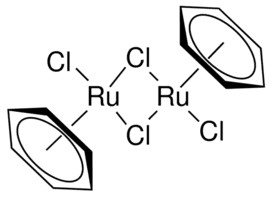
Benzeneruthenium(II) chloride dimer
Ru2(C6H6)2Cl4
Catalysis & Inorganic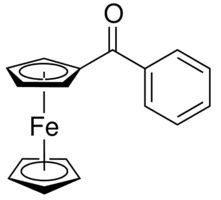
Benzoylferrocene
C17H14FeO
Catalysis & Inorganic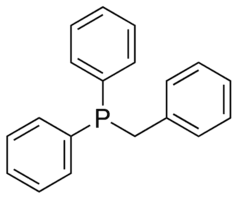
Benzyldiphenylphosphine
C6H5CH2P(C6H5)2
Catalysis & Inorganic
Beryllium
Be
Catalysis & Inorganic
Beryllium oxide
BeO
Catalysis & Inorganic![Bicyclo[2.2.1]hepta-2,5-diene-rhodium(I) chloride dimer — chemical structure, CAS 12257-42-0; Catalysis & Inorganic, fine chemical supplied by Tech Serve Solutions](/_next/image?url=https%3A%2F%2Fpub-f4d920c906024441a773a96f7098e551.r2.dev%2Fimages%2Fproducts%2F12257-42-0.png&w=3840&q=75)
Bicyclo[2.2.1]hepta-2,5-diene-rhodium(I) chloride dimer
Catalysis & Inorganic
![Bis[(10,11-η)-5-[(11bS)-dinaphtho[2,1-d:1′,2′-f][1,3,2]dioxaphosphepin-4-yl- κP4]-5H-dibenz[b,f]azepine]rhodium(I) tetrafluorobo — chemical structure, CAS 1228149-03-8; Catalysis & Inorganic, fine chemical supplied by Tech Serve Solutions](/_next/image?url=https%3A%2F%2Fpub-f4d920c906024441a773a96f7098e551.r2.dev%2Fimages%2Fproducts%2F1228149-03-8.png&w=3840&q=75)
Bis[(10,11-η)-5-[(11bS)-dinaphtho[2,1-d:1′,2′-f][1,3,2]dioxaphosphepin-4-yl- κP4]-5H-dibenz[b,f]azepine]rhodium(I) tetrafluorobo
1-d:1′
Catalysis & Inorganic![Bis[(2-dimethylamino)phenyl]amine nickel(II) chloride (C16H20ClN3Ni) — chemical structure, CAS 1033772-47-2; Catalysis & Inorganic, fine chemical supplied by Tech Serve Solutions](/_next/image?url=https%3A%2F%2Fpub-f4d920c906024441a773a96f7098e551.r2.dev%2Fimages%2Fproducts%2F1033772-47-2.png&w=3840&q=75)
Bis[(2-dimethylamino)phenyl]amine nickel(II) chloride
C16H20ClN3Ni
Catalysis & Inorganic