Tetrakis(triphenylphosphine)palladium(0)
Tetrakis(triphenylphosphine)palladium(0), CAS 14221-01-3, with the molecular formula Pd[(C6H5)3P]4 and a molecular weight of 1155.56 g/mol, is a highly valued organometallic compound. It serves as a crucial homogeneous palladium catalyst, widely employed in organic synthesis for cross-coupling reactions. This 99% assay material is essential for facilitating the formation of carbon-carbon and carbon-heteroatom bonds in pharmaceutical and fine chemical manufacturing.
- IUPAC
- Palladium-tetrakis(triphenylphosphine),Pd(PPh3)4
![Tetrakis(triphenylphosphine)palladium(0) (Pd[(C6H5)3P]4) — chemical structure, CAS 14221-01-3; Chemistry, fine chemical supplied by Tech Serve Solutions](/_next/image?url=https%3A%2F%2Fpub-f4d920c906024441a773a96f7098e551.r2.dev%2Fimages%2Fproducts%2F14221-01-3.png&w=3840&q=75)
Palladium-Catalyzed Cross-Coupling Reactions
This compound is a premier catalyst for various palladium-catalyzed cross-coupling reactions, such as Suzuki, Stille, Negishi, and Heck couplings. These reactions are fundamental in constructing complex organic molecules.
Homogeneous Catalysis
As a soluble palladium complex, it offers excellent control over reaction selectivity and activity in homogeneous catalytic processes. It is particularly effective in reactions requiring mild conditions.
Chemical Synthesis
Tetrakis(triphenylphosphine)palladium(0) is indispensable in the synthesis of pharmaceuticals, agrochemicals, and advanced materials. Its ability to promote efficient bond formation is key to modern synthetic strategies.
| Molecular weight | 1155.56 |
|---|---|
| Linear formula | Pd[(C6H5)3P]4 |
| Assay | 99% |
| Application | Application Guide for Palladium Catalyzed Cross-Coupling Reactions |
Precautionary statements
- P281Use personal protective equipment as required
| Protective equipment | Eyeshields, Gloves, type N95 (US), type P1 (EN143) respirator filter |
|---|---|
| Water hazard class (WGK, DE) | 3 |
Hazard information is provided for guidance. Always consult the product Safety Data Sheet (SDS), available on request, before handling.
| Matrix | Magnesium aluminometasilicate base material |
|---|
Documentation
Every batch ships with a Certificate of Analysis covering assay, identity and purity; the grade is confirmed against your enquiry. Safety Data Sheets and technical data sheets are available on request.
Supply & logistics
Samples for technical evaluation; bulk MOQ by grade and packaging. In-stock material ships in 7–10 working days, worldwide, with full export documentation.
What is Tetrakis(triphenylphosphine)palladium(0) primarily used for?
+
Tetrakis(triphenylphosphine)palladium(0) is primarily used as a homogeneous palladium catalyst in various organic synthesis reactions, most notably in palladium-catalyzed cross-coupling reactions to form carbon-carbon and carbon-heteroatom bonds.
What is the CAS number and molecular formula for Tetrakis(triphenylphosphine)palladium(0)?
+
The CAS number is 14221-01-3, and the molecular formula is Pd[(C6H5)3P]4.
What grade and purity does Tech Serve Solutions supply?
+
Tech Serve Solutions supplies Tetrakis(triphenylphosphine)palladium(0) with an assay of 99%. We do not represent this product as USP, BP, or EP grade.
How should Tetrakis(triphenylphosphine)palladium(0) be handled safely?
+
Handle with appropriate personal protective equipment, including eyeshields and gloves. Use a type N95 (US) or type P1 (EN143) respirator filter if airborne exposure is possible. Dispose of waste according to regulations. The compound is classified under WGK Germany 3.
How is this chemical packed, shipped, and exported?
+
Products are carefully packed to ensure integrity during transit. TSS is a global supplier and exporter of fine chemicals, adhering to all relevant shipping and export regulations.
How can I request a quote or sample?
+
To request a quote or sample, please use the contact form on our website or contact our sales department directly. Specify the product name and CAS number (14221-01-3) for prompt service.
▶ Related products
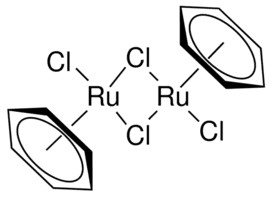
Benzeneruthenium(II) chloride dimer
Ru2(C6H6)2Cl4
Catalysis & Inorganic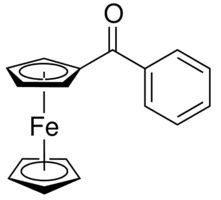
Benzoylferrocene
C17H14FeO
Catalysis & Inorganic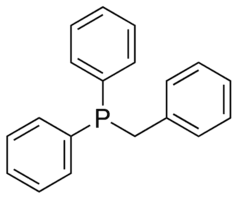
Benzyldiphenylphosphine
C6H5CH2P(C6H5)2
Catalysis & Inorganic
Beryllium
Be
Catalysis & Inorganic
Beryllium oxide
BeO
Catalysis & Inorganic![Bicyclo[2.2.1]hepta-2,5-diene-rhodium(I) chloride dimer — chemical structure, CAS 12257-42-0; Catalysis & Inorganic, fine chemical supplied by Tech Serve Solutions](/_next/image?url=https%3A%2F%2Fpub-f4d920c906024441a773a96f7098e551.r2.dev%2Fimages%2Fproducts%2F12257-42-0.png&w=3840&q=75)
Bicyclo[2.2.1]hepta-2,5-diene-rhodium(I) chloride dimer
Catalysis & Inorganic
![Bis[(10,11-η)-5-[(11bS)-dinaphtho[2,1-d:1′,2′-f][1,3,2]dioxaphosphepin-4-yl- κP4]-5H-dibenz[b,f]azepine]rhodium(I) tetrafluorobo — chemical structure, CAS 1228149-03-8; Catalysis & Inorganic, fine chemical supplied by Tech Serve Solutions](/_next/image?url=https%3A%2F%2Fpub-f4d920c906024441a773a96f7098e551.r2.dev%2Fimages%2Fproducts%2F1228149-03-8.png&w=3840&q=75)
Bis[(10,11-η)-5-[(11bS)-dinaphtho[2,1-d:1′,2′-f][1,3,2]dioxaphosphepin-4-yl- κP4]-5H-dibenz[b,f]azepine]rhodium(I) tetrafluorobo
1-d:1′
Catalysis & Inorganic![Bis[(2-dimethylamino)phenyl]amine nickel(II) chloride (C16H20ClN3Ni) — chemical structure, CAS 1033772-47-2; Catalysis & Inorganic, fine chemical supplied by Tech Serve Solutions](/_next/image?url=https%3A%2F%2Fpub-f4d920c906024441a773a96f7098e551.r2.dev%2Fimages%2Fproducts%2F1033772-47-2.png&w=3840&q=75)
Bis[(2-dimethylamino)phenyl]amine nickel(II) chloride
C16H20ClN3Ni
Catalysis & Inorganic