Tetraamminepalladium(II) acetate
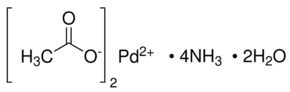
Tetraamminepalladium(II) acetate (CAS: 61495-96-3), with the molecular formula Pd(NH3)4(CH3CO2)2 and a molecular weight of 292.63 g/mol, is a palladium compound widely recognised for its catalytic properties. It is frequently employed in organic synthesis, particularly in homogeneous catalysis. This compound also finds utility in materials science and micro/nanoelectronics, serving as a precursor for solution deposition techniques. TSS supplies this chemical for research and development purposes.
Homogeneous Palladium Catalysis
Tetraamminepalladium(II) acetate serves as an effective homogeneous catalyst in various organic transformations. Its palladium centre facilitates reactions such as cross-couplings and hydrogenations.
Materials Science Precursor
This compound is utilised as a precursor in materials science for the deposition of palladium-containing thin films. It is particularly suited for solution deposition methods in micro- and nanoelectronics fabrication.
Chemical Synthesis Reagent
It functions as a valuable reagent in complex chemical syntheses. Its specific coordination sphere and acetate counterions can influence reactivity in targeted synthetic pathways.
| Molecular weight | 292.63 |
|---|---|
| Linear formula | Pd(NH3)4(CH3CO2)2 |
| Melting point | 183-186 °C (dec.)(lit.) |

Hazard statements
- H315Causes skin irritation
- H319Causes serious eye irritation
- H335May cause respiratory irritation
Precautionary statements
- P261Avoid breathing dust, fume, gas or vapours
- P305IF IN EYES
| Protective equipment | dust mask type N95 (US), Eyeshields, Gloves |
|---|---|
| Water hazard class (WGK, DE) | 3 |
| Hazard codes (EU) | Xi |
| Risk statements (R) | 36/37/38 |
| Safety statements (S) | 26-36 |
Hazard information is provided for guidance. Always consult the product Safety Data Sheet (SDS), available on request, before handling.
Documentation
Every batch ships with a Certificate of Analysis covering assay, identity and purity; the grade is confirmed against your enquiry. Safety Data Sheets and technical data sheets are available on request.
Supply & logistics
Samples for technical evaluation; bulk MOQ by grade and packaging. In-stock material ships in 7–10 working days, worldwide, with full export documentation.
What is Tetraamminepalladium(II) acetate primarily used for?
+
Tetraamminepalladium(II) acetate is primarily used as a catalyst in homogeneous palladium catalysis and as a precursor in materials science for solution deposition, particularly in micro/nanoelectronics.
What are the CAS number and chemical formula for Tetraamminepalladium(II) acetate?
+
The CAS number is 61495-96-3, and the chemical formula is Pd(NH3)4(CH3CO2)2.
What grade and purity does Tech Serve Solutions supply?
+
Tech Serve Solutions supplies Tetraamminepalladium(II) acetate typically as a research or technical grade. We do not represent this product as USP, BP, or EP grade. Please refer to the product's Certificate of Analysis for specific assay details.
How should Tetraamminepalladium(II) acetate be handled safely?
+
Handle Tetraamminepalladium(II) acetate with appropriate personal protective equipment, including eyeshields, gloves, and a dust mask (N95 type). Avoid breathing dust and ensure adequate ventilation, as it can cause skin irritation, serious eye irritation, and respiratory irritation (H315, H319, H335).
Is Tetraamminepalladium(II) acetate a controlled substance?
+
Based on the provided data, Tetraamminepalladium(II) acetate is not indicated as a controlled substance.
How is Tetraamminepalladium(II) acetate packed and shipped?
+
Tetraamminepalladium(II) acetate is carefully packed according to international shipping regulations for chemicals. TSS exports this product globally to meet research and industrial needs.
How can I request a quote or sample of Tetraamminepalladium(II) acetate?
+
To request a quote or a sample of Tetraamminepalladium(II) acetate, please contact our sales department via the website or direct email, providing your specific requirements.
▶ Related products
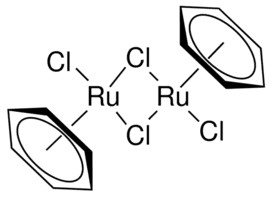
Benzeneruthenium(II) chloride dimer
Ru2(C6H6)2Cl4
Catalysis & Inorganic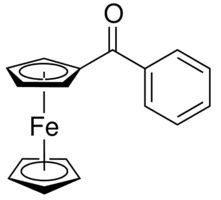
Benzoylferrocene
C17H14FeO
Catalysis & Inorganic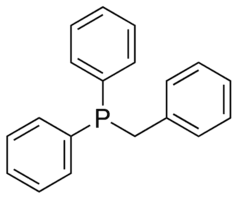
Benzyldiphenylphosphine
C6H5CH2P(C6H5)2
Catalysis & Inorganic
Beryllium
Be
Catalysis & Inorganic
Beryllium oxide
BeO
Catalysis & Inorganic![Bicyclo[2.2.1]hepta-2,5-diene-rhodium(I) chloride dimer — chemical structure, CAS 12257-42-0; Catalysis & Inorganic, fine chemical supplied by Tech Serve Solutions](/_next/image?url=https%3A%2F%2Fpub-f4d920c906024441a773a96f7098e551.r2.dev%2Fimages%2Fproducts%2F12257-42-0.png&w=3840&q=75)
Bicyclo[2.2.1]hepta-2,5-diene-rhodium(I) chloride dimer
Catalysis & Inorganic
![Bis[(10,11-η)-5-[(11bS)-dinaphtho[2,1-d:1′,2′-f][1,3,2]dioxaphosphepin-4-yl- κP4]-5H-dibenz[b,f]azepine]rhodium(I) tetrafluorobo — chemical structure, CAS 1228149-03-8; Catalysis & Inorganic, fine chemical supplied by Tech Serve Solutions](/_next/image?url=https%3A%2F%2Fpub-f4d920c906024441a773a96f7098e551.r2.dev%2Fimages%2Fproducts%2F1228149-03-8.png&w=3840&q=75)
Bis[(10,11-η)-5-[(11bS)-dinaphtho[2,1-d:1′,2′-f][1,3,2]dioxaphosphepin-4-yl- κP4]-5H-dibenz[b,f]azepine]rhodium(I) tetrafluorobo
1-d:1′
Catalysis & Inorganic![Bis[(2-dimethylamino)phenyl]amine nickel(II) chloride (C16H20ClN3Ni) — chemical structure, CAS 1033772-47-2; Catalysis & Inorganic, fine chemical supplied by Tech Serve Solutions](/_next/image?url=https%3A%2F%2Fpub-f4d920c906024441a773a96f7098e551.r2.dev%2Fimages%2Fproducts%2F1033772-47-2.png&w=3840&q=75)
Bis[(2-dimethylamino)phenyl]amine nickel(II) chloride
C16H20ClN3Ni
Catalysis & Inorganic