
Sodium nitrate
Sodium nitrate (CAS 7631-99-4), with the linear formula NaNO3 and a molar mass of 84.99 g/mol, is an inorganic salt. Commonly known as Chile salpeter, it is a white crystalline solid highly soluble in water. This versatile compound finds application in various industrial and laboratory settings, including as an oxidizer, in glass and ceramic manufacturing, and as a component in certain chemical syntheses.
- IUPAC
- Chile salpeter
- Synonyms
- Chile salpeterNitric acid sodium saltSoda niterSoda saltpeter

Chemical Synthesis Reagent
Sodium nitrate serves as a key reagent in various chemical syntheses, particularly where a source of nitrate ions or an oxidising agent is required. Its high purity and consistent quality make it suitable for research and development applications.
Oxidising Agent
As a strong oxidising agent, sodium nitrate is utilised in applications such as pyrotechnics and the production of explosives, though its handling requires strict safety protocols due to its reactive nature.
Industrial Processes
This inorganic salt is employed in the manufacturing of glass and ceramics, contributing to specific properties of the final products. It also finds use in heat treatment baths and as a component in certain fertilisers.
Laboratory Research
In laboratory settings, sodium nitrate is valued for its role in catalysis, inorganic chemistry research, and as a standard for analytical procedures. Its tested suitability for plant cell culture also supports its use in biological research.
| Molecular weight | 84.99 |
|---|---|
| Linear formula | NaNO3 |
| Assay | ≥99.0% |
| Grade | ReagentPlus® |
| Solubility | H2O: soluble1 M at 20 °C, clear, colorless |
| pH | 5.5-8.0 (25 °C, 1 M in H2O) |
| Impurities tested | insoluble matter, passes filter test |
| Melting point | 306 °C (dec.)(lit.) |
| Suitability | plant cell culture tested |


Hazard statements
- H272May intensify fire; oxidiser
- H302Harmful if swallowed
- H315Causes skin irritation
- H319Causes serious eye irritation
- H335May cause respiratory irritation
Precautionary statements
- P220Keep away from clothing and combustible materials
- P261Avoid breathing dust, fume, gas or vapours
- P305IF IN EYES
| Protective equipment | Eyeshields, full-face particle respirator type N100 (US), Gloves, respirator cartridge type N100 (US), type P1 (EN143) respirator filter, type P3 (EN 143) respirator cartridges |
|---|---|
| Transport (UN / ADR) | UN 1498 5.1 / PGIII |
| Water hazard class (WGK, DE) | 3 |
| Hazard codes (EU) | O,Xn |
| Risk statements (R) | 8-22-36/37/38 |
| Safety statements (S) | 17-26 |
| Anion traces | chloride (Cl-): ≤5 mg/kgiodate (IO3-): ≤5 mg/kgnitrite (NO2-): ≤10 mg/kgphosphate (PO43-): ≤2 mg/kgsulfate (SO42-): ≤30 mg/kg |
Hazard information is provided for guidance. Always consult the product Safety Data Sheet (SDS), available on request, before handling.
| Absorption | absorption1M/328 nm, H2O cut-off |
|---|
Documentation
Every batch ships with a Certificate of Analysis covering assay, identity and purity; the grade is confirmed against your enquiry. Safety Data Sheets and technical data sheets are available on request.
Supply & logistics
Samples for technical evaluation; bulk MOQ by grade and packaging. In-stock material ships in 7–10 working days, worldwide, with full export documentation.
What is Sodium nitrate used for?
+
Sodium nitrate is used as a chemical synthesis reagent, a strong oxidising agent, in industrial processes such as glass and ceramic manufacturing, and for laboratory research including plant cell culture.
What is the CAS number and formula for Sodium nitrate?
+
The CAS number for Sodium nitrate is 7631-99-4 and its linear formula is NaNO3.
What grade and purity does Tech Serve Solutions supply?
+
Tech Serve Solutions supplies Sodium nitrate in ReagentPlus® grade with an assay of ≥99.0%.
How should Sodium nitrate be handled safely?
+
Sodium nitrate is an oxidiser and harmful if swallowed, causing skin irritation, serious eye irritation, and may cause respiratory irritation. Appropriate personal protective equipment, including eyeshields, gloves, and respiratory protection (type N100 or P3 filters), must be used. Store away from combustible materials. Refer to the safety data sheet for full handling instructions.
Is Sodium nitrate controlled or regulated?
+
Sodium nitrate is classified as an oxidising substance (UN 1498, Hazard Class 5.1) and requires appropriate handling and documentation for transport. It is listed with hazard codes O (Oxidising) and Xn (Harmful) in Europe.
How are Sodium nitrate products shipped or exported?
+
Sodium nitrate is shipped and exported in compliance with regulations for UN 1498, Hazard Class 5.1, Packing Group III.
How can I request a sample or quote for Sodium nitrate?
+
To request a sample or quote for Sodium nitrate, please contact our sales department through the TSS website or by calling our customer service line.
▶ Related products
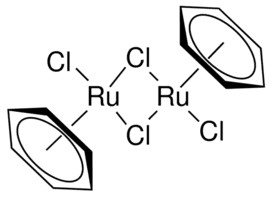
Benzeneruthenium(II) chloride dimer
Ru2(C6H6)2Cl4
Catalysis & Inorganic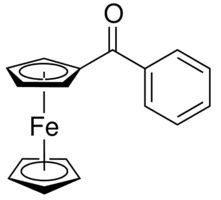
Benzoylferrocene
C17H14FeO
Catalysis & Inorganic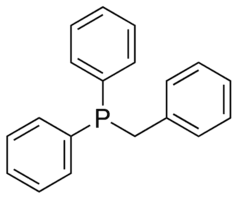
Benzyldiphenylphosphine
C6H5CH2P(C6H5)2
Catalysis & Inorganic
Beryllium
Be
Catalysis & Inorganic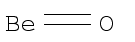
Beryllium oxide
BeO
Catalysis & Inorganic![Bicyclo[2.2.1]hepta-2,5-diene-rhodium(I) chloride dimer — chemical structure, CAS 12257-42-0; Catalysis & Inorganic, fine chemical supplied by Tech Serve Solutions](/_next/image?url=https%3A%2F%2Fpub-f4d920c906024441a773a96f7098e551.r2.dev%2Fimages%2Fproducts%2F12257-42-0.png&w=3840&q=75)
Bicyclo[2.2.1]hepta-2,5-diene-rhodium(I) chloride dimer
Catalysis & Inorganic
![Bis[(10,11-η)-5-[(11bS)-dinaphtho[2,1-d:1′,2′-f][1,3,2]dioxaphosphepin-4-yl- κP4]-5H-dibenz[b,f]azepine]rhodium(I) tetrafluorobo — chemical structure, CAS 1228149-03-8; Catalysis & Inorganic, fine chemical supplied by Tech Serve Solutions](/_next/image?url=https%3A%2F%2Fpub-f4d920c906024441a773a96f7098e551.r2.dev%2Fimages%2Fproducts%2F1228149-03-8.png&w=3840&q=75)
Bis[(10,11-η)-5-[(11bS)-dinaphtho[2,1-d:1′,2′-f][1,3,2]dioxaphosphepin-4-yl- κP4]-5H-dibenz[b,f]azepine]rhodium(I) tetrafluorobo
1-d:1′
Catalysis & Inorganic![Bis[(2-dimethylamino)phenyl]amine nickel(II) chloride (C16H20ClN3Ni) — chemical structure, CAS 1033772-47-2; Catalysis & Inorganic, fine chemical supplied by Tech Serve Solutions](/_next/image?url=https%3A%2F%2Fpub-f4d920c906024441a773a96f7098e551.r2.dev%2Fimages%2Fproducts%2F1033772-47-2.png&w=3840&q=75)
Bis[(2-dimethylamino)phenyl]amine nickel(II) chloride
C16H20ClN3Ni
Catalysis & Inorganic▶ Explore more

Bis(cyclopentadienyl)cobalt(III) hexafluorophosphate
C10H10CoF6P
Catalysis & Inorganic
1-(4-Chlorophenyl)biguanide hydrochloride
ClC6H4NHC(NH)NHC(NH)NH2 · HCl
Chemical Synthesis
Bis(cyclopentadienyl)dimethylzirconium(IV)
Catalysis & Inorganic

1-(4-Chlorophenyl)ethanol
ClC6H4CH(CH3)OH
Chemical Synthesis