
Silver(I) oxide
Silver(I) oxide (CAS: 20667-12-3; Formula: Ag2O; Molar Mass: 231.74 g/mol) is a potent oxidizing agent used in organic synthesis. It is particularly effective for generating lactones from diols and mediating the monoprotection of symmetrical diols. Available as a powder or chunks with an assay of ≥99.99% trace metals basis, this compound is vital for advanced chemical research and materials science applications.
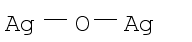
Lactone Synthesis
Silver(I) oxide serves as a crucial oxidizing agent for the efficient conversion of diols into lactones, a common structural motif in natural products and pharmaceuticals.
Selective Diol Monoprotection
This reagent facilitates the selective monoprotection of symmetrical diols using alkyl halides, yielding the desired protected intermediate with good to excellent yields in synthetic pathways.
Oxidizing Agent
As a strong oxidizing agent, Ag2O plays a key role in various chemical transformations within organic synthesis and inorganic chemistry.
| Molecular weight | 231.74 |
|---|---|
| Empirical formula | Ag2O |
| Assay | ≥99.99% trace metals basis |
| Form | powder and chunks |
| Application | Oxidizing agent for the generation of lactones from diols.1 Mediates monoprotection of symmetrical diols with alkyl halides in good to excellent yield.2 |


Hazard statements
- H271May cause fire or explosion; strong oxidiser
- H318Causes serious eye damage
- H410Very toxic to aquatic life with long-lasting effects
Precautionary statements
- P220Keep away from clothing and combustible materials
- P273Avoid release to the environment
- P280Wear protective gloves, clothing and eye/face protection
- P305IF IN EYES
- P501Dispose of contents and container per local regulations
| Protective equipment | dust mask type N95 (US), Eyeshields, Gloves |
|---|---|
| Transport (UN / ADR) | UN 1479 5.1 / PGII |
| Water hazard class (WGK, DE) | 2 |
| Hazard codes (EU) | O,Xi,N |
| Risk statements (R) | 8-41-50/53 |
| Safety statements (S) | 26-39-60-61 |
Hazard information is provided for guidance. Always consult the product Safety Data Sheet (SDS), available on request, before handling.
Documentation
Every batch ships with a Certificate of Analysis covering assay, identity and purity; the grade is confirmed against your enquiry. Safety Data Sheets and technical data sheets are available on request.
Supply & logistics
Samples for technical evaluation; bulk MOQ by grade and packaging. In-stock material ships in 7–10 working days, worldwide, with full export documentation.
What is Silver(I) oxide used for?
+
Silver(I) oxide is primarily used as an oxidizing agent for the generation of lactones from diols and for the monoprotection of symmetrical diols with alkyl halides in organic synthesis.
What are the CAS number and formula for Silver(I) oxide?
+
The CAS number for Silver(I) oxide is 20667-12-3, and its chemical formula is Ag2O.
What grade and purity does Tech Serve Solutions supply for Silver(I) oxide?
+
Tech Serve Solutions supplies Silver(I) oxide with an assay of ≥99.99% trace metals basis. This product is supplied for research and laboratory use and is not represented as meeting USP, BP, EP, or other pharmacopoeia standards.
What are the primary safety concerns when handling Silver(I) oxide?
+
Silver(I) oxide is a Danger-classified substance (GHS03, GHS05, GHS09) with hazards including H271 (May intensify fire; oxidizer) and H318 (Causes serious eye damage), and H410 (Very toxic to aquatic life with long-lasting effects). Always use appropriate personal protective equipment such as eyeshields, gloves, and a dust mask (N95 US type), and handle in a well-ventilated area.
How is Silver(I) oxide packaged and shipped by TSS?
+
Silver(I) oxide is available as powder and chunks. It is classified under UN 1479, Hazard Class 5.1, Packing Group II for transport. TSS ensures compliant packaging for safe global export.
How can I request a quote or sample for Silver(I) oxide?
+
To request a quote or sample of Silver(I) oxide, please contact our sales team via the website or by phone, providing your specific requirements and shipping details.
▶ Related products
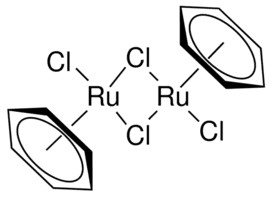
Benzeneruthenium(II) chloride dimer
Ru2(C6H6)2Cl4
Catalysis & Inorganic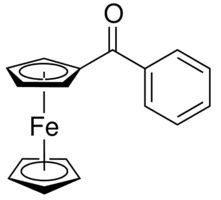
Benzoylferrocene
C17H14FeO
Catalysis & Inorganic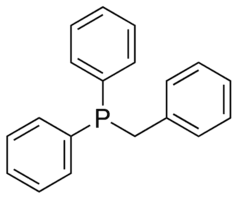
Benzyldiphenylphosphine
C6H5CH2P(C6H5)2
Catalysis & Inorganic
Beryllium
Be
Catalysis & Inorganic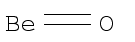
Beryllium oxide
BeO
Catalysis & Inorganic![Bicyclo[2.2.1]hepta-2,5-diene-rhodium(I) chloride dimer — chemical structure, CAS 12257-42-0; Catalysis & Inorganic, fine chemical supplied by Tech Serve Solutions](/_next/image?url=https%3A%2F%2Fpub-f4d920c906024441a773a96f7098e551.r2.dev%2Fimages%2Fproducts%2F12257-42-0.png&w=3840&q=75)
Bicyclo[2.2.1]hepta-2,5-diene-rhodium(I) chloride dimer
Catalysis & Inorganic
![Bis[(10,11-η)-5-[(11bS)-dinaphtho[2,1-d:1′,2′-f][1,3,2]dioxaphosphepin-4-yl- κP4]-5H-dibenz[b,f]azepine]rhodium(I) tetrafluorobo — chemical structure, CAS 1228149-03-8; Catalysis & Inorganic, fine chemical supplied by Tech Serve Solutions](/_next/image?url=https%3A%2F%2Fpub-f4d920c906024441a773a96f7098e551.r2.dev%2Fimages%2Fproducts%2F1228149-03-8.png&w=3840&q=75)
Bis[(10,11-η)-5-[(11bS)-dinaphtho[2,1-d:1′,2′-f][1,3,2]dioxaphosphepin-4-yl- κP4]-5H-dibenz[b,f]azepine]rhodium(I) tetrafluorobo
1-d:1′
Catalysis & Inorganic![Bis[(2-dimethylamino)phenyl]amine nickel(II) chloride (C16H20ClN3Ni) — chemical structure, CAS 1033772-47-2; Catalysis & Inorganic, fine chemical supplied by Tech Serve Solutions](/_next/image?url=https%3A%2F%2Fpub-f4d920c906024441a773a96f7098e551.r2.dev%2Fimages%2Fproducts%2F1033772-47-2.png&w=3840&q=75)
Bis[(2-dimethylamino)phenyl]amine nickel(II) chloride
C16H20ClN3Ni
Catalysis & Inorganic▶ Explore more

Bis(cyclopentadienyl)cobalt(III) hexafluorophosphate
C10H10CoF6P
Catalysis & Inorganic
1-(4-Chlorophenyl)biguanide hydrochloride
ClC6H4NHC(NH)NHC(NH)NH2 · HCl
Chemical Synthesis
Bis(cyclopentadienyl)dimethylzirconium(IV)
Catalysis & Inorganic

1-(4-Chlorophenyl)ethanol
ClC6H4CH(CH3)OH
Chemical Synthesis