
Salicylaldehyde thiosemicarbazone palladium(II) chloride
Salicylaldehyde thiosemicarbazone palladium(II) chloride (CAS: 219954-63-9) is a palladium-based organometallic compound. This catalyst is formulated with the empirical formula C8H8ClN3OPdS and is primarily utilised in chemical synthesis. Its key application lies in facilitating Suzuki coupling reactions, particularly those conducted under aerobic conditions. Tech Serve Solutions supplies this chemical at a minimum purity of 97%.
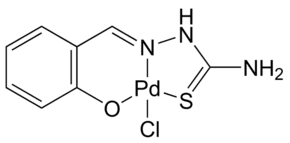
Suzuki Coupling Reactions
This palladium(II) complex serves as an effective catalyst for Suzuki coupling reactions. It is particularly noted for its utility in promoting these cross-coupling reactions under aerobic conditions, offering a convenient synthetic pathway.
Homogeneous Catalysis
As a homogeneous palladium catalyst, it operates within the same phase as the reactants, enabling efficient interaction and promoting desired chemical transformations. Its structure is suited for various organic synthesis applications.
Palladacycle Chemistry
This compound falls under the category of palladacycle catalysts, which are known for their stability and reactivity in diverse coupling reactions. It is a valuable reagent for researchers in organometallic chemistry and synthesis.
| Empirical formula | C8H8ClN3OPdS |
|---|---|
| Assay | 97% |
| Application | Catalyst used for Suzuki Coupling under aerobic conditions1 |
| Melting point | >300 °C |

Hazard statements
- H301Toxic if swallowed
- H311Toxic in contact with skin
- H331Toxic if inhaled
Precautionary statements
- P261Avoid breathing dust, fume, gas or vapours
- P280Wear protective gloves, clothing and eye/face protection
- P301IF SWALLOWED
- P311Call a POISON CENTER or doctor
| Protective equipment | Eyeshields, Faceshields, Gloves, type P2 (EN 143) respirator cartridges |
|---|---|
| Transport (UN / ADR) | UN 3467 6.1 / PGIII |
| Water hazard class (WGK, DE) | 3 |
| Hazard codes (EU) | T |
| Risk statements (R) | 23/24/25 |
| Safety statements (S) | 36/37-45 |
Hazard information is provided for guidance. Always consult the product Safety Data Sheet (SDS), available on request, before handling.
Documentation
Every batch ships with a Certificate of Analysis covering assay, identity and purity; the grade is confirmed against your enquiry. Safety Data Sheets and technical data sheets are available on request.
Supply & logistics
Samples for technical evaluation; bulk MOQ by grade and packaging. In-stock material ships in 7–10 working days, worldwide, with full export documentation.
What is Salicylaldehyde thiosemicarbazone palladium(II) chloride used for?
+
Salicylaldehyde thiosemicarbazone palladium(II) chloride (CAS: 219954-63-9) is primarily used as a catalyst for Suzuki coupling reactions, especially under aerobic conditions.
What is the CAS number and formula for Salicylaldehyde thiosemicarbazone palladium(II) chloride?
+
The CAS number is 219954-63-9, and the empirical formula (Hill notation) is C8H8ClN3OPdS.
What grade and purity does Tech Serve Solutions supply?
+
Tech Serve Solutions supplies Salicylaldehyde thiosemicarbazone palladium(II) chloride with an assay of 97%. We do not represent this product as USP, BP, EP, or any other pharmacopoeia grade.
What are the main safety concerns for this product?
+
This compound is classified as toxic if swallowed, in contact with skin, or if inhaled (H301-H311-H331). It requires careful handling with appropriate personal protective equipment, including eyeshields, faceshields, gloves, and a P2 respirator. Users must follow all provided safety statements and precautionary measures.
How is this chemical handled, packed, and exported?
+
This chemical is labelled with UN 3467, Class 6.1, Packing Group III. Tech Serve Solutions ensures compliance with all relevant regulations for packing, shipping, and exporting fine chemicals globally.
How can I request a quote or sample?
+
To request a quote or a sample of Salicylaldehyde thiosemicarbazone palladium(II) chloride, please visit the Tech Serve Solutions website or contact our sales department directly.
▶ Related products
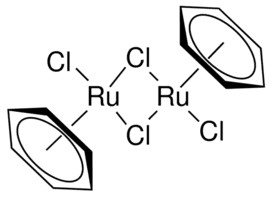
Benzeneruthenium(II) chloride dimer
Ru2(C6H6)2Cl4
Catalysis & Inorganic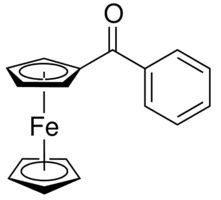
Benzoylferrocene
C17H14FeO
Catalysis & Inorganic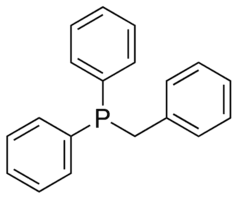
Benzyldiphenylphosphine
C6H5CH2P(C6H5)2
Catalysis & Inorganic
Beryllium
Be
Catalysis & Inorganic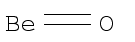
Beryllium oxide
BeO
Catalysis & Inorganic![Bicyclo[2.2.1]hepta-2,5-diene-rhodium(I) chloride dimer — chemical structure, CAS 12257-42-0; Catalysis & Inorganic, fine chemical supplied by Tech Serve Solutions](/_next/image?url=https%3A%2F%2Fpub-f4d920c906024441a773a96f7098e551.r2.dev%2Fimages%2Fproducts%2F12257-42-0.png&w=3840&q=75)
Bicyclo[2.2.1]hepta-2,5-diene-rhodium(I) chloride dimer
Catalysis & Inorganic
![Bis[(10,11-η)-5-[(11bS)-dinaphtho[2,1-d:1′,2′-f][1,3,2]dioxaphosphepin-4-yl- κP4]-5H-dibenz[b,f]azepine]rhodium(I) tetrafluorobo — chemical structure, CAS 1228149-03-8; Catalysis & Inorganic, fine chemical supplied by Tech Serve Solutions](/_next/image?url=https%3A%2F%2Fpub-f4d920c906024441a773a96f7098e551.r2.dev%2Fimages%2Fproducts%2F1228149-03-8.png&w=3840&q=75)
Bis[(10,11-η)-5-[(11bS)-dinaphtho[2,1-d:1′,2′-f][1,3,2]dioxaphosphepin-4-yl- κP4]-5H-dibenz[b,f]azepine]rhodium(I) tetrafluorobo
1-d:1′
Catalysis & Inorganic![Bis[(2-dimethylamino)phenyl]amine nickel(II) chloride (C16H20ClN3Ni) — chemical structure, CAS 1033772-47-2; Catalysis & Inorganic, fine chemical supplied by Tech Serve Solutions](/_next/image?url=https%3A%2F%2Fpub-f4d920c906024441a773a96f7098e551.r2.dev%2Fimages%2Fproducts%2F1033772-47-2.png&w=3840&q=75)
Bis[(2-dimethylamino)phenyl]amine nickel(II) chloride
C16H20ClN3Ni
Catalysis & Inorganic▶ Explore more

Bis(cyclopentadienyl)cobalt(III) hexafluorophosphate
C10H10CoF6P
Catalysis & Inorganic
1-(4-Chlorophenyl)biguanide hydrochloride
ClC6H4NHC(NH)NHC(NH)NH2 · HCl
Chemical Synthesis
Bis(cyclopentadienyl)dimethylzirconium(IV)
Catalysis & Inorganic

1-(4-Chlorophenyl)ethanol
ClC6H4CH(CH3)OH
Chemical Synthesis