Ruthenium(III) acetylacetonate
Ruthenium(III) acetylacetonate (CAS: 14284-93-6), with the formula Ru(C5H7O2)3 and a molecular weight of 398.39 g/mol, is a ruthenium complex supplied by Tech Serve Solutions. This solid compound, typically at 97% assay, finds utility as a catalyst in chemical synthesis, particularly for reactions like the hydrogenation of dimethyl oxalate to ethylene glycol under mild conditions. It is also relevant in materials science and micro/nanoelectronics.
- IUPAC
- 2,4-Pentanedione ruthenium(III) derivative,Ru(acac)3
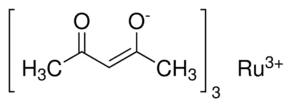
Catalysis in Organic Synthesis
Ruthenium(III) acetylacetonate is employed as a catalyst in organic transformations. Notably, it catalyzes the hydrogenation of dimethyl oxalate to ethylene glycol, offering a valuable route to this important chemical under mild reaction conditions.
Materials Science Precursor
This ruthenium complex serves as a precursor in materials science applications. Its decomposition or reaction can lead to the formation of ruthenium-containing materials or thin films, relevant for various technological advancements.
Chemical Vapor Deposition (CVD)
Ruthenium(III) acetylacetonate is utilized as a precursor in deposition techniques such as Chemical Vapor Deposition (CVD) or Atomic Layer Deposition (ALD). This allows for the creation of thin films of ruthenium or ruthenium oxide for microelectronic applications.
| Molecular weight | 398.39 |
|---|---|
| Linear formula | Ru(C5H7O2)3 |
| Assay | 97% |
| Form | solid |
| Application | Catalyzes the hydrogenation of dimethyl oxalate to ethylene glycol under mild conditions.1 |
| Melting point | 260 °C (dec.)(lit.) |

Hazard statements
- H315Causes skin irritation
- H319Causes serious eye irritation
- H335May cause respiratory irritation
Precautionary statements
- P261Avoid breathing dust, fume, gas or vapours
- P305IF IN EYES
| Protective equipment | dust mask type N95 (US), Eyeshields, Gloves |
|---|---|
| Water hazard class (WGK, DE) | 3 |
| Hazard codes (EU) | Xi |
| Risk statements (R) | 36/37/38 |
| Safety statements (S) | 26-36 |
Hazard information is provided for guidance. Always consult the product Safety Data Sheet (SDS), available on request, before handling.
Documentation
Every batch ships with a Certificate of Analysis covering assay, identity and purity; the grade is confirmed against your enquiry. Safety Data Sheets and technical data sheets are available on request.
Supply & logistics
Samples for technical evaluation; bulk MOQ by grade and packaging. In-stock material ships in 7–10 working days, worldwide, with full export documentation.
What is Ruthenium(III) acetylacetonate used for?
+
Ruthenium(III) acetylacetonate is used as a catalyst in chemical synthesis, particularly for the hydrogenation of dimethyl oxalate to ethylene glycol. It also finds applications in materials science and as a precursor for thin film deposition in micro/nanoelectronics.
What are the CAS number and chemical formula for Ruthenium(III) acetylacetonate?
+
The CAS number for Ruthenium(III) acetylacetonate is 14284-93-6, and its chemical formula is Ru(C5H7O2)3.
What grade and purity does Tech Serve Solutions supply?
+
Tech Serve Solutions supplies Ruthenium(III) acetylacetonate with an assay of 97%. We do not represent this product as USP, BP, EP, or other pharmacopoeial grades.
How should Ruthenium(III) acetylacetonate be handled safely?
+
Ruthenium(III) acetylacetonate is a Warning substance that causes skin irritation (H315), serious eye irritation (H319), and may cause respiratory irritation (H335). Handle with appropriate personal protective equipment including eyeshields, gloves, and a dust mask (type N95). Ensure good ventilation.
How is this chemical packed, shipped, and exported?
+
Tech Serve Solutions professionally packs, ships, and exports Ruthenium(III) acetylacetonate globally, adhering to all relevant transport and safety regulations for chemical substances.
How can I request a quote or sample for Ruthenium(III) acetylacetonate?
+
To request a quote or sample for Ruthenium(III) acetylacetonate, please contact our sales team through the website or by phone, providing your specific requirements.
▶ Related products
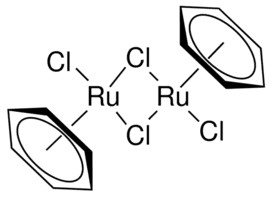
Benzeneruthenium(II) chloride dimer
Ru2(C6H6)2Cl4
Catalysis & Inorganic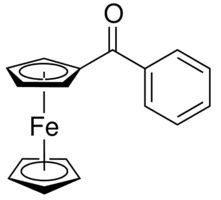
Benzoylferrocene
C17H14FeO
Catalysis & Inorganic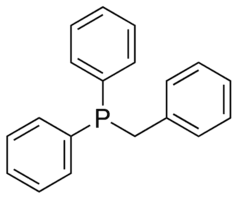
Benzyldiphenylphosphine
C6H5CH2P(C6H5)2
Catalysis & Inorganic
Beryllium
Be
Catalysis & Inorganic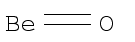
Beryllium oxide
BeO
Catalysis & Inorganic![Bicyclo[2.2.1]hepta-2,5-diene-rhodium(I) chloride dimer — chemical structure, CAS 12257-42-0; Catalysis & Inorganic, fine chemical supplied by Tech Serve Solutions](/_next/image?url=https%3A%2F%2Fpub-f4d920c906024441a773a96f7098e551.r2.dev%2Fimages%2Fproducts%2F12257-42-0.png&w=3840&q=75)
Bicyclo[2.2.1]hepta-2,5-diene-rhodium(I) chloride dimer
Catalysis & Inorganic
![Bis[(10,11-η)-5-[(11bS)-dinaphtho[2,1-d:1′,2′-f][1,3,2]dioxaphosphepin-4-yl- κP4]-5H-dibenz[b,f]azepine]rhodium(I) tetrafluorobo — chemical structure, CAS 1228149-03-8; Catalysis & Inorganic, fine chemical supplied by Tech Serve Solutions](/_next/image?url=https%3A%2F%2Fpub-f4d920c906024441a773a96f7098e551.r2.dev%2Fimages%2Fproducts%2F1228149-03-8.png&w=3840&q=75)
Bis[(10,11-η)-5-[(11bS)-dinaphtho[2,1-d:1′,2′-f][1,3,2]dioxaphosphepin-4-yl- κP4]-5H-dibenz[b,f]azepine]rhodium(I) tetrafluorobo
1-d:1′
Catalysis & Inorganic![Bis[(2-dimethylamino)phenyl]amine nickel(II) chloride (C16H20ClN3Ni) — chemical structure, CAS 1033772-47-2; Catalysis & Inorganic, fine chemical supplied by Tech Serve Solutions](/_next/image?url=https%3A%2F%2Fpub-f4d920c906024441a773a96f7098e551.r2.dev%2Fimages%2Fproducts%2F1033772-47-2.png&w=3840&q=75)
Bis[(2-dimethylamino)phenyl]amine nickel(II) chloride
C16H20ClN3Ni
Catalysis & Inorganic