
RuPhos Pd G2
RuPhos Pd G2 (CAS: 1375325-68-0), with a molecular weight of 776.72 g/mol and formula C42H53ClNO2PPd, is a second-generation palladacycle complex. It is a highly effective homogeneous palladium catalyst, widely recognised for its utility in various cross-coupling reactions. This advanced catalyst is instrumental in facilitating complex organic syntheses within academic research and industrial chemical production, offering superior performance and efficiency.
- IUPAC
- 2nd Generation RuPhos Precatalyst,Chloro(2-dicyclohexylphosphino-2′,6′-diisopropoxy-1,1′-biphenyl)[2-(2′-amino-1,1′-biphenyl)]palladium(II),RuPhos-Pd-G2
- Synonyms
- RuPhos-Pd-G2

Suzuki-Miyaura Coupling
RuPhos Pd G2 is an excellent catalyst for Suzuki-Miyaura cross-coupling reactions, enabling the formation of carbon-carbon bonds between aryl/vinyl halides and boronic acids or esters under mild conditions.
Buchwald-Hartwig Amination
This palladium complex is highly efficient in catalysing Buchwald-Hartwig amination, facilitating the synthesis of arylamines by coupling aryl halides with primary or secondary amines.
Cross-Coupling Reactions
As a versatile homogeneous Pd catalyst, RuPhos Pd G2 is employed in a broad spectrum of cross-coupling methodologies crucial for constructing complex organic molecules.
Organic Synthesis
It serves as a vital reagent in advanced organic synthesis, aiding in the efficient construction of challenging molecular architectures for pharmaceutical and materials science research.
| Molecular weight | 776.72 |
|---|---|
| Empirical formula | C42H53ClNO2PPd |
| Melting point | 195-197 °C |
Documentation
Every batch ships with a Certificate of Analysis covering assay, identity and purity; the grade is confirmed against your enquiry. Safety Data Sheets and technical data sheets are available on request.
Supply & logistics
Samples for technical evaluation; bulk MOQ by grade and packaging. In-stock material ships in 7–10 working days, worldwide, with full export documentation.
What is RuPhos Pd G2 primarily used for?
+
RuPhos Pd G2 is primarily used as a highly active homogeneous palladium catalyst for various cross-coupling reactions, including Suzuki-Miyaura coupling and Buchwald-Hartwig amination, in organic synthesis.
What are the CAS number and molecular formula for RuPhos Pd G2?
+
The CAS number for RuPhos Pd G2 is 1375325-68-0, and its molecular formula is C42H53ClNO2PPd.
What grade and purity does Tech Serve Solutions supply?
+
Tech Serve Solutions supplies RuPhos Pd G2 in research grade. We do not represent this product as USP, BP, or EP grade.
What are the safety considerations when handling RuPhos Pd G2?
+
RuPhos Pd G2 is classified as hazardous. It is harmful if swallowed and causes skin irritation and serious eye irritation. Handle with appropriate personal protective equipment in a well-ventilated area. Refer to the Safety Data Sheet for comprehensive handling instructions.
Is RuPhos Pd G2 available for international export?
+
Yes, Tech Serve Solutions specialises in the global supply and export of fine chemicals, including RuPhos Pd G2, to researchers and industries worldwide.
How can I request a quote or sample for RuPhos Pd G2?
+
To request a quote or sample of RuPhos Pd G2, please contact our sales team through the website or by phone, providing your specific requirements.
▶ Related products
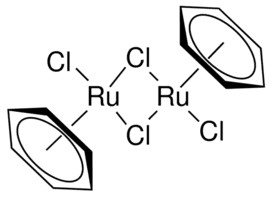
Benzeneruthenium(II) chloride dimer
Ru2(C6H6)2Cl4
Catalysis & Inorganic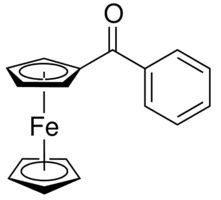
Benzoylferrocene
C17H14FeO
Catalysis & Inorganic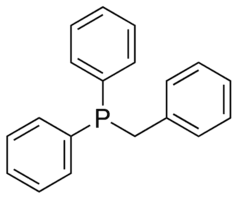
Benzyldiphenylphosphine
C6H5CH2P(C6H5)2
Catalysis & Inorganic
Beryllium
Be
Catalysis & Inorganic
Beryllium oxide
BeO
Catalysis & Inorganic![Bicyclo[2.2.1]hepta-2,5-diene-rhodium(I) chloride dimer — chemical structure, CAS 12257-42-0; Catalysis & Inorganic, fine chemical supplied by Tech Serve Solutions](/_next/image?url=https%3A%2F%2Fpub-f4d920c906024441a773a96f7098e551.r2.dev%2Fimages%2Fproducts%2F12257-42-0.png&w=3840&q=75)
Bicyclo[2.2.1]hepta-2,5-diene-rhodium(I) chloride dimer
Catalysis & Inorganic
![Bis[(10,11-η)-5-[(11bS)-dinaphtho[2,1-d:1′,2′-f][1,3,2]dioxaphosphepin-4-yl- κP4]-5H-dibenz[b,f]azepine]rhodium(I) tetrafluorobo — chemical structure, CAS 1228149-03-8; Catalysis & Inorganic, fine chemical supplied by Tech Serve Solutions](/_next/image?url=https%3A%2F%2Fpub-f4d920c906024441a773a96f7098e551.r2.dev%2Fimages%2Fproducts%2F1228149-03-8.png&w=3840&q=75)
Bis[(10,11-η)-5-[(11bS)-dinaphtho[2,1-d:1′,2′-f][1,3,2]dioxaphosphepin-4-yl- κP4]-5H-dibenz[b,f]azepine]rhodium(I) tetrafluorobo
1-d:1′
Catalysis & Inorganic![Bis[(2-dimethylamino)phenyl]amine nickel(II) chloride (C16H20ClN3Ni) — chemical structure, CAS 1033772-47-2; Catalysis & Inorganic, fine chemical supplied by Tech Serve Solutions](/_next/image?url=https%3A%2F%2Fpub-f4d920c906024441a773a96f7098e551.r2.dev%2Fimages%2Fproducts%2F1033772-47-2.png&w=3840&q=75)
Bis[(2-dimethylamino)phenyl]amine nickel(II) chloride
C16H20ClN3Ni
Catalysis & Inorganic▶ Explore more

Bis(cyclopentadienyl)cobalt(III) hexafluorophosphate
C10H10CoF6P
Catalysis & Inorganic
1-(4-Chlorophenyl)biguanide hydrochloride
ClC6H4NHC(NH)NHC(NH)NH2 · HCl
Chemical Synthesis
Bis(cyclopentadienyl)dimethylzirconium(IV)
Catalysis & Inorganic

1-(4-Chlorophenyl)ethanol
ClC6H4CH(CH3)OH
Chemical Synthesis