
Platinum
Platinum (CAS: 7440-06-4, Formula: Pt) is a dense, lustrous, silver-white transition metal known for its exceptional corrosion resistance and catalytic activity. Supplied as a nanopowder with a high surface area, it is particularly effective in applications requiring rapid reaction rates. Key uses include fuel cells, oxidation catalysts, and as an electrode material in various advanced technological applications, owing to its unique chemical and physical properties.

Catalysis
Nanoscale platinum powders offer enhanced catalytic activity due to their high surface area, making them ideal for various chemical reactions, including oxidation processes.
Fuel Cells
Platinum nanopowders are widely employed as catalysts in fuel cells, facilitating the electrochemical reactions essential for energy conversion.
Electrode Materials
Its excellent conductivity and stability make platinum a crucial material for electrodes in electrochemical applications and scientific research.
Materials Science
Platinum's unique properties are leveraged in materials science for developing advanced components and substrates, particularly in electronics and specialized coatings.
| Molecular weight | 195.08 |
|---|---|
| Empirical formula | Pt |
| Assay | 99.9% (metals basis) |
| Form | nanopowder |
| Boiling point | 3827 °C(lit.) |
| Density | 21.45 g/cm3(lit.) |
| Particle size | <50 nm (TEM) |
| Melting point | 1772 °C(lit.) |
| Application | Nanoscale platinum powders possess improved reaction rates compared to bulk powders owing to their high surface area. Platinum nanopowders have found use in applications including in fuel cells and oxidation catalysts. |

Hazard statements
- H228Flammable solid
Precautionary statements
- P210Keep away from heat, sparks and open flames. No smoking
| Transport (UN / ADR) | UN 3089 4.1 / PGII |
|---|---|
| Water hazard class (WGK, DE) | nwg |
| Hazard codes (EU) | F |
| Risk statements (R) | 11 |
| Safety statements (S) | 7/9-16-33 |
Hazard information is provided for guidance. Always consult the product Safety Data Sheet (SDS), available on request, before handling.
| Surface Area | spec. surface area 98.0 m2/g (BET) |
|---|---|
| Resistivity | 10.6 μΩ-cm, 20°C |
| Thickness | 0.5 mm |
| Weight | 4.3 g (one slug) |
Documentation
Every batch ships with a Certificate of Analysis covering assay, identity and purity; the grade is confirmed against your enquiry. Safety Data Sheets and technical data sheets are available on request.
Supply & logistics
Samples for technical evaluation; bulk MOQ by grade and packaging. In-stock material ships in 7–10 working days, worldwide, with full export documentation.
What is Platinum used for?
+
Platinum is used in catalysis, fuel cells, as an electrode material, and in materials science for advanced applications due to its corrosion resistance and catalytic properties.
What is the CAS number and formula for Platinum?
+
The CAS number for Platinum is 7440-06-4, and its chemical formula is Pt.
What grade and purity does Tech Serve Solutions supply for Platinum?
+
Tech Serve Solutions supplies Platinum with an assay of 99.9% (metals basis) in nanopowder form. We do not represent this product as USP, BP, or EP grade.
How should Platinum nanopowder be handled and stored?
+
Platinum nanopowder is a flammable solid (H228). It should be kept away from heat, hot surfaces, sparks, open flames, and other ignition sources. Handle with appropriate safety precautions, including personal protective equipment, and store in a well-ventilated place.
Is Platinum available for export?
+
Yes, Tech Serve Solutions is a global supplier and exporter of chemicals, including Platinum.
How can I request a quote or sample of Platinum?
+
To request a quote or sample of Platinum, please contact our sales team through the website or by phone, providing the product details and desired quantity.
▶ Related products
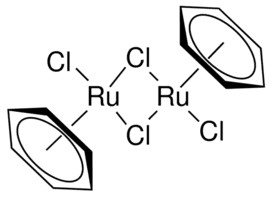
Benzeneruthenium(II) chloride dimer
Ru2(C6H6)2Cl4
Catalysis & Inorganic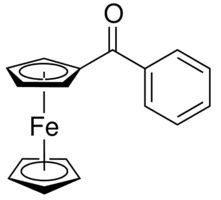
Benzoylferrocene
C17H14FeO
Catalysis & Inorganic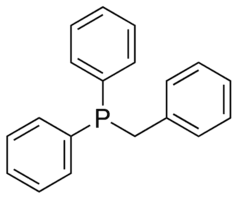
Benzyldiphenylphosphine
C6H5CH2P(C6H5)2
Catalysis & Inorganic
Beryllium
Be
Catalysis & Inorganic
Beryllium oxide
BeO
Catalysis & Inorganic![Bicyclo[2.2.1]hepta-2,5-diene-rhodium(I) chloride dimer — chemical structure, CAS 12257-42-0; Catalysis & Inorganic, fine chemical supplied by Tech Serve Solutions](/_next/image?url=https%3A%2F%2Fpub-f4d920c906024441a773a96f7098e551.r2.dev%2Fimages%2Fproducts%2F12257-42-0.png&w=3840&q=75)
Bicyclo[2.2.1]hepta-2,5-diene-rhodium(I) chloride dimer
Catalysis & Inorganic
![Bis[(10,11-η)-5-[(11bS)-dinaphtho[2,1-d:1′,2′-f][1,3,2]dioxaphosphepin-4-yl- κP4]-5H-dibenz[b,f]azepine]rhodium(I) tetrafluorobo — chemical structure, CAS 1228149-03-8; Catalysis & Inorganic, fine chemical supplied by Tech Serve Solutions](/_next/image?url=https%3A%2F%2Fpub-f4d920c906024441a773a96f7098e551.r2.dev%2Fimages%2Fproducts%2F1228149-03-8.png&w=3840&q=75)
Bis[(10,11-η)-5-[(11bS)-dinaphtho[2,1-d:1′,2′-f][1,3,2]dioxaphosphepin-4-yl- κP4]-5H-dibenz[b,f]azepine]rhodium(I) tetrafluorobo
1-d:1′
Catalysis & Inorganic![Bis[(2-dimethylamino)phenyl]amine nickel(II) chloride (C16H20ClN3Ni) — chemical structure, CAS 1033772-47-2; Catalysis & Inorganic, fine chemical supplied by Tech Serve Solutions](/_next/image?url=https%3A%2F%2Fpub-f4d920c906024441a773a96f7098e551.r2.dev%2Fimages%2Fproducts%2F1033772-47-2.png&w=3840&q=75)
Bis[(2-dimethylamino)phenyl]amine nickel(II) chloride
C16H20ClN3Ni
Catalysis & Inorganic▶ Explore more

Bis(cyclopentadienyl)cobalt(III) hexafluorophosphate
C10H10CoF6P
Catalysis & Inorganic
1-(4-Chlorophenyl)biguanide hydrochloride
ClC6H4NHC(NH)NHC(NH)NH2 · HCl
Chemical Synthesis
Bis(cyclopentadienyl)dimethylzirconium(IV)
Catalysis & Inorganic

1-(4-Chlorophenyl)ethanol
ClC6H4CH(CH3)OH
Chemical Synthesis