
Pentamethylcyclopentadienylbis(triphenylphosphine)ruthenium(II) chloride
Pentamethylcyclopentadienylbis(triphenylphosphine)ruthenium(II) chloride (CAS 92361-49-4) is a specialised ruthenium catalyst with the linear formula [(C10H15)Ru(P(C6H5)3)2Cl] and a molecular weight of 796.32. This compound is particularly noted for its application in catalyzing the cycloaddition of azides and acetylenes, preferentially forming 1,5-disubstituted triazoles, even with internal acetylenes. It is supplied by Tech Serve Solutions for research and chemical synthesis purposes.
- IUPAC
- Chloro(pentamethylcyclopentadienyl)bis(triphenylphosphine)ruthenium(II),Cp*RuCl(PPh3)2
- Synonyms
- Cp*RuCl(PPh3)2Chloro(pentamethylcyclopentadienyl)bis(triphenylphosphine)ruthenium(II)
![Pentamethylcyclopentadienylbis(triphenylphosphine)ruthenium(II) chloride ([(C10H15)Ru(P((C6H5)3))2Cl]) — chemical structure, CAS 92361-49-4; Chemistry, fine chemical supplied by Tech Serve Solutions](/_next/image?url=https%3A%2F%2Fpub-f4d920c906024441a773a96f7098e551.r2.dev%2Fimages%2Fproducts%2F92361-49-4.png&w=3840&q=75)
1,5-Regioselective Triazole Synthesis
This ruthenium catalyst facilitates the cycloaddition of azides and acetylenes, yielding exclusively 1,5-disubstituted triazoles. This regioselectivity distinguishes it from copper catalysts, which typically favour 1,4-substitution.
Catalysis with Internal Alkynes
A significant advantage of this catalyst is its ability to mediate "click" cycloaddition reactions utilising internal acetylenes, a class of substrates often challenging for other catalytic systems.
Ruthenium-Catalysed Cycloadditions
As a sophisticated ruthenium complex, it serves as a powerful tool in organometallic chemistry and synthetic methodologies, enabling specific bond formations under mild conditions.
| Molecular weight | 796.32 |
|---|---|
| Linear formula | [(C10H15)Ru(P((C6H5)3))2Cl] |
| Storage temperature | 2-8°C |
| Application | Catalyst employed in the cycloaddtion of azides with acetylenes giving exclusively the 1,5-disubstitutedtriazoles in contrast to the 1,4-regiochemistry commonly observed with copper catalysis. Ruthenium catalysis also enables the use of internal acetylenes in these "click cycloaddtions".1 |
| Melting point | 128 °C (D) |
Documentation
Every batch ships with a Certificate of Analysis covering assay, identity and purity; the grade is confirmed against your enquiry. Safety Data Sheets and technical data sheets are available on request.
Supply & logistics
Samples for technical evaluation; bulk MOQ by grade and packaging. In-stock material ships in 7–10 working days, worldwide, with full export documentation.
What is Pentamethylcyclopentadienylbis(triphenylphosphine)ruthenium(II) chloride used for?
+
Pentamethylcyclopentadienylbis(triphenylphosphine)ruthenium(II) chloride is primarily used as a catalyst in organic synthesis, particularly for the regioselective cycloaddition of azides and acetylenes to form 1,5-disubstituted triazoles, including those derived from internal acetylenes.
What is the CAS number and formula for this compound?
+
The CAS number is 92361-49-4, and its linear formula is [(C10H15)Ru(P(C6H5)3)2Cl].
What grade and purity does Tech Serve Solutions supply?
+
Tech Serve Solutions supplies this compound for research purposes. The specific grade and purity are available upon request; it is not represented as USP, BP, or EP grade.
How should this chemical be handled and stored?
+
This compound is classified under WGK 2 (German water hazard class) and requires careful handling. It should be stored at 2-8°C to maintain its stability and efficacy. Consult the Safety Data Sheet for comprehensive handling information.
Is this product regulated or controlled?
+
The provided data does not indicate that this specific compound is a controlled substance.
How is this product shipped and exported?
+
Tech Serve Solutions reliably packs, ships, and exports a wide range of chemicals globally, adhering to all necessary regulations for safe transport.
How can I request a sample or quote?
+
To request a sample or obtain a quotation, please contact our sales team through the official Tech Serve Solutions website or direct inquiry channels.
▶ Related products
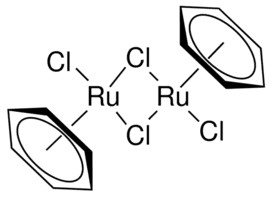
Benzeneruthenium(II) chloride dimer
Ru2(C6H6)2Cl4
Catalysis & Inorganic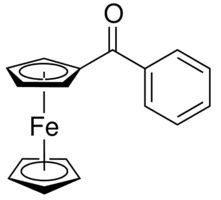
Benzoylferrocene
C17H14FeO
Catalysis & Inorganic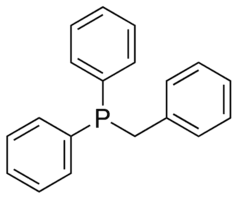
Benzyldiphenylphosphine
C6H5CH2P(C6H5)2
Catalysis & Inorganic
Beryllium
Be
Catalysis & Inorganic
Beryllium oxide
BeO
Catalysis & Inorganic![Bicyclo[2.2.1]hepta-2,5-diene-rhodium(I) chloride dimer — chemical structure, CAS 12257-42-0; Catalysis & Inorganic, fine chemical supplied by Tech Serve Solutions](/_next/image?url=https%3A%2F%2Fpub-f4d920c906024441a773a96f7098e551.r2.dev%2Fimages%2Fproducts%2F12257-42-0.png&w=3840&q=75)
Bicyclo[2.2.1]hepta-2,5-diene-rhodium(I) chloride dimer
Catalysis & Inorganic
![Bis[(10,11-η)-5-[(11bS)-dinaphtho[2,1-d:1′,2′-f][1,3,2]dioxaphosphepin-4-yl- κP4]-5H-dibenz[b,f]azepine]rhodium(I) tetrafluorobo — chemical structure, CAS 1228149-03-8; Catalysis & Inorganic, fine chemical supplied by Tech Serve Solutions](/_next/image?url=https%3A%2F%2Fpub-f4d920c906024441a773a96f7098e551.r2.dev%2Fimages%2Fproducts%2F1228149-03-8.png&w=3840&q=75)
Bis[(10,11-η)-5-[(11bS)-dinaphtho[2,1-d:1′,2′-f][1,3,2]dioxaphosphepin-4-yl- κP4]-5H-dibenz[b,f]azepine]rhodium(I) tetrafluorobo
1-d:1′
Catalysis & Inorganic![Bis[(2-dimethylamino)phenyl]amine nickel(II) chloride (C16H20ClN3Ni) — chemical structure, CAS 1033772-47-2; Catalysis & Inorganic, fine chemical supplied by Tech Serve Solutions](/_next/image?url=https%3A%2F%2Fpub-f4d920c906024441a773a96f7098e551.r2.dev%2Fimages%2Fproducts%2F1033772-47-2.png&w=3840&q=75)
Bis[(2-dimethylamino)phenyl]amine nickel(II) chloride
C16H20ClN3Ni
Catalysis & Inorganic▶ Explore more

Bis(cyclopentadienyl)cobalt(III) hexafluorophosphate
C10H10CoF6P
Catalysis & Inorganic
1-(4-Chlorophenyl)biguanide hydrochloride
ClC6H4NHC(NH)NHC(NH)NH2 · HCl
Chemical Synthesis
Bis(cyclopentadienyl)dimethylzirconium(IV)
Catalysis & Inorganic

1-(4-Chlorophenyl)ethanol
ClC6H4CH(CH3)OH
Chemical Synthesis