Mercury(II) thiocyanate
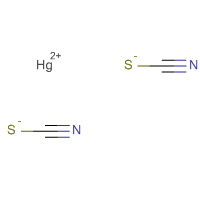
Mercury(II) thiocyanate (CAS: 592-85-8; Formula: Hg(SCN)₂; Molar Mass: 316.75 g/mol) is a white crystalline solid. It is primarily utilised as a catalyst in chemical synthesis, specifically for the addition of HSCN to alkynes. Its applications are concentrated within inorganic chemistry and catalysis research. This compound requires careful handling due to its significant toxicity and environmental hazards.
- IUPAC
- Mercuric isothiocyanate,Mercuric sulfocyanide,Mercuric thiocyanate,Mercury di(thiocyanate),Thiocyanic acid, mercury(II) salt
- Synonyms
- Mercuric isothiocyanateMercuric sulfocyanideMercuric thiocyanateMercury di(thiocyanate)Thiocyanic acid, mercury(II) salt
Catalysis in Organic Synthesis
Mercury(II) thiocyanate serves as an effective catalyst for the addition of thiocyanic acid (HSCN) to alkynes, facilitating specific chemical transformations in organic synthesis.
Inorganic Chemistry Research
This compound is employed in inorganic chemistry studies, contributing to the understanding and development of mercury-based chemical systems and reactions.
Chemical Synthesis Reagent
As a reagent in chemical synthesis, Hg(SCN)₂ can be used to introduce the thiocyanate group or as a precursor in the synthesis of other mercury compounds.
| Molecular weight | 316.75 |
|---|---|
| Linear formula | Hg(SCN)2 |
| Assay | ≥99.0% |
| Density | 3.71 g/mL at 25 °C(lit.) |
| Application | Catalyst for addition of HSCN to alkynes. |
| Melting point | 165 °C (dec.)(lit.) |


Hazard statements
- H300Fatal if swallowed
- H373May cause damage to organs through prolonged exposure
- H410Very toxic to aquatic life with long-lasting effects
Precautionary statements
- P260Do not breathe dust, fume, gas, mist, vapours or spray
- P264Wash thoroughly after handling
- P273Avoid release to the environment
- P280Wear protective gloves, clothing and eye/face protection
- P284Wear respiratory protection
- P301IF SWALLOWED
| Protective equipment | Eyeshields, Faceshields, full-face particle respirator type N100 (US), Gloves, respirator cartridge type N100 (US), type P1 (EN143) respirator filter, type P3 (EN 143) respirator cartridges |
|---|---|
| Flash point | 120 °C / 248 °F |
| Transport (UN / ADR) | UN 1646 6.1 / PGII |
| Water hazard class (WGK, DE) | 3 |
| Hazard codes (EU) | T+,N |
| Risk statements (R) | 26/27/28-33-50/53 |
| Safety statements (S) | 13-28-45-60-61 |
Hazard information is provided for guidance. Always consult the product Safety Data Sheet (SDS), available on request, before handling.
Documentation
Every batch ships with a Certificate of Analysis covering assay, identity and purity; the grade is confirmed against your enquiry. Safety Data Sheets and technical data sheets are available on request.
Supply & logistics
Samples for technical evaluation; bulk MOQ by grade and packaging. In-stock material ships in 7–10 working days, worldwide, with full export documentation.
What is Mercury(II) thiocyanate used for?
+
Mercury(II) thiocyanate (CAS: 592-85-8) is primarily used as a catalyst for the addition of HSCN to alkynes in chemical synthesis and in inorganic chemistry research.
What is the CAS number and formula for Mercury(II) thiocyanate?
+
The CAS number for Mercury(II) thiocyanate is 592-85-8, and its chemical formula is Hg(SCN)₂.
What grade and purity does Tech Serve Solutions supply?
+
Tech Serve Solutions supplies Mercury(II) thiocyanate with a minimum purity of ≥99.0%. This product is supplied for laboratory and industrial use; TSS does not represent it as USP, BP, or EP grade.
How should Mercury(II) thiocyanate be handled safely?
+
Mercury(II) thiocyanate is acutely toxic if swallowed, in contact with skin, or if inhaled (H300 +H310 + H330), and may cause damage to organs through prolonged or repeated exposure (H373). It is also very toxic to aquatic life with long-lasting effects (H410). Strict adherence to safety protocols, including wearing appropriate personal protective equipment such as gloves, eyeshields, and a suitable respirator, is mandatory.
Is Mercury(II) thiocyanate a controlled substance?
+
The provided data does not indicate that Mercury(II) thiocyanate is a controlled substance. However, due to its toxicity and the presence of mercury, its handling and disposal are subject to stringent regulations.
How is Mercury(II) thiocyanate typically packed and exported?
+
Mercury(II) thiocyanate is shipped and exported according to international regulations for hazardous materials, identified under UN 1646, Class 6.1, Packing Group II. Packaging is designed to ensure safety and compliance during transport.
How can I request a sample or quote for Mercury(II) thiocyanate?
+
To request a sample or a quote for Mercury(II) thiocyanate, please contact the Tech Serve Solutions sales department via our website or by phone, providing your specific requirements.
▶ Related products
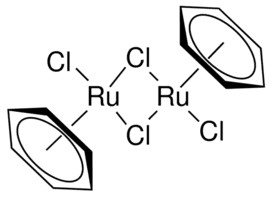
Benzeneruthenium(II) chloride dimer
Ru2(C6H6)2Cl4
Catalysis & Inorganic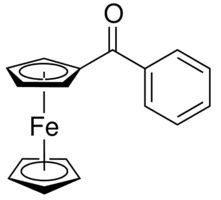
Benzoylferrocene
C17H14FeO
Catalysis & Inorganic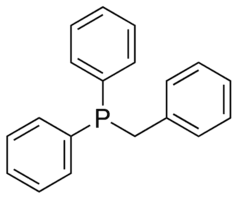
Benzyldiphenylphosphine
C6H5CH2P(C6H5)2
Catalysis & Inorganic
Beryllium
Be
Catalysis & Inorganic
Beryllium oxide
BeO
Catalysis & Inorganic![Bicyclo[2.2.1]hepta-2,5-diene-rhodium(I) chloride dimer — chemical structure, CAS 12257-42-0; Catalysis & Inorganic, fine chemical supplied by Tech Serve Solutions](/_next/image?url=https%3A%2F%2Fpub-f4d920c906024441a773a96f7098e551.r2.dev%2Fimages%2Fproducts%2F12257-42-0.png&w=3840&q=75)
Bicyclo[2.2.1]hepta-2,5-diene-rhodium(I) chloride dimer
Catalysis & Inorganic
![Bis[(10,11-η)-5-[(11bS)-dinaphtho[2,1-d:1′,2′-f][1,3,2]dioxaphosphepin-4-yl- κP4]-5H-dibenz[b,f]azepine]rhodium(I) tetrafluorobo — chemical structure, CAS 1228149-03-8; Catalysis & Inorganic, fine chemical supplied by Tech Serve Solutions](/_next/image?url=https%3A%2F%2Fpub-f4d920c906024441a773a96f7098e551.r2.dev%2Fimages%2Fproducts%2F1228149-03-8.png&w=3840&q=75)
Bis[(10,11-η)-5-[(11bS)-dinaphtho[2,1-d:1′,2′-f][1,3,2]dioxaphosphepin-4-yl- κP4]-5H-dibenz[b,f]azepine]rhodium(I) tetrafluorobo
1-d:1′
Catalysis & Inorganic![Bis[(2-dimethylamino)phenyl]amine nickel(II) chloride (C16H20ClN3Ni) — chemical structure, CAS 1033772-47-2; Catalysis & Inorganic, fine chemical supplied by Tech Serve Solutions](/_next/image?url=https%3A%2F%2Fpub-f4d920c906024441a773a96f7098e551.r2.dev%2Fimages%2Fproducts%2F1033772-47-2.png&w=3840&q=75)
Bis[(2-dimethylamino)phenyl]amine nickel(II) chloride
C16H20ClN3Ni
Catalysis & Inorganic