
Lithium niobate
Lithium niobate (CAS: 12031-63-9) is a synthetic inorganic compound with the linear formula LiNbO<sub>3</sub> and a molecular weight of 147.85 g/mol. It exists as a white crystalline powder. This material is primarily recognised for its pyroelectric, piezoelectric, and non-linear optical properties, making it valuable in advanced materials science, ceramics, and chemical synthesis applications.
- IUPAC
- Lithium metaniobatem,Lithium niobium oxide,Lithium niobium trioxide
- Synonyms
- Lithium metaniobatemLithium niobium oxideLithium niobium trioxide

Non-linear Optics
Lithium niobate is widely used in optoelectronics for applications such as frequency doubling, optical modulation, and parametric oscillation due to its significant non-linear optical coefficients.
Piezoelectric Transducers
Its strong piezoelectric effect makes it suitable for manufacturing sensors, actuators, and ultrasonic transducers used in various electronic devices and medical imaging.
Pyroelectric Detectors
The pyroelectric properties of lithium niobate enable its use in infrared detectors and thermal imaging systems, where it converts temperature changes into electrical signals.
Materials Science Research
As a versatile inorganic compound, it serves as a key material in fundamental research within materials science, particularly in solid-state chemistry and advanced ceramics.
| Molecular weight | 147.85 |
|---|---|
| Linear formula | LiNbO3 |
| Assay | 99.9% trace metals basis |
| Form | powder |
| Particle size | 200 mesh |
Documentation
Every batch ships with a Certificate of Analysis covering assay, identity and purity; the grade is confirmed against your enquiry. Safety Data Sheets and technical data sheets are available on request.
Supply & logistics
Samples for technical evaluation; bulk MOQ by grade and packaging. In-stock material ships in 7–10 working days, worldwide, with full export documentation.
What is Lithium niobate used for?
+
Lithium niobate is utilised for its non-linear optical, piezoelectric, and pyroelectric properties in applications such as optical modulators, sensors, transducers, and infrared detectors. It is also used in materials science and chemical synthesis.
What is the CAS number and formula for Lithium niobate?
+
The CAS number for Lithium niobate is 12031-63-9 and its linear formula is LiNbO<sub>3</sub>.
What grade and purity does Tech Serve Solutions supply?
+
Tech Serve Solutions supplies Lithium niobate with an assay of 99.9% trace metals basis. We do not represent this product as USP, BP, or EP grade.
What are the safety and handling precautions for Lithium niobate?
+
Lithium niobate (CAS: 12031-63-9) is classified under WGK Germany 3. Appropriate personal protective equipment should be used when handling to avoid contact and inhalation. Refer to the Safety Data Sheet for comprehensive handling information.
How is Lithium niobate shipped and exported?
+
Tech Serve Solutions, a specialist global supplier and exporter since 1998, professionally packages and exports chemical products in compliance with international shipping regulations.
How can I request a quote or sample of Lithium niobate?
+
To request a quote or sample of Lithium niobate, please use the contact form on our website or contact our sales team directly.
▶ Related products
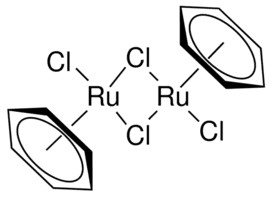
Benzeneruthenium(II) chloride dimer
Ru2(C6H6)2Cl4
Catalysis & Inorganic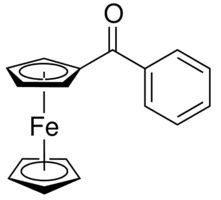
Benzoylferrocene
C17H14FeO
Catalysis & Inorganic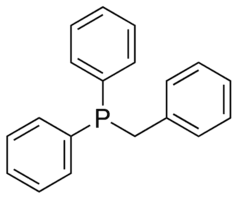
Benzyldiphenylphosphine
C6H5CH2P(C6H5)2
Catalysis & Inorganic
Beryllium
Be
Catalysis & Inorganic
Beryllium oxide
BeO
Catalysis & Inorganic![Bicyclo[2.2.1]hepta-2,5-diene-rhodium(I) chloride dimer — chemical structure, CAS 12257-42-0; Catalysis & Inorganic, fine chemical supplied by Tech Serve Solutions](/_next/image?url=https%3A%2F%2Fpub-f4d920c906024441a773a96f7098e551.r2.dev%2Fimages%2Fproducts%2F12257-42-0.png&w=3840&q=75)
Bicyclo[2.2.1]hepta-2,5-diene-rhodium(I) chloride dimer
Catalysis & Inorganic
![Bis[(10,11-η)-5-[(11bS)-dinaphtho[2,1-d:1′,2′-f][1,3,2]dioxaphosphepin-4-yl- κP4]-5H-dibenz[b,f]azepine]rhodium(I) tetrafluorobo — chemical structure, CAS 1228149-03-8; Catalysis & Inorganic, fine chemical supplied by Tech Serve Solutions](/_next/image?url=https%3A%2F%2Fpub-f4d920c906024441a773a96f7098e551.r2.dev%2Fimages%2Fproducts%2F1228149-03-8.png&w=3840&q=75)
Bis[(10,11-η)-5-[(11bS)-dinaphtho[2,1-d:1′,2′-f][1,3,2]dioxaphosphepin-4-yl- κP4]-5H-dibenz[b,f]azepine]rhodium(I) tetrafluorobo
1-d:1′
Catalysis & Inorganic![Bis[(2-dimethylamino)phenyl]amine nickel(II) chloride (C16H20ClN3Ni) — chemical structure, CAS 1033772-47-2; Catalysis & Inorganic, fine chemical supplied by Tech Serve Solutions](/_next/image?url=https%3A%2F%2Fpub-f4d920c906024441a773a96f7098e551.r2.dev%2Fimages%2Fproducts%2F1033772-47-2.png&w=3840&q=75)
Bis[(2-dimethylamino)phenyl]amine nickel(II) chloride
C16H20ClN3Ni
Catalysis & Inorganic▶ Explore more

Bis(cyclopentadienyl)cobalt(III) hexafluorophosphate
C10H10CoF6P
Catalysis & Inorganic
1-(4-Chlorophenyl)biguanide hydrochloride
ClC6H4NHC(NH)NHC(NH)NH2 · HCl
Chemical Synthesis
Bis(cyclopentadienyl)dimethylzirconium(IV)
Catalysis & Inorganic

1-(4-Chlorophenyl)ethanol
ClC6H4CH(CH3)OH
Chemical Synthesis