
Li-Quinoline Ligand
Li-Quinoline Ligand (CAS: 151657-37-3; Formula: C14H15NO; MW: 213.28) is a specialised organic compound primarily utilised as a ligand in catalysis. Its structure facilitates C-H activation reactions, particularly in conjunction with palladium catalysts like Pd(TFA)₂. This ligand is crucial for advanced synthetic chemistry, enabling the formation of complex molecules by selectively activating specific carbon-hydrogen bonds. It is supplied by Tech Serve Solutions for research and development purposes.
- IUPAC
- 3,4-Dihydro-2,5-dimethyl-2H-pyrano[2,3-b]quinoline
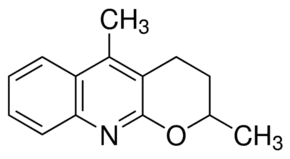
C-H Activation Catalysis
This quinoline-based ligand, when paired with palladium trifluoroacetate (Pd(TFA)₂), effectively promotes the C-H activation of β-Aryl-α-amino acids. The Yu group's research indicates an optimal 2:1 ratio of ligand to palladium source for this transformation.
Organic Synthesis
As a key auxiliary in modern synthetic methodologies, Li-Quinoline Ligand facilitates the development of novel synthetic routes. Its application is integral to building complex organic architectures with high selectivity.
Catalyst Development
The compound serves as a valuable component in the design and optimisation of catalytic systems for specific chemical transformations, contributing to advancements in inorganic and catalysis research.
| Molecular weight | 213.28 |
|---|---|
| Empirical formula | C14H15NO |
| Application | Ligand can be used in the presence of Pd(TFA)2 (Aldrich 299685) to promote C-H activation of β-Aryl-α-amino acids. This product has shown to be optimal with a 2:1 ratio of Ligand:Pd Source for several examples reported by the Yu group. |
| Melting point | 143-147 °C |
Documentation
Every batch ships with a Certificate of Analysis covering assay, identity and purity; the grade is confirmed against your enquiry. Safety Data Sheets and technical data sheets are available on request.
Supply & logistics
Samples for technical evaluation; bulk MOQ by grade and packaging. In-stock material ships in 7–10 working days, worldwide, with full export documentation.
What is Li-Quinoline Ligand used for?
+
Li-Quinoline Ligand (CAS: 151657-37-3) is primarily used as a ligand in palladium-catalysed C-H activation reactions, particularly for β-Aryl-α-amino acids.
What are the CAS number and chemical formula for Li-Quinoline Ligand?
+
The CAS number is 151657-37-3, and the chemical formula is C14H15NO.
What grade and purity does Tech Serve Solutions supply?
+
Tech Serve Solutions supplies Li-Quinoline Ligand as a research-grade chemical. We do not represent it as USP, BP, EP, or other pharmacopoeial grades.
What are the safety and handling considerations for Li-Quinoline Ligand?
+
This compound has a WGK Germany rating of 3, indicating it is hazardous for water. Please consult the Safety Data Sheet (SDS) for comprehensive handling, storage, and disposal information. Appropriate personal protective equipment should always be used.
How is Li-Quinoline Ligand shipped and exported?
+
Tech Serve Solutions is an experienced global supplier and exporter of fine chemicals, ensuring compliant packing and shipping for international destinations.
How can I request a quote or sample of Li-Quinoline Ligand?
+
To request a quote or sample, please use the contact form on our website or contact our sales department directly with your requirements.
▶ Related products
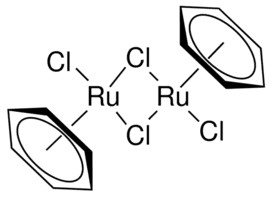
Benzeneruthenium(II) chloride dimer
Ru2(C6H6)2Cl4
Catalysis & Inorganic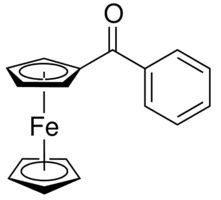
Benzoylferrocene
C17H14FeO
Catalysis & Inorganic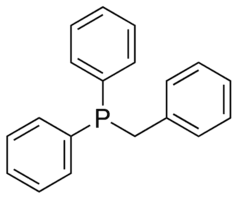
Benzyldiphenylphosphine
C6H5CH2P(C6H5)2
Catalysis & Inorganic
Beryllium
Be
Catalysis & Inorganic
Beryllium oxide
BeO
Catalysis & Inorganic![Bicyclo[2.2.1]hepta-2,5-diene-rhodium(I) chloride dimer — chemical structure, CAS 12257-42-0; Catalysis & Inorganic, fine chemical supplied by Tech Serve Solutions](/_next/image?url=https%3A%2F%2Fpub-f4d920c906024441a773a96f7098e551.r2.dev%2Fimages%2Fproducts%2F12257-42-0.png&w=3840&q=75)
Bicyclo[2.2.1]hepta-2,5-diene-rhodium(I) chloride dimer
Catalysis & Inorganic
![Bis[(10,11-η)-5-[(11bS)-dinaphtho[2,1-d:1′,2′-f][1,3,2]dioxaphosphepin-4-yl- κP4]-5H-dibenz[b,f]azepine]rhodium(I) tetrafluorobo — chemical structure, CAS 1228149-03-8; Catalysis & Inorganic, fine chemical supplied by Tech Serve Solutions](/_next/image?url=https%3A%2F%2Fpub-f4d920c906024441a773a96f7098e551.r2.dev%2Fimages%2Fproducts%2F1228149-03-8.png&w=3840&q=75)
Bis[(10,11-η)-5-[(11bS)-dinaphtho[2,1-d:1′,2′-f][1,3,2]dioxaphosphepin-4-yl- κP4]-5H-dibenz[b,f]azepine]rhodium(I) tetrafluorobo
1-d:1′
Catalysis & Inorganic![Bis[(2-dimethylamino)phenyl]amine nickel(II) chloride (C16H20ClN3Ni) — chemical structure, CAS 1033772-47-2; Catalysis & Inorganic, fine chemical supplied by Tech Serve Solutions](/_next/image?url=https%3A%2F%2Fpub-f4d920c906024441a773a96f7098e551.r2.dev%2Fimages%2Fproducts%2F1033772-47-2.png&w=3840&q=75)
Bis[(2-dimethylamino)phenyl]amine nickel(II) chloride
C16H20ClN3Ni
Catalysis & Inorganic▶ Explore more

Bis(cyclopentadienyl)cobalt(III) hexafluorophosphate
C10H10CoF6P
Catalysis & Inorganic
1-(4-Chlorophenyl)biguanide hydrochloride
ClC6H4NHC(NH)NHC(NH)NH2 · HCl
Chemical Synthesis
Bis(cyclopentadienyl)dimethylzirconium(IV)
Catalysis & Inorganic

1-(4-Chlorophenyl)ethanol
ClC6H4CH(CH3)OH
Chemical Synthesis