
Lead(IV) oxide
Lead(IV) oxide (CAS: 1309-60-0, PbO₂), also known as lead dioxide or lead peroxide, is a strong oxidizing agent. This inorganic compound is a brown or black solid, insoluble in water. It finds significant application as a key component in lead-acid batteries, acting as the active material in the positive electrode. Lead(IV) oxide also serves as an oxidant in various chemical syntheses and in the production of matches and dyes.
- IUPAC
- Lead (su)peroxide,Lead dioxide,Lead peroxide
- Synonyms
- Lead dioxideLead peroxidePlumbic oxideLead(4+) oxide

Lead-Acid Batteries
Lead(IV) oxide is the essential active material for the positive plates in lead-acid batteries. Its electrochemical properties facilitate the reversible conversion to lead sulfate during discharge and back to lead dioxide during charging.
Oxidizing Agent in Synthesis
As a potent oxidant, PbO₂ is employed in organic and inorganic synthesis to oxidise various functional groups and metal ions under controlled conditions. It is particularly useful for oxidising diols to diketones.
Dye and Match Production
Historically, lead dioxide has been used as an oxidizing agent in the production of certain dyes and in the manufacture of friction-based ignition devices, such as matches.
Laboratory Reagent
In laboratory settings, Lead(IV) oxide serves as a reliable reagent for specific oxidation reactions and analytical testing where a controlled and strong oxidizing environment is required.
| Molecular weight | 239.20 |
|---|---|
| Linear formula | PbO2 |
| Assay | 99.999% trace metals basis |


Hazard statements
- H272May intensify fire; oxidiser
- H302Harmful if swallowed
- H332Harmful if inhaled
- H360DF
- H373May cause damage to organs through prolonged exposure
- H410Very toxic to aquatic life with long-lasting effects
Precautionary statements
- P201Obtain special instructions before use
- P220Keep away from clothing and combustible materials
- P273Avoid release to the environment
- P308IF exposed or concerned
- P501Dispose of contents and container per local regulations
| Protective equipment | Eyeshields, full-face particle respirator type N100 (US), Gloves, respirator cartridge type N100 (US), type P1 (EN143) respirator filter, type P3 (EN 143) respirator cartridges |
|---|---|
| Transport (UN / ADR) | UN 1872 5.1/PG 3 |
| Water hazard class (WGK, DE) | 3 |
| Hazard codes (EU) | T,N |
| Risk statements (R) | 61-20/22-33-50/53-62 |
| Safety statements (S) | 53-45-60-61 |
Hazard information is provided for guidance. Always consult the product Safety Data Sheet (SDS), available on request, before handling.
Documentation
Every batch ships with a Certificate of Analysis covering assay, identity and purity; the grade is confirmed against your enquiry. Safety Data Sheets and technical data sheets are available on request.
Supply & logistics
Samples for technical evaluation; bulk MOQ by grade and packaging. In-stock material ships in 7–10 working days, worldwide, with full export documentation.
What is Lead(IV) oxide used for?
+
Lead(IV) oxide is primarily used as the active material in the positive electrodes of lead-acid batteries. It also functions as a strong oxidizing agent in chemical synthesis, and has historical applications in dye and match production.
What are the CAS number and chemical formula for Lead(IV) oxide?
+
The CAS number for Lead(IV) oxide is 1309-60-0, and its chemical formula is PbO₂.
What grade and purity does Tech Serve Solutions supply?
+
Tech Serve Solutions supplies Lead(IV) oxide with a purity of 99.999% on a trace metals basis. We do not represent this product as USP, BP, or EP grade.
How should Lead(IV) oxide be handled safely?
+
Lead(IV) oxide is a Danger hazard, classified as H272 (May intensify fire; oxidiser), H302 (Harmful if swallowed), H332 (Harmful if inhaled), H360Df (May damage fertility or the unborn child), H373 (May cause damage to organs through prolonged or repeated exposure), and H410 (Very toxic to aquatic life with long lasting effects). Appropriate personal protective equipment including eyeshields, gloves, and respiratory protection (N100 or P3 filter) is essential. Handle in a well-ventilated area away from combustible materials.
Is Lead(IV) oxide a controlled substance?
+
While not explicitly listed as a scheduled controlled substance in all jurisdictions, Lead(IV) oxide carries significant reproductive toxicity hazards (H360Df). Due to its hazardous nature and potential for misuse, its handling and sale may be subject to specific regulations.
How is Lead(IV) oxide packed, shipped, or exported?
+
Lead(IV) oxide is classified under UN 1872, Hazard Class 5.1 (Oxidising Substances), Packing Group III. Shipments are handled in accordance with international transport regulations for hazardous materials, ensuring secure and compliant packaging.
How can I request a quote or sample of Lead(IV) oxide?
+
To request a quote or a sample of Lead(IV) oxide, please contact our sales team through the website or by phone. Provide your specific requirements, including quantity and delivery details.
▶ Related products
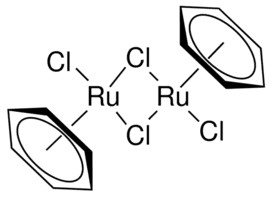
Benzeneruthenium(II) chloride dimer
Ru2(C6H6)2Cl4
Catalysis & Inorganic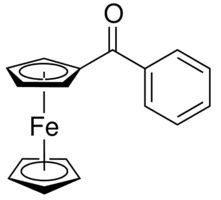
Benzoylferrocene
C17H14FeO
Catalysis & Inorganic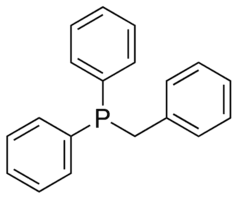
Benzyldiphenylphosphine
C6H5CH2P(C6H5)2
Catalysis & Inorganic
Beryllium
Be
Catalysis & Inorganic
Beryllium oxide
BeO
Catalysis & Inorganic![Bicyclo[2.2.1]hepta-2,5-diene-rhodium(I) chloride dimer — chemical structure, CAS 12257-42-0; Catalysis & Inorganic, fine chemical supplied by Tech Serve Solutions](/_next/image?url=https%3A%2F%2Fpub-f4d920c906024441a773a96f7098e551.r2.dev%2Fimages%2Fproducts%2F12257-42-0.png&w=3840&q=75)
Bicyclo[2.2.1]hepta-2,5-diene-rhodium(I) chloride dimer
Catalysis & Inorganic
![Bis[(10,11-η)-5-[(11bS)-dinaphtho[2,1-d:1′,2′-f][1,3,2]dioxaphosphepin-4-yl- κP4]-5H-dibenz[b,f]azepine]rhodium(I) tetrafluorobo — chemical structure, CAS 1228149-03-8; Catalysis & Inorganic, fine chemical supplied by Tech Serve Solutions](/_next/image?url=https%3A%2F%2Fpub-f4d920c906024441a773a96f7098e551.r2.dev%2Fimages%2Fproducts%2F1228149-03-8.png&w=3840&q=75)
Bis[(10,11-η)-5-[(11bS)-dinaphtho[2,1-d:1′,2′-f][1,3,2]dioxaphosphepin-4-yl- κP4]-5H-dibenz[b,f]azepine]rhodium(I) tetrafluorobo
1-d:1′
Catalysis & Inorganic![Bis[(2-dimethylamino)phenyl]amine nickel(II) chloride (C16H20ClN3Ni) — chemical structure, CAS 1033772-47-2; Catalysis & Inorganic, fine chemical supplied by Tech Serve Solutions](/_next/image?url=https%3A%2F%2Fpub-f4d920c906024441a773a96f7098e551.r2.dev%2Fimages%2Fproducts%2F1033772-47-2.png&w=3840&q=75)
Bis[(2-dimethylamino)phenyl]amine nickel(II) chloride
C16H20ClN3Ni
Catalysis & Inorganic▶ Explore more

Bis(cyclopentadienyl)cobalt(III) hexafluorophosphate
C10H10CoF6P
Catalysis & Inorganic
1-(4-Chlorophenyl)biguanide hydrochloride
ClC6H4NHC(NH)NHC(NH)NH2 · HCl
Chemical Synthesis
Bis(cyclopentadienyl)dimethylzirconium(IV)
Catalysis & Inorganic

1-(4-Chlorophenyl)ethanol
ClC6H4CH(CH3)OH
Chemical Synthesis