
Lead(II,IV) oxide
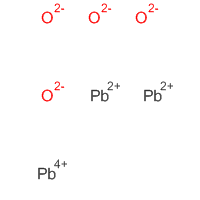
Lead(II,IV) oxide, CAS 1314-41-6, is a vibrant red inorganic compound with the formula Pb3O4. Also known as red lead, this substance is notable for its use as a pigment, in glass manufacturing, and as an oxidising agent. Its chemical properties make it valuable in specific industrial applications and as a precursor in certain chemical syntheses. Tech Serve Solutions supplies Lead(II,IV) oxide meeting rigorous quality standards for laboratory and industrial use.
- IUPAC
- Minium,Red lead oxide,Trilead tetraoxide
- Synonyms
- Pb3O4MiniumRed lead oxideTrilead tetraoxide
Pigment and Corrosion Inhibitor
Historically, Lead(II,IV) oxide was widely used as a pigment in paints, particularly for priming structural steel due to its excellent anti-corrosive properties. While its use in paints has declined due to health concerns, it remains relevant in specialised applications where its protective qualities are essential.
Glass Manufacturing
This compound serves as a key component in the production of certain types of glass, including lead crystal and optical glass. It contributes to increased refractive index, density, and workability of the glass.
Oxidising Agent
Lead(II,IV) oxide acts as a powerful oxidising agent in various chemical reactions. Its controlled reactivity is utilised in specific synthetic processes where selective oxidation is required.
Catalysis
In inorganic chemistry, Lead(II,IV) oxide finds application as a catalyst or catalyst precursor in certain industrial processes. Its specific electronic and structural properties enable it to facilitate chemical transformations.
| Molecular weight | 685.60 |
|---|---|
| Linear formula | Pb3O4 |
| Assay | ≥96% |
| Vapour pressure | 10 mmHg (0 °C) |
| Particle size | 1-2 μm |
| Impurities tested | ≤0.1% in HNO3/H2O2 insoluble matter |


Hazard statements
- H272May intensify fire; oxidiser
- H302Harmful if swallowed
- H332Harmful if inhaled
- H360DF
- H373May cause damage to organs through prolonged exposure
- H410Very toxic to aquatic life with long-lasting effects
Precautionary statements
- P201Obtain special instructions before use
- P220Keep away from clothing and combustible materials
- P273Avoid release to the environment
- P308IF exposed or concerned
- P501Dispose of contents and container per local regulations
| Protective equipment | dust mask type N95 (US), Eyeshields, full-face particle respirator type N100 (US), Gloves, respirator cartridge type N100 (US), type P1 (EN143) respirator filter, type P2 (EN 143) respirator cartridges, type P3 (EN 143) respirator cartridges |
|---|---|
| Transport (UN / ADR) | UN 1479 5.1/PG 2 |
| Water hazard class (WGK, DE) | 3 |
| Hazard codes (EU) | O,T,N |
| Risk statements (R) | 61-8-20/22-33-50/53-62 |
| Safety statements (S) | 53-45-60-61 |
| Anion traces | chloride (Cl-): ≤100 mg/kg |
Hazard information is provided for guidance. Always consult the product Safety Data Sheet (SDS), available on request, before handling.
Documentation
Every batch ships with a Certificate of Analysis covering assay, identity and purity; the grade is confirmed against your enquiry. Safety Data Sheets and technical data sheets are available on request.
Supply & logistics
Samples for technical evaluation; bulk MOQ by grade and packaging. In-stock material ships in 7–10 working days, worldwide, with full export documentation.
What is Lead(II,IV) oxide used for?
+
Lead(II,IV) oxide is primarily used as a pigment and corrosion inhibitor, in glass manufacturing, as an oxidising agent in chemical synthesis, and in certain catalytic applications.
What is the CAS number and formula for Lead(II,IV) oxide?
+
The CAS number for Lead(II,IV) oxide is 1314-41-6, and its chemical formula is Pb3O4.
What grade and purity does Tech Serve Solutions supply for Lead(II,IV) oxide?
+
Tech Serve Solutions supplies Lead(II,IV) oxide with an assay of ≥96%. We do not represent this product as meeting pharmacopoeia standards (USP, BP, EP) unless explicitly stated. It is suitable for research and industrial applications.
How should Lead(II,IV) oxide be handled safely?
+
Lead(II,IV) oxide is a dangerous substance. It is an oxidiser and harmful if swallowed or inhaled, can cause serious damage to health through prolonged exposure, and is suspected of damaging fertility or the unborn child. Handle with appropriate personal protective equipment, including eyeshields, gloves, and a suitable respirator (e.g., N95/P3 filter). Store away from combustible materials in a well-ventilated area. Consult the Safety Data Sheet for comprehensive handling information.
How is Lead(II,IV) oxide packed and shipped?
+
Lead(II,IV) oxide is packed according to UN 1479, Class 5.1, Packing Group II regulations for transport. TSS exports this chemical globally, adhering to all relevant shipping and hazardous materials regulations.
How can I request a quote or sample for Lead(II,IV) oxide?
+
To request a quote or sample for Lead(II,IV) oxide, please contact our sales team through the TSS website or via email, specifying the product name and CAS number (1314-41-6).
▶ Related products
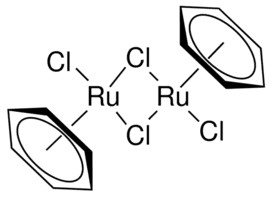
Benzeneruthenium(II) chloride dimer
Ru2(C6H6)2Cl4
Catalysis & Inorganic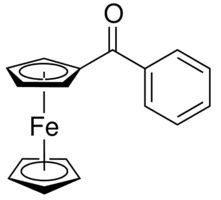
Benzoylferrocene
C17H14FeO
Catalysis & Inorganic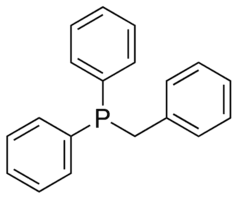
Benzyldiphenylphosphine
C6H5CH2P(C6H5)2
Catalysis & Inorganic
Beryllium
Be
Catalysis & Inorganic
Beryllium oxide
BeO
Catalysis & Inorganic![Bicyclo[2.2.1]hepta-2,5-diene-rhodium(I) chloride dimer — chemical structure, CAS 12257-42-0; Catalysis & Inorganic, fine chemical supplied by Tech Serve Solutions](/_next/image?url=https%3A%2F%2Fpub-f4d920c906024441a773a96f7098e551.r2.dev%2Fimages%2Fproducts%2F12257-42-0.png&w=3840&q=75)
Bicyclo[2.2.1]hepta-2,5-diene-rhodium(I) chloride dimer
Catalysis & Inorganic
![Bis[(10,11-η)-5-[(11bS)-dinaphtho[2,1-d:1′,2′-f][1,3,2]dioxaphosphepin-4-yl- κP4]-5H-dibenz[b,f]azepine]rhodium(I) tetrafluorobo — chemical structure, CAS 1228149-03-8; Catalysis & Inorganic, fine chemical supplied by Tech Serve Solutions](/_next/image?url=https%3A%2F%2Fpub-f4d920c906024441a773a96f7098e551.r2.dev%2Fimages%2Fproducts%2F1228149-03-8.png&w=3840&q=75)
Bis[(10,11-η)-5-[(11bS)-dinaphtho[2,1-d:1′,2′-f][1,3,2]dioxaphosphepin-4-yl- κP4]-5H-dibenz[b,f]azepine]rhodium(I) tetrafluorobo
1-d:1′
Catalysis & Inorganic![Bis[(2-dimethylamino)phenyl]amine nickel(II) chloride (C16H20ClN3Ni) — chemical structure, CAS 1033772-47-2; Catalysis & Inorganic, fine chemical supplied by Tech Serve Solutions](/_next/image?url=https%3A%2F%2Fpub-f4d920c906024441a773a96f7098e551.r2.dev%2Fimages%2Fproducts%2F1033772-47-2.png&w=3840&q=75)
Bis[(2-dimethylamino)phenyl]amine nickel(II) chloride
C16H20ClN3Ni
Catalysis & Inorganic▶ Explore more

Bis(cyclopentadienyl)cobalt(III) hexafluorophosphate
C10H10CoF6P
Catalysis & Inorganic
1-(4-Chlorophenyl)biguanide hydrochloride
ClC6H4NHC(NH)NHC(NH)NH2 · HCl
Chemical Synthesis
Bis(cyclopentadienyl)dimethylzirconium(IV)
Catalysis & Inorganic

1-(4-Chlorophenyl)ethanol
ClC6H4CH(CH3)OH
Chemical Synthesis