
Lead(II) carbonate
Lead(II) carbonate (CAS 598-63-0) is an inorganic lead salt with the formula PbCO3 and a molar mass of 267.21 g/mol. Supplied by Tech Serve Solutions as a high-purity white powder and chunks at an assay of ≥99.99% (trace metals basis), it is a water-insoluble carbonate used principally in research, materials and ceramic science, inorganic synthesis and as a precursor to other lead compounds. It is a hazardous, reproductively toxic and environmentally hazardous substance requiring controlled handling.
- Synonyms
- Lead(II) carbonateLead carbonateLead carbonate (PbCO3)Carbonic acid, lead(2+) salt (1:1)CerussitePbCO3CAS 598-63-0

Inorganic synthesis and lead precursor
Serves as a starting material in inorganic and materials chemistry, where it is converted into other lead compounds such as lead oxides and lead salts. Its high trace-metals purity suits demanding preparative work.
Materials, ceramic and glass science
Used as a research-grade source of lead in ceramic, glass and solid-state studies. The ≥99.99% grade limits metallic contaminants that could affect material properties.
Catalysis and inorganic chemistry research
Applied as a reagent and reference material in catalysis and inorganic chemistry investigations. It functions as a defined, well-characterised source of lead carbonate for laboratory study.
Analytical and reference use
The trace-metals-basis assay makes it suitable as a high-purity reference material for analytical and standards work involving lead. Used where contaminant control is essential.
| Molecular weight | 267.21 |
|---|---|
| Linear formula | PbCO3 |
| Assay | ≥99.99% trace metals basis |
| Form | powder and chunks |


Hazard statements
- H302Harmful if swallowed
- H332Harmful if inhaled
- H360May damage fertility or the unborn child
- H373May cause damage to organs through prolonged exposure
- H410Very toxic to aquatic life with long-lasting effects
Precautionary statements
- P201Obtain special instructions before use
- P273Avoid release to the environment
- P308IF exposed or concerned
- P501Dispose of contents and container per local regulations
| Protective equipment | dust mask type N95 (US), Eyeshields, Gloves, type P2 (EN 143) respirator cartridges |
|---|---|
| Transport (UN / ADR) | UN 3077 9 / PGIII |
| Water hazard class (WGK, DE) | 3 |
| Hazard codes (EU) | T,N |
| Risk statements (R) | 61-20/22-33-50/53-62 |
| Safety statements (S) | 53-45-60-61 |
Hazard information is provided for guidance. Always consult the product Safety Data Sheet (SDS), available on request, before handling.
Documentation
Every batch ships with a Certificate of Analysis covering assay, identity and purity; the grade is confirmed against your enquiry. Safety Data Sheets and technical data sheets are available on request.
Supply & logistics
Samples for technical evaluation; bulk MOQ by grade and packaging. In-stock material ships in 7–10 working days, worldwide, with full export documentation.
What is Lead(II) carbonate used for?
+
Lead(II) carbonate is used mainly in research and materials science as a high-purity inorganic lead source and as a precursor for synthesising other lead compounds such as lead oxides and salts. It also features in catalysis, inorganic chemistry, ceramic and glass studies. Because of its serious hazards it is intended for controlled industrial and laboratory use only.
What is the CAS number and molecular formula of Lead(II) carbonate?
+
The CAS number of Lead(II) carbonate is 598-63-0 and its molecular formula is PbCO3, with a molecular weight of 267.21 g/mol. Its EC number is 209-943-4 and the MDL number is MFCD00064631.
What grade and purity does Tech Serve Solutions supply?
+
Tech Serve Solutions supplies Lead(II) carbonate at an assay of ≥99.99% on a trace metals basis, in powder and chunk form. This is a high-purity technical/research grade; we do not represent it as USP, BP, EP or food grade. A certificate of analysis can be provided with each consignment.
What are the safety and handling hazards of Lead(II) carbonate?
+
Lead(II) carbonate carries the GHS signal word Danger (pictograms GHS07, GHS08, GHS09). Its hazard statements are H302 (harmful if swallowed), H332 (harmful if inhaled), H360 (may damage fertility or the unborn child), H373 (may cause damage to organs through prolonged or repeated exposure) and H410 (very toxic to aquatic life with long-lasting effects). Avoid dust formation, use eye protection, gloves and an N95 (US) or P2 (EN 143) respirator, prevent release to the environment, and follow the SDS. WGK Germany is 3.
How is Lead(II) carbonate packed, shipped and exported?
+
It is packed in sealed, labelled containers appropriate to the order quantity and shipped with full documentation, including the SDS and certificate of analysis. For transport it is classified as UN 3077, Class 9, Packing Group III (environmentally hazardous substance). Tech Serve Solutions exports worldwide in compliance with applicable dangerous-goods and export regulations.
How do I request a sample or quote?
+
Contact Tech Serve Solutions with your required quantity, purity and destination, and our team will respond with availability, lead time and documentation. Samples may be available subject to regulatory and dangerous-goods shipping requirements for this hazardous material.
▶ Related products
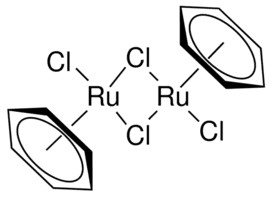
Benzeneruthenium(II) chloride dimer
Ru2(C6H6)2Cl4
Catalysis & Inorganic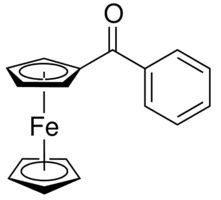
Benzoylferrocene
C17H14FeO
Catalysis & Inorganic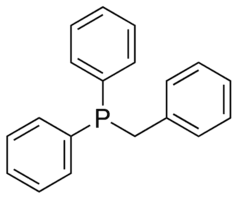
Benzyldiphenylphosphine
C6H5CH2P(C6H5)2
Catalysis & Inorganic
Beryllium
Be
Catalysis & Inorganic
Beryllium oxide
BeO
Catalysis & Inorganic![Bicyclo[2.2.1]hepta-2,5-diene-rhodium(I) chloride dimer — chemical structure, CAS 12257-42-0; Catalysis & Inorganic, fine chemical supplied by Tech Serve Solutions](/_next/image?url=https%3A%2F%2Fpub-f4d920c906024441a773a96f7098e551.r2.dev%2Fimages%2Fproducts%2F12257-42-0.png&w=3840&q=75)
Bicyclo[2.2.1]hepta-2,5-diene-rhodium(I) chloride dimer
Catalysis & Inorganic
![Bis[(10,11-η)-5-[(11bS)-dinaphtho[2,1-d:1′,2′-f][1,3,2]dioxaphosphepin-4-yl- κP4]-5H-dibenz[b,f]azepine]rhodium(I) tetrafluorobo — chemical structure, CAS 1228149-03-8; Catalysis & Inorganic, fine chemical supplied by Tech Serve Solutions](/_next/image?url=https%3A%2F%2Fpub-f4d920c906024441a773a96f7098e551.r2.dev%2Fimages%2Fproducts%2F1228149-03-8.png&w=3840&q=75)
Bis[(10,11-η)-5-[(11bS)-dinaphtho[2,1-d:1′,2′-f][1,3,2]dioxaphosphepin-4-yl- κP4]-5H-dibenz[b,f]azepine]rhodium(I) tetrafluorobo
1-d:1′
Catalysis & Inorganic![Bis[(2-dimethylamino)phenyl]amine nickel(II) chloride (C16H20ClN3Ni) — chemical structure, CAS 1033772-47-2; Catalysis & Inorganic, fine chemical supplied by Tech Serve Solutions](/_next/image?url=https%3A%2F%2Fpub-f4d920c906024441a773a96f7098e551.r2.dev%2Fimages%2Fproducts%2F1033772-47-2.png&w=3840&q=75)
Bis[(2-dimethylamino)phenyl]amine nickel(II) chloride
C16H20ClN3Ni
Catalysis & Inorganic▶ Explore more

Bis(cyclopentadienyl)cobalt(III) hexafluorophosphate
C10H10CoF6P
Catalysis & Inorganic
1-(4-Chlorophenyl)biguanide hydrochloride
ClC6H4NHC(NH)NHC(NH)NH2 · HCl
Chemical Synthesis
Bis(cyclopentadienyl)dimethylzirconium(IV)
Catalysis & Inorganic

1-(4-Chlorophenyl)ethanol
ClC6H4CH(CH3)OH
Chemical Synthesis