
Iron(II) bromide
Iron(II) bromide (CAS: 7789-46-0) is a chemical compound with the linear formula FeBr<sub>2</sub> and a molecular weight of 215.65 g/mol. This iron salt is a key reagent in various chemical synthesis applications. It is particularly noted for its role in catalysis, including atom transfer radical polymerization (ATRP). Available from Tech Serve Solutions with an assay of 98%, it is supplied for research and industrial use.
- IUPAC
- Dibromoiron,Ferrous bromide,Iron dibromide
- Synonyms
- DibromoironFerrous bromideIron dibromide

Atom Transfer Radical Polymerization (ATRP)
Iron(II) bromide serves as a crucial metal salt catalyst in ATRP, a controlled polymerization technique. It enables precise control over polymer architecture, molecular weight, and polydispersity.
Chemical Synthesis
This compound is employed as a reagent in various organic and inorganic synthesis pathways. Its reactivity makes it valuable for introducing iron or bromide functionalities into target molecules.
Catalysis
Beyond ATRP, Iron(II) bromide finds application in other catalytic processes, contributing to a range of chemical transformations. Its role in non-precious metal catalysis is an area of ongoing research.
Materials Science
As an iron salt, it can be utilized in materials science research for the development of novel materials with specific magnetic or electronic properties.
| Molecular weight | 215.65 |
|---|---|
| Linear formula | FeBr2 |
| Assay | 98% |
| Boiling point | 934 °C(lit.) |
| Density | 4.63 g/mL at 25 °C(lit.) |
| Solubility | ethanol: very soluble(lit.) |
| Particle size | −10 mesh |
| Melting point | 684 °C(lit.) |

Hazard statements
- H315Causes skin irritation
- H319Causes serious eye irritation
- H332Harmful if inhaled
- H335May cause respiratory irritation
Precautionary statements
- P261Avoid breathing dust, fume, gas or vapours
- P305IF IN EYES
| Protective equipment | dust mask type N95 (US), Eyeshields, Gloves |
|---|---|
| Water hazard class (WGK, DE) | 3 |
| Hazard codes (EU) | Xn |
| Risk statements (R) | 20-36/37/38 |
| Safety statements (S) | 26-36 |
Hazard information is provided for guidance. Always consult the product Safety Data Sheet (SDS), available on request, before handling.
Documentation
Every batch ships with a Certificate of Analysis covering assay, identity and purity; the grade is confirmed against your enquiry. Safety Data Sheets and technical data sheets are available on request.
Supply & logistics
Samples for technical evaluation; bulk MOQ by grade and packaging. In-stock material ships in 7–10 working days, worldwide, with full export documentation.
What is Iron(II) bromide used for?
+
Iron(II) bromide (FeBr<sub>2</sub>) is primarily used as a catalyst in Atom Transfer Radical Polymerization (ATRP) and in general chemical synthesis.
What is the CAS number and formula for Iron(II) bromide?
+
The CAS number for Iron(II) bromide is 7789-46-0, and its linear formula is FeBr<sub>2</sub>.
What grade and purity does Tech Serve Solutions supply for Iron(II) bromide?
+
Tech Serve Solutions supplies Iron(II) bromide with an assay of 98%. This product is suitable for research and general chemical applications; TSS does not represent it as USP, BP, or EP grade.
How should Iron(II) bromide be handled safely?
+
Iron(II) bromide can cause skin irritation (H315), serious eye irritation (H319), and respiratory irritation (H335), and may be harmful if inhaled (H332). Handle with appropriate personal protective equipment, including dust masks (N95), eyeshields, and gloves, in a well-ventilated area. Avoid breathing dust.
How is Iron(II) bromide packed and shipped?
+
Iron(II) bromide is typically supplied in packaging suitable for its physical form and hazard classification, ensuring safe handling and export compliance.
How can I request a sample or a quote for Iron(II) bromide?
+
To request a sample or a quote for Iron(II) bromide, please contact the Tech Serve Solutions sales department via our website or by phone.
▶ Related products
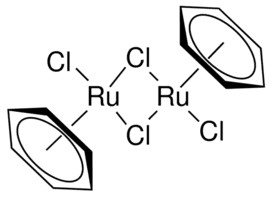
Benzeneruthenium(II) chloride dimer
Ru2(C6H6)2Cl4
Catalysis & Inorganic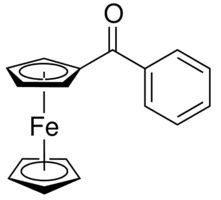
Benzoylferrocene
C17H14FeO
Catalysis & Inorganic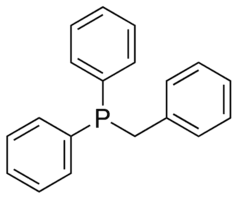
Benzyldiphenylphosphine
C6H5CH2P(C6H5)2
Catalysis & Inorganic
Beryllium
Be
Catalysis & Inorganic
Beryllium oxide
BeO
Catalysis & Inorganic![Bicyclo[2.2.1]hepta-2,5-diene-rhodium(I) chloride dimer — chemical structure, CAS 12257-42-0; Catalysis & Inorganic, fine chemical supplied by Tech Serve Solutions](/_next/image?url=https%3A%2F%2Fpub-f4d920c906024441a773a96f7098e551.r2.dev%2Fimages%2Fproducts%2F12257-42-0.png&w=3840&q=75)
Bicyclo[2.2.1]hepta-2,5-diene-rhodium(I) chloride dimer
Catalysis & Inorganic
![Bis[(10,11-η)-5-[(11bS)-dinaphtho[2,1-d:1′,2′-f][1,3,2]dioxaphosphepin-4-yl- κP4]-5H-dibenz[b,f]azepine]rhodium(I) tetrafluorobo — chemical structure, CAS 1228149-03-8; Catalysis & Inorganic, fine chemical supplied by Tech Serve Solutions](/_next/image?url=https%3A%2F%2Fpub-f4d920c906024441a773a96f7098e551.r2.dev%2Fimages%2Fproducts%2F1228149-03-8.png&w=3840&q=75)
Bis[(10,11-η)-5-[(11bS)-dinaphtho[2,1-d:1′,2′-f][1,3,2]dioxaphosphepin-4-yl- κP4]-5H-dibenz[b,f]azepine]rhodium(I) tetrafluorobo
1-d:1′
Catalysis & Inorganic![Bis[(2-dimethylamino)phenyl]amine nickel(II) chloride (C16H20ClN3Ni) — chemical structure, CAS 1033772-47-2; Catalysis & Inorganic, fine chemical supplied by Tech Serve Solutions](/_next/image?url=https%3A%2F%2Fpub-f4d920c906024441a773a96f7098e551.r2.dev%2Fimages%2Fproducts%2F1033772-47-2.png&w=3840&q=75)
Bis[(2-dimethylamino)phenyl]amine nickel(II) chloride
C16H20ClN3Ni
Catalysis & Inorganic▶ Explore more

Bis(cyclopentadienyl)cobalt(III) hexafluorophosphate
C10H10CoF6P
Catalysis & Inorganic
1-(4-Chlorophenyl)biguanide hydrochloride
ClC6H4NHC(NH)NHC(NH)NH2 · HCl
Chemical Synthesis
Bis(cyclopentadienyl)dimethylzirconium(IV)
Catalysis & Inorganic

1-(4-Chlorophenyl)ethanol
ClC6H4CH(CH3)OH
Chemical Synthesis