
Gold
Gold (Au, CAS: 7440-57-5) is a highly valued precious metal known for its exceptional conductivity, inertness, and catalytic properties. With a molecular weight of 196.97 g/mol, it finds critical applications in catalysis, chemical synthesis, and materials science. Tech Serve Solutions supplies high-purity gold for demanding research and industrial processes, adhering to strict quality standards for reliable performance.

Catalysis
Gold nanoparticles and complexes serve as effective catalysts in various organic reactions, including oxidation and hydrogenation processes. Its unique electronic properties enable selective transformations crucial for fine chemical synthesis.
Chemical Synthesis
As a reagent or catalyst, gold facilitates complex chemical transformations. It is employed in the development of novel synthetic routes for pharmaceuticals and advanced materials, leveraging its distinctive reactivity.
Materials Science
Gold's inertness and conductivity make it ideal for applications in electronics, nanotechnology, and surface coatings. Its use extends to creating specialized films and components requiring high performance and durability.
Research and Development
High-purity gold is essential for fundamental research in chemistry, physics, and materials science. It is used in developing new technologies, studying material properties, and creating advanced scientific instruments.
| Molecular weight | 196.97 |
|---|---|
| Empirical formula | Au |
| Assay | 99.99% trace metals basis |
| Form | powder |
| Boiling point | 2808 °C(lit.) |
| Density | 19.3 g/mL at 25 °C(lit.) |
| Refractive index | n20/587 1.523 |
| Melting point | 1063 °C(lit.) |
| Concentration | ~0.01% HAuCl4~1 A520 units/mL |
| Storage temperature | 2-8°C |
| Particle size | 5 nm |
| Contains / stabiliser | 0.02% sodium azide as preservative |
| Protective equipment | Eyeshields, Gloves, type N95 (US), type P1 (EN143) respirator filter |
|---|---|
| Water hazard class (WGK, DE) | nwg |
Hazard information is provided for guidance. Always consult the product Safety Data Sheet (SDS), available on request, before handling.
| Resistivity | 2.05 μΩ-cm, 0°C |
|---|---|
| Size | 10-20 μm |
| Thickness | 0.25 mm |
| Transmittance | 380-700, >91% (for the glass microscope slide alone) |
| Mean Particle Size | 3.0-5.5 nm (monodisperse) |
Documentation
Every batch ships with a Certificate of Analysis covering assay, identity and purity; the grade is confirmed against your enquiry. Safety Data Sheets and technical data sheets are available on request.
Supply & logistics
Samples for technical evaluation; bulk MOQ by grade and packaging. In-stock material ships in 7–10 working days, worldwide, with full export documentation.
What is Gold (CAS 7440-57-5) used for?
+
Gold (CAS 7440-57-5) is used in catalysis, chemical synthesis, materials science, and research and development due to its inertness, conductivity, and catalytic properties.
What are the CAS number and formula for Gold?
+
The CAS number for Gold is 7440-57-5, and its chemical formula is Au.
What grade and purity does Tech Serve Solutions supply?
+
Tech Serve Solutions supplies Gold with an assay of 99.99% trace metals basis. We do not represent this product as USP, BP, or EP grade unless explicitly stated in the specifications.
What are the safety and handling requirements for Gold?
+
Handling Gold requires appropriate personal protective equipment, including eyeshields, gloves, and a P1 (EN143) or N95 (US) respirator filter, especially when handling in powder form.
How is Gold typically packed, shipped, and exported?
+
Gold is carefully packaged to ensure its integrity during transit. As a global supplier, Tech Serve Solutions adheres to all regulations for the export of chemicals.
How can I request a sample or a quote for Gold?
+
To request a sample or a quote for Gold, please contact our sales team through the website or by phone, providing your specific requirements.
▶ Related products
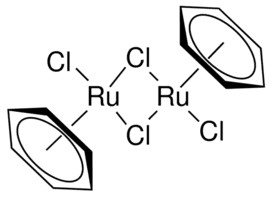
Benzeneruthenium(II) chloride dimer
Ru2(C6H6)2Cl4
Catalysis & Inorganic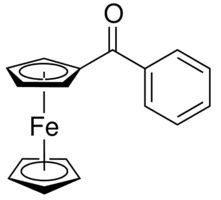
Benzoylferrocene
C17H14FeO
Catalysis & Inorganic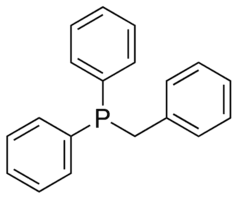
Benzyldiphenylphosphine
C6H5CH2P(C6H5)2
Catalysis & Inorganic
Beryllium
Be
Catalysis & Inorganic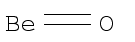
Beryllium oxide
BeO
Catalysis & Inorganic![Bicyclo[2.2.1]hepta-2,5-diene-rhodium(I) chloride dimer — chemical structure, CAS 12257-42-0; Catalysis & Inorganic, fine chemical supplied by Tech Serve Solutions](/_next/image?url=https%3A%2F%2Fpub-f4d920c906024441a773a96f7098e551.r2.dev%2Fimages%2Fproducts%2F12257-42-0.png&w=3840&q=75)
Bicyclo[2.2.1]hepta-2,5-diene-rhodium(I) chloride dimer
Catalysis & Inorganic
![Bis[(10,11-η)-5-[(11bS)-dinaphtho[2,1-d:1′,2′-f][1,3,2]dioxaphosphepin-4-yl- κP4]-5H-dibenz[b,f]azepine]rhodium(I) tetrafluorobo — chemical structure, CAS 1228149-03-8; Catalysis & Inorganic, fine chemical supplied by Tech Serve Solutions](/_next/image?url=https%3A%2F%2Fpub-f4d920c906024441a773a96f7098e551.r2.dev%2Fimages%2Fproducts%2F1228149-03-8.png&w=3840&q=75)
Bis[(10,11-η)-5-[(11bS)-dinaphtho[2,1-d:1′,2′-f][1,3,2]dioxaphosphepin-4-yl- κP4]-5H-dibenz[b,f]azepine]rhodium(I) tetrafluorobo
1-d:1′
Catalysis & Inorganic![Bis[(2-dimethylamino)phenyl]amine nickel(II) chloride (C16H20ClN3Ni) — chemical structure, CAS 1033772-47-2; Catalysis & Inorganic, fine chemical supplied by Tech Serve Solutions](/_next/image?url=https%3A%2F%2Fpub-f4d920c906024441a773a96f7098e551.r2.dev%2Fimages%2Fproducts%2F1033772-47-2.png&w=3840&q=75)
Bis[(2-dimethylamino)phenyl]amine nickel(II) chloride
C16H20ClN3Ni
Catalysis & Inorganic▶ Explore more

Bis(cyclopentadienyl)cobalt(III) hexafluorophosphate
C10H10CoF6P
Catalysis & Inorganic
1-(4-Chlorophenyl)biguanide hydrochloride
ClC6H4NHC(NH)NHC(NH)NH2 · HCl
Chemical Synthesis
Bis(cyclopentadienyl)dimethylzirconium(IV)
Catalysis & Inorganic

1-(4-Chlorophenyl)ethanol
ClC6H4CH(CH3)OH
Chemical Synthesis