
Europium
Europium (CAS 7440-53-1, Eu, MW 151.96) is a soft, silvery-white, malleable rare-earth metal. Known for its distinctive fluorescence, Europium metal finds critical applications in phosphors for television screens and lighting, as a nuclear reactor control material due to its neutron absorption cross-section, and in various catalysis and materials science research endeavours. Tech Serve Solutions supplies Europium ingot at 99.9% trace metals basis.
Phosphor Production
Europium compounds are essential activators in phosphors, providing the red and blue colours in cathode ray tube (CRT) televisions and fluorescent lighting. This luminescent property is key to display technologies.
Nuclear Applications
With a high neutron absorption cross-section, Europium metal is utilised in nuclear reactors as control rods or burnable neutron poisons. Its isotopes can also serve as neutron sources.
Catalysis and Materials Science
Europium's unique electronic structure makes it a subject of interest in catalysis research and the development of novel materials with specific magnetic or optical properties. It is employed in various chemical synthesis pathways.
Specialty Glass and Ceramics
Doping glass and ceramics with Europium can impart specific optical characteristics, such as phosphorescence or UV absorption, for specialised applications.
| Molecular weight | 151.96 |
|---|---|
| Empirical formula | Eu |
| Assay | 99.9% trace metals basis |
| Form | ingot |
| Boiling point | 1527 °C(lit.) |
| Density | 5.24 g/mL at 25 °C(lit.) |
| Melting point | 822 °C(lit.) |

Hazard statements
- H250Catches fire spontaneously if exposed to air
Precautionary statements
- P222Do not allow contact with air
- P231Handle under inert gas
- P422
| Protective equipment | Eyeshields, Faceshields, full-face particle respirator type N100 (US), Gloves, respirator cartridge type N100 (US), type P1 (EN143) respirator filter, type P3 (EN 143) respirator cartridges |
|---|---|
| Transport (UN / ADR) | UN 2813 4.3 / PGII |
| Water hazard class (WGK, DE) | 3 |
| Hazard codes (EU) | F |
| Risk statements (R) | 14/15-17 |
| Safety statements (S) | 7/8-43 |
| Supplemental hazards | Reacts violently with water. |
Hazard information is provided for guidance. Always consult the product Safety Data Sheet (SDS), available on request, before handling.
| Resistivity | 81 μΩ-cm, 20°C |
|---|
Documentation
Every batch ships with a Certificate of Analysis covering assay, identity and purity; the grade is confirmed against your enquiry. Safety Data Sheets and technical data sheets are available on request.
Supply & logistics
Samples for technical evaluation; bulk MOQ by grade and packaging. In-stock material ships in 7–10 working days, worldwide, with full export documentation.
What is Europium metal used for?
+
Europium metal is primarily used in the production of phosphors for displays and lighting, as a control material in nuclear reactors, and in catalysis and materials science research.
What are the CAS number and formula for Europium?
+
The CAS number for Europium is 7440-53-1, and its chemical formula is Eu.
What grade and purity does Tech Serve Solutions supply?
+
Tech Serve Solutions supplies Europium as an ingot with an assay of 99.9% trace metals basis. We do not represent this product as USP, BP, EP, or any other pharmacopoeia grade.
How should Europium metal be handled?
+
Europium is a pyrophoric metal that reacts violently with water (H250, supplemental hazard: Reacts violently with water). It must be handled under an inert atmosphere, and appropriate personal protective equipment, including eyeshields, gloves, and respiratory protection (type N100 or P3), must be worn. Avoid contact with water and air.
How is Europium packed and shipped?
+
Europium is shipped as UN 2813, Hazard Class 4.3, Packing Group II, under inert conditions to ensure safety during transit.
How can I request a quote or sample of Europium?
+
To request a quote or a sample of Europium, please contact our sales team via the website or direct inquiry. Please specify your quantity requirements.
▶ Related products
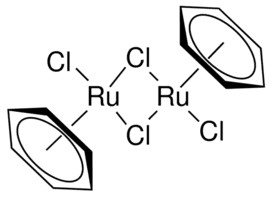
Benzeneruthenium(II) chloride dimer
Ru2(C6H6)2Cl4
Catalysis & Inorganic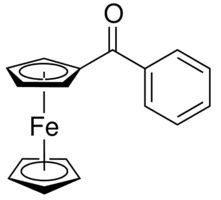
Benzoylferrocene
C17H14FeO
Catalysis & Inorganic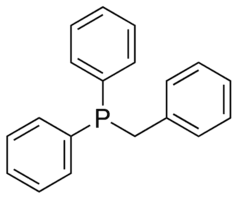
Benzyldiphenylphosphine
C6H5CH2P(C6H5)2
Catalysis & Inorganic
Beryllium
Be
Catalysis & Inorganic
Beryllium oxide
BeO
Catalysis & Inorganic![Bicyclo[2.2.1]hepta-2,5-diene-rhodium(I) chloride dimer — chemical structure, CAS 12257-42-0; Catalysis & Inorganic, fine chemical supplied by Tech Serve Solutions](/_next/image?url=https%3A%2F%2Fpub-f4d920c906024441a773a96f7098e551.r2.dev%2Fimages%2Fproducts%2F12257-42-0.png&w=3840&q=75)
Bicyclo[2.2.1]hepta-2,5-diene-rhodium(I) chloride dimer
Catalysis & Inorganic
![Bis[(10,11-η)-5-[(11bS)-dinaphtho[2,1-d:1′,2′-f][1,3,2]dioxaphosphepin-4-yl- κP4]-5H-dibenz[b,f]azepine]rhodium(I) tetrafluorobo — chemical structure, CAS 1228149-03-8; Catalysis & Inorganic, fine chemical supplied by Tech Serve Solutions](/_next/image?url=https%3A%2F%2Fpub-f4d920c906024441a773a96f7098e551.r2.dev%2Fimages%2Fproducts%2F1228149-03-8.png&w=3840&q=75)
Bis[(10,11-η)-5-[(11bS)-dinaphtho[2,1-d:1′,2′-f][1,3,2]dioxaphosphepin-4-yl- κP4]-5H-dibenz[b,f]azepine]rhodium(I) tetrafluorobo
1-d:1′
Catalysis & Inorganic![Bis[(2-dimethylamino)phenyl]amine nickel(II) chloride (C16H20ClN3Ni) — chemical structure, CAS 1033772-47-2; Catalysis & Inorganic, fine chemical supplied by Tech Serve Solutions](/_next/image?url=https%3A%2F%2Fpub-f4d920c906024441a773a96f7098e551.r2.dev%2Fimages%2Fproducts%2F1033772-47-2.png&w=3840&q=75)
Bis[(2-dimethylamino)phenyl]amine nickel(II) chloride
C16H20ClN3Ni
Catalysis & Inorganic▶ Explore more

Bis(cyclopentadienyl)cobalt(III) hexafluorophosphate
C10H10CoF6P
Catalysis & Inorganic
1-(4-Chlorophenyl)biguanide hydrochloride
ClC6H4NHC(NH)NHC(NH)NH2 · HCl
Chemical Synthesis
Bis(cyclopentadienyl)dimethylzirconium(IV)
Catalysis & Inorganic

1-(4-Chlorophenyl)ethanol
ClC6H4CH(CH3)OH
Chemical Synthesis