
Ethyldiphenylphosphine
Ethyldiphenylphosphine (CAS: 607-01-2), with the linear formula (C₆H₅)₂PCH₂CH₃ and a molecular weight of 214.24 g/mol, is a phosphine compound widely employed as a ligand and catalyst in organic synthesis. Its applications span diverse catalytic processes, including coupling reactions, cycloadditions, and hydroformylation, contributing to the efficient formation of complex molecules in academic research and industrial chemical synthesis.
- IUPAC
- Diphenylethylphosphine,NSC 151254
- Synonyms
- Diphenylethylphosphine

Catalysis in Organic Synthesis
Ethyldiphenylphosphine serves as a valuable catalyst and ligand in various organic transformations. It facilitates three-component coupling reactions of arylaldehydes with methyl vinyl ketone and phthalimide, and is instrumental in the regio- and stereoselective hydroalkynylation of methylenecyclopropanes.
Heterocycle Synthesis
This compound is employed in the synthesis of important heterocyclic structures. Its catalytic activity aids in the formation of oxazolidines, thiazolidines, pyrrolidines, and indoles, which are common motifs in pharmaceuticals and biologically active molecules.
Advanced Catalytic Processes
Ethyldiphenylphosphine participates in more complex catalytic cycles, such as tandem Morita-Baylis-Hillman/Michael addition reactions. It is also utilized in platinum-catalyzed cyclization and intermolecular hydroamination reactions, demonstrating its versatility.
Hydroformylation Reactions
The compound acts as a ligand in hydroformylation reactions, a critical industrial process for converting alkenes into aldehydes. This application highlights its utility in large-scale chemical manufacturing and fine chemical production.
| Molecular weight | 214.24 |
|---|---|
| Linear formula | (C6H5)2PCH2CH3 |
| Assay | 98% |
| Boiling point | 293 °C(lit.) |
| Density | 1.048 g/mL at 25 °C(lit.) |
| Refractive index | n20/D 1.614(lit.) |
| Application | Catalyst for:• Three component coupling reactions of arylaldehydes with Me vinyl ketone and phthalimide1• Regio- and stereoselective hydroalkynylation of methylenecyclopropanes2• Synthesis of oxazolidines, thiazolidines, pyrrolidines, and indoles3• Dimer to monomer conversion4• Tandem Morita-Baylis-Hillman/Michael addition reactions5• Platinum-catalyzed cyclization6• Regioselective and stereoselective [3+2] cycloaddition7• Platinum-catalyzed intermolecular hydroamination8• Hydroformylation reactions9 |

Hazard statements
- H302Harmful if swallowed
- H315Causes skin irritation
- H319Causes serious eye irritation
- H335May cause respiratory irritation
Precautionary statements
- P261Avoid breathing dust, fume, gas or vapours
- P305IF IN EYES
| Protective equipment | Eyeshields, Faceshields, full-face respirator (US), Gloves, multi-purpose combination respirator cartridge (US), type ABEK (EN14387) respirator filter |
|---|---|
| Flash point | 110 °C / 230 °F |
| Transport (UN / ADR) | UN 3334 |
| Water hazard class (WGK, DE) | 3 |
| Hazard codes (EU) | Xn |
| Risk statements (R) | 22-36/37/38 |
| Safety statements (S) | 26-36 |
Hazard information is provided for guidance. Always consult the product Safety Data Sheet (SDS), available on request, before handling.
Documentation
Every batch ships with a Certificate of Analysis covering assay, identity and purity; the grade is confirmed against your enquiry. Safety Data Sheets and technical data sheets are available on request.
Supply & logistics
Samples for technical evaluation; bulk MOQ by grade and packaging. In-stock material ships in 7–10 working days, worldwide, with full export documentation.
What is Ethyldiphenylphosphine (CAS: 607-01-2) used for?
+
Ethyldiphenylphosphine (CAS: 607-01-2) is primarily used as a catalyst and ligand in various organic synthesis reactions, including coupling reactions, hydroalkynylation, heterocycle synthesis, and hydroformylation. It is a key component in advanced catalytic processes.
What are the CAS number and molecular formula for Ethyldiphenylphosphine?
+
The CAS number for Ethyldiphenylphosphine is 607-01-2, and its linear molecular formula is (C₆H₅)₂PCH₂CH₃.
What grade and purity does Tech Serve Solutions supply?
+
Tech Serve Solutions supplies Ethyldiphenylphosphine with an assay of 98%. This product is supplied for research and development purposes; TSS does not represent it as USP, BP, EP, or any other pharmacopoeia grade.
How should Ethyldiphenylphosphine be handled safely?
+
Ethyldiphenylphosphine is classified as harmful if swallowed, causes skin irritation, causes serious eye irritation, and may cause respiratory irritation (H302-H315-H319-H335). Handle with appropriate personal protective equipment, including eyeshields, gloves, and a suitable respirator. Ensure adequate ventilation and avoid inhalation of vapours or dust.
How is Ethyldiphenylphosphine packed, shipped, and exported?
+
Ethyldiphenylphosphine is carefully packed according to international shipping regulations for hazardous materials (UN 3334). Tech Serve Solutions, as a specialist global supplier and exporter, ensures compliant packaging and shipment for both domestic and international clients.
How can I request a sample or quote for Ethyldiphenylphosphine?
+
To request a sample or a quote for Ethyldiphenylphosphine, please visit the Tech Serve Solutions website or contact our sales department directly. Our team will be pleased to assist you with your specific requirements.
▶ Related products
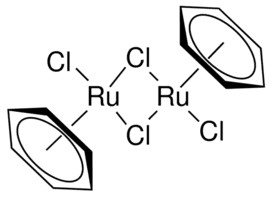
Benzeneruthenium(II) chloride dimer
Ru2(C6H6)2Cl4
Catalysis & Inorganic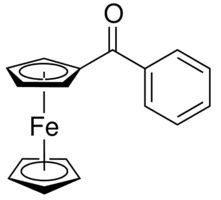
Benzoylferrocene
C17H14FeO
Catalysis & Inorganic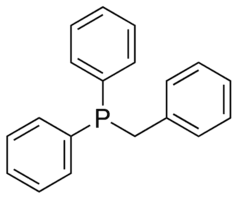
Benzyldiphenylphosphine
C6H5CH2P(C6H5)2
Catalysis & Inorganic
Beryllium
Be
Catalysis & Inorganic
Beryllium oxide
BeO
Catalysis & Inorganic![Bicyclo[2.2.1]hepta-2,5-diene-rhodium(I) chloride dimer — chemical structure, CAS 12257-42-0; Catalysis & Inorganic, fine chemical supplied by Tech Serve Solutions](/_next/image?url=https%3A%2F%2Fpub-f4d920c906024441a773a96f7098e551.r2.dev%2Fimages%2Fproducts%2F12257-42-0.png&w=3840&q=75)
Bicyclo[2.2.1]hepta-2,5-diene-rhodium(I) chloride dimer
Catalysis & Inorganic
![Bis[(10,11-η)-5-[(11bS)-dinaphtho[2,1-d:1′,2′-f][1,3,2]dioxaphosphepin-4-yl- κP4]-5H-dibenz[b,f]azepine]rhodium(I) tetrafluorobo — chemical structure, CAS 1228149-03-8; Catalysis & Inorganic, fine chemical supplied by Tech Serve Solutions](/_next/image?url=https%3A%2F%2Fpub-f4d920c906024441a773a96f7098e551.r2.dev%2Fimages%2Fproducts%2F1228149-03-8.png&w=3840&q=75)
Bis[(10,11-η)-5-[(11bS)-dinaphtho[2,1-d:1′,2′-f][1,3,2]dioxaphosphepin-4-yl- κP4]-5H-dibenz[b,f]azepine]rhodium(I) tetrafluorobo
1-d:1′
Catalysis & Inorganic![Bis[(2-dimethylamino)phenyl]amine nickel(II) chloride (C16H20ClN3Ni) — chemical structure, CAS 1033772-47-2; Catalysis & Inorganic, fine chemical supplied by Tech Serve Solutions](/_next/image?url=https%3A%2F%2Fpub-f4d920c906024441a773a96f7098e551.r2.dev%2Fimages%2Fproducts%2F1033772-47-2.png&w=3840&q=75)
Bis[(2-dimethylamino)phenyl]amine nickel(II) chloride
C16H20ClN3Ni
Catalysis & Inorganic▶ Explore more

Bis(cyclopentadienyl)cobalt(III) hexafluorophosphate
C10H10CoF6P
Catalysis & Inorganic
1-(4-Chlorophenyl)biguanide hydrochloride
ClC6H4NHC(NH)NHC(NH)NH2 · HCl
Chemical Synthesis
Bis(cyclopentadienyl)dimethylzirconium(IV)
Catalysis & Inorganic

1-(4-Chlorophenyl)ethanol
ClC6H4CH(CH3)OH
Chemical Synthesis