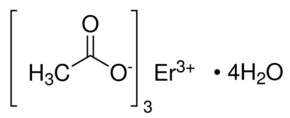
Erbium(III) acetate hydrate
Erbium(III) acetate hydrate, CAS 207234-04-6, with the linear formula (CH3CO2)3Er · xH2O, is a hydrated salt of erbium and acetic acid. Its molecular weight is approximately 344.39 g/mol on an anhydrous basis. This compound is primarily utilised as a precursor in materials science, for chemical synthesis, and in applications related to catalysis and microelectronics, often employed in solution deposition processes for advanced material fabrication.
Materials Science Precursor
Erbium(III) acetate hydrate serves as a valuable precursor for the synthesis of various erbium-containing materials. It is particularly useful in the deposition of thin films and nanoparticles for applications in optics and magnetic materials.
Catalysis
This erbium salt can be employed as a component in catalytic systems. Its unique electronic and coordination properties make it suitable for facilitating specific chemical transformations in organic synthesis.
Micro/Nanoelectronics
The compound finds application in the microelectronics industry, where erbium compounds are investigated for their dielectric properties and use in advanced semiconductor devices and memory technologies.
Solution Deposition
As a soluble erbium source, it is ideal for solution-based deposition techniques, enabling the controlled formation of functional coatings and structures for research and development.
| Molecular weight | 344.39 (anhydrous basis) |
|---|---|
| Linear formula | (CH3CO2)3Er · xH2O |
| Assay | 99.9% trace metals basis |
| Composition | Degree of hydration, ≤4 |
Documentation
Every batch ships with a Certificate of Analysis covering assay, identity and purity; the grade is confirmed against your enquiry. Safety Data Sheets and technical data sheets are available on request.
Supply & logistics
Samples for technical evaluation; bulk MOQ by grade and packaging. In-stock material ships in 7–10 working days, worldwide, with full export documentation.
What is Erbium(III) acetate hydrate used for?
+
Erbium(III) acetate hydrate is primarily used as a precursor in materials science, for chemical synthesis, catalysis, and in micro/nanoelectronics applications, often via solution deposition methods.
What is the CAS number and formula for Erbium(III) acetate hydrate?
+
The CAS number is 207234-04-6 and the linear formula is (CH3CO2)3Er · xH2O.
What grade and purity does Tech Serve Solutions supply?
+
Tech Serve Solutions supplies Erbium(III) acetate hydrate with an assay of 99.9% trace metals basis. This is a high-purity grade suitable for research and specialized applications. We do not represent this product as USP, BP, EP, or any other pharmacopoeia grade.
What are the safety and handling precautions for Erbium(III) acetate hydrate?
+
Erbium(III) acetate hydrate is classified with a WGK Germany of 3, indicating it is hazardous to water. Appropriate personal protective equipment should be worn, and handling should occur in a well-ventilated area to avoid dust inhalation and contact with skin and eyes.
How is Erbium(III) acetate hydrate packed, shipped, and exported?
+
Erbium(III) acetate hydrate is carefully packaged to ensure product integrity during transit. Tech Serve Solutions is experienced in exporting chemicals globally, adhering to all relevant shipping regulations.
How can I request a sample or quote for Erbium(III) acetate hydrate?
+
To request a sample or a quotation for Erbium(III) acetate hydrate, please contact our sales team via the website or by telephone. Our specialists will be pleased to assist you.
▶ Related products
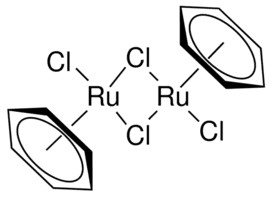
Benzeneruthenium(II) chloride dimer
Ru2(C6H6)2Cl4
Catalysis & Inorganic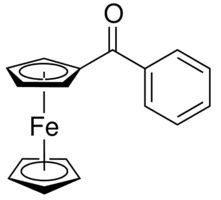
Benzoylferrocene
C17H14FeO
Catalysis & Inorganic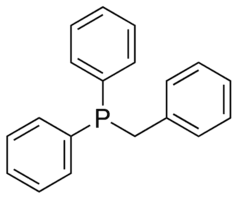
Benzyldiphenylphosphine
C6H5CH2P(C6H5)2
Catalysis & Inorganic
Beryllium
Be
Catalysis & Inorganic
Beryllium oxide
BeO
Catalysis & Inorganic![Bicyclo[2.2.1]hepta-2,5-diene-rhodium(I) chloride dimer — chemical structure, CAS 12257-42-0; Catalysis & Inorganic, fine chemical supplied by Tech Serve Solutions](/_next/image?url=https%3A%2F%2Fpub-f4d920c906024441a773a96f7098e551.r2.dev%2Fimages%2Fproducts%2F12257-42-0.png&w=3840&q=75)
Bicyclo[2.2.1]hepta-2,5-diene-rhodium(I) chloride dimer
Catalysis & Inorganic
![Bis[(10,11-η)-5-[(11bS)-dinaphtho[2,1-d:1′,2′-f][1,3,2]dioxaphosphepin-4-yl- κP4]-5H-dibenz[b,f]azepine]rhodium(I) tetrafluorobo — chemical structure, CAS 1228149-03-8; Catalysis & Inorganic, fine chemical supplied by Tech Serve Solutions](/_next/image?url=https%3A%2F%2Fpub-f4d920c906024441a773a96f7098e551.r2.dev%2Fimages%2Fproducts%2F1228149-03-8.png&w=3840&q=75)
Bis[(10,11-η)-5-[(11bS)-dinaphtho[2,1-d:1′,2′-f][1,3,2]dioxaphosphepin-4-yl- κP4]-5H-dibenz[b,f]azepine]rhodium(I) tetrafluorobo
1-d:1′
Catalysis & Inorganic![Bis[(2-dimethylamino)phenyl]amine nickel(II) chloride (C16H20ClN3Ni) — chemical structure, CAS 1033772-47-2; Catalysis & Inorganic, fine chemical supplied by Tech Serve Solutions](/_next/image?url=https%3A%2F%2Fpub-f4d920c906024441a773a96f7098e551.r2.dev%2Fimages%2Fproducts%2F1033772-47-2.png&w=3840&q=75)
Bis[(2-dimethylamino)phenyl]amine nickel(II) chloride
C16H20ClN3Ni
Catalysis & Inorganic