DL-α-Tocopherol methoxypolyethylene glycol succinate
DL-α-Tocopherol methoxypolyethylene glycol succinate (CAS: 1309573-60-1) is a nonionic surfactant derived from Vitamin E. It functions as an emulsifier and solubilizer, often employed in research and chemical synthesis. Its properties, including a refractive index of n20/D 1.336 and a density of 1.002 g/mL at 25 °C, make it suitable for specific applications in catalysis and the development of greener chemical technologies.
- IUPAC
- TPGS-750-M

Chemical Synthesis
Utilised as a reagent or additive in organic synthesis, particularly where controlled surfactant properties are beneficial. Its structure may aid in reactions requiring specific solubility or phase transfer conditions.
Catalysis and Inorganic Chemistry
Can serve as a component in catalytic systems or as a dispersing agent in inorganic chemistry applications. Its surfactant nature may influence reaction kinetics or material properties.
Greener Alternatives
Appreciated as a greener alternative reagent, aligning with sustainable chemistry principles. Its design promotes more environmentally conscious chemical processes.
Phase Transfer Catalysis
Its surfactant characteristics suggest potential utility as a phase transfer catalyst or co-catalyst, facilitating reactions between immiscible phases.
| Density | 1.002 g/mL at 25 °C |
|---|---|
| Refractive index | n20/D 1.336 |
| Concentration | 2 wt. % in H2O |
| Flash point | >110 °C / >230 °F |
|---|---|
| Water hazard class (WGK, DE) | 2 |
Hazard information is provided for guidance. Always consult the product Safety Data Sheet (SDS), available on request, before handling.
| Greener Alternative Product Characteristics | Catalysis |
|---|---|
| Transition Temp | Tm 29-34 |
Documentation
Every batch ships with a Certificate of Analysis covering assay, identity and purity; the grade is confirmed against your enquiry. Safety Data Sheets and technical data sheets are available on request.
Supply & logistics
Samples for technical evaluation; bulk MOQ by grade and packaging. In-stock material ships in 7–10 working days, worldwide, with full export documentation.
What is DL-α-Tocopherol methoxypolyethylene glycol succinate used for?
+
DL-α-Tocopherol methoxypolyethylene glycol succinate is used in chemical synthesis, catalysis, as a designer surfactant, and as a greener alternative reagent in various research and industrial applications.
What is the CAS number and chemical formula for DL-α-Tocopherol methoxypolyethylene glycol succinate?
+
The CAS number is 1309573-60-1. The chemical formula is not provided in the product data.
What grade and purity does Tech Serve Solutions supply?
+
Tech Serve Solutions supplies DL-α-Tocopherol methoxypolyethylene glycol succinate at a concentration of 2 wt. % in H2O. TSS does not represent this product as USP, BP, or EP grade unless explicitly stated in the product specifications.
What are the safety and handling considerations for this product?
+
This product has a WGK Germany classification of 2 and a flash point greater than 110 °C (>230 °F). Handle with appropriate laboratory precautions, avoiding ignition sources.
How is DL-α-Tocopherol methoxypolyethylene glycol succinate packed, shipped, and exported?
+
DL-α-Tocopherol methoxypolyethylene glycol succinate is packed and shipped according to standard chemical handling procedures for laboratory reagents. Tech Serve Solutions is a global supplier and exporter.
How can I request a sample or quote for DL-α-Tocopherol methoxypolyethylene glycol succinate?
+
To request a sample or a quote, please contact our sales team through the TSS website or designated contact channels, providing the product name and CAS number (1309573-60-1).
▶ Related products
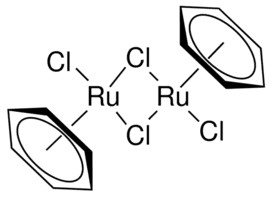
Benzeneruthenium(II) chloride dimer
Ru2(C6H6)2Cl4
Catalysis & Inorganic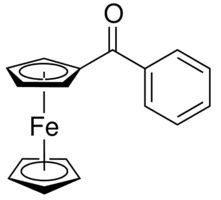
Benzoylferrocene
C17H14FeO
Catalysis & Inorganic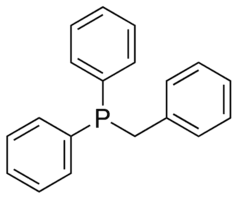
Benzyldiphenylphosphine
C6H5CH2P(C6H5)2
Catalysis & Inorganic
Beryllium
Be
Catalysis & Inorganic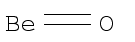
Beryllium oxide
BeO
Catalysis & Inorganic![Bicyclo[2.2.1]hepta-2,5-diene-rhodium(I) chloride dimer — chemical structure, CAS 12257-42-0; Catalysis & Inorganic, fine chemical supplied by Tech Serve Solutions](/_next/image?url=https%3A%2F%2Fpub-f4d920c906024441a773a96f7098e551.r2.dev%2Fimages%2Fproducts%2F12257-42-0.png&w=3840&q=75)
Bicyclo[2.2.1]hepta-2,5-diene-rhodium(I) chloride dimer
Catalysis & Inorganic
![Bis[(10,11-η)-5-[(11bS)-dinaphtho[2,1-d:1′,2′-f][1,3,2]dioxaphosphepin-4-yl- κP4]-5H-dibenz[b,f]azepine]rhodium(I) tetrafluorobo — chemical structure, CAS 1228149-03-8; Catalysis & Inorganic, fine chemical supplied by Tech Serve Solutions](/_next/image?url=https%3A%2F%2Fpub-f4d920c906024441a773a96f7098e551.r2.dev%2Fimages%2Fproducts%2F1228149-03-8.png&w=3840&q=75)
Bis[(10,11-η)-5-[(11bS)-dinaphtho[2,1-d:1′,2′-f][1,3,2]dioxaphosphepin-4-yl- κP4]-5H-dibenz[b,f]azepine]rhodium(I) tetrafluorobo
1-d:1′
Catalysis & Inorganic![Bis[(2-dimethylamino)phenyl]amine nickel(II) chloride (C16H20ClN3Ni) — chemical structure, CAS 1033772-47-2; Catalysis & Inorganic, fine chemical supplied by Tech Serve Solutions](/_next/image?url=https%3A%2F%2Fpub-f4d920c906024441a773a96f7098e551.r2.dev%2Fimages%2Fproducts%2F1033772-47-2.png&w=3840&q=75)
Bis[(2-dimethylamino)phenyl]amine nickel(II) chloride
C16H20ClN3Ni
Catalysis & Inorganic